

How Speed Limits Are Set
The number on a speed limit sign isn't guesswork. Traffic engineers typically conduct what's called an 85th-percentile speed study: they observe the speeds of free-flowing vehicles on a road and identify the speed at or below which 85% of drivers naturally travel. That figure often becomes the posted limit, on the theory that it reflects the speed most drivers find comfortable and safe on that specific road.
Beyond driver behavior, engineers weigh road geometry (curves, grades, sight lines), lane width, shoulder conditions, adjacent land use (school zone vs. open highway), pedestrian activity, and historical crash data. State legislatures also set statutory limits - default speeds that apply even when no sign is posted - which vary by road type and state.
This is part of a broader set of rules that shape everyday driving. See our overview of US traffic laws every driver should know for the wider regulatory picture.
The Four Types of Speed Limits
Not every speed-related sign carries the same legal weight. Understanding the differences helps drivers respond correctly.
- Statutory (default) limits: Set by state law for road categories - often 25 mph in residential areas, 55 mph on undivided rural highways - and apply when no sign is posted.
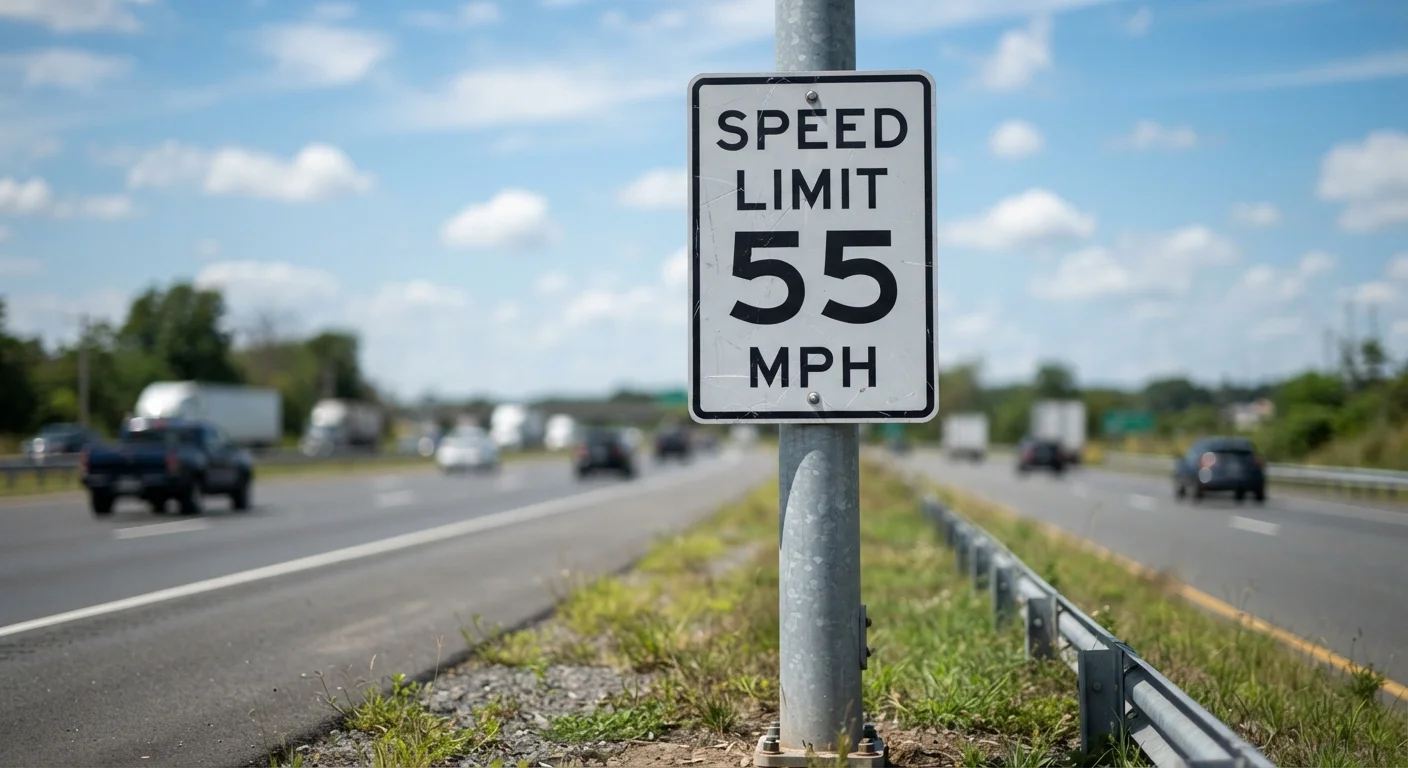
- Posted (regulatory) limits: The white rectangular signs with black numerals you see most often. These are legally enforceable maximums for that specific road segment.
- Advisory speed signs: Yellow diamond-shaped signs, often paired with warning signs near curves or ramps. They suggest a safe speed for that condition but are not a legal limit.
- Variable speed limits: Electronic signs that update in real time based on traffic, weather, or incident conditions. Several states use these on high-volume interstates. When illuminated, they carry the same legal force as static signs.
Yellow Sign vs. White Sign: A Quick Check
When you see a speed-related sign, check its background color first. White with black text means it's a regulatory limit - legally enforceable. Yellow with black text means it's advisory - a safety recommendation, not a mandate. Treating advisory signs as optional is legal but physically risky, especially on curves and ramps.
What the Posted Number Actually Means - and Doesn't
The posted limit is a maximum under normal conditions, not a floor or a target. Drivers are legally required to adjust their speed downward when conditions demand it - rain-slicked roads, low visibility, heavy traffic, or road construction all qualify. This is often called the basic speed law, which exists in some form in every US state: you must drive at a speed that is reasonable and prudent for current conditions, regardless of what the sign says.
This matters in practice. A driver traveling at the posted 65 mph limit in dense fog may still be cited for unsafe speed. Conversely, a driver going 50 mph on a 65 mph highway is not automatically violating the law.
Speed and stopping distance are closely linked. The faster you travel, the more distance your vehicle needs to come to a complete stop - a relationship that becomes critical in emergencies. Our article on following distance and stopping distance explains how these two concepts work together and why the difference matters.
26%
Of traffic fatalities linked to speeding
According to the National Highway Traffic Safety Administration (NHTSA), speeding was a factor in approximately 26% of all traffic fatalities in a recent reporting year.
85th percentile
Speed used to set many posted limits
The 85th-percentile speed method - measuring the speed at or below which 85% of free-flowing traffic travels - is a widely used engineering benchmark for establishing posted speed limits.
Why Limits Vary So Much by Road Type
A 15 mph school zone and a 75 mph interstate both have speed limits grounded in the same engineering logic - they just reflect radically different environments. Common US limit ranges by road type include:
| Road Type | Typical Limit Range |
|---|---|
| School zones | 15-25 mph |
| Residential streets | 25-30 mph |
| Urban arterials | 35-45 mph |
| Rural two-lane highways | 55 mph |
| Interstate highways | 65-80 mph (state-dependent) |
State-level variation is real and significant. Texas has some of the highest posted limits in the country on certain rural roads, while Hawaii caps most roads notably lower than the national average. When driving across state lines, confirming the default statutory limits for each state is a practical habit worth developing.
This article is for general informational and educational purposes. Always obey posted signs, local laws, and official guidance from your state's department of transportation.
Frequently Asked Questions
State transportation departments and local governments set posted speed limits, often following traffic engineering studies. Federal guidelines from the MUTCD (Manual on Uniform Traffic Control Devices) standardize sign design, but the actual number is a state or local decision.
A regulatory speed limit sign (white background, black text) is legally enforceable - exceeding it is a violation. An advisory speed sign (yellow background, black text) warns drivers of a recommended safe speed for a specific condition like a curve, but is not a legal limit.
In most states, driving significantly below the posted limit when conditions don't warrant it can be cited as impeding traffic. However, driving below the limit when weather, road, or traffic conditions require it is legal and expected.
Variable speed limit signs use electronic displays to show limits that change based on real-time conditions - traffic congestion, weather, or incidents ahead. These limits are legally enforceable just like static signs.
Road classification, surrounding land use, pedestrian presence, lane width, sight distance, and historical crash data all influence limit-setting. A narrow residential street and a divided highway present fundamentally different safety environments.
The content on this site is for informational purposes only and is not a substitute for professional advice. Always consult a qualified professional for guidance specific to your situation.