

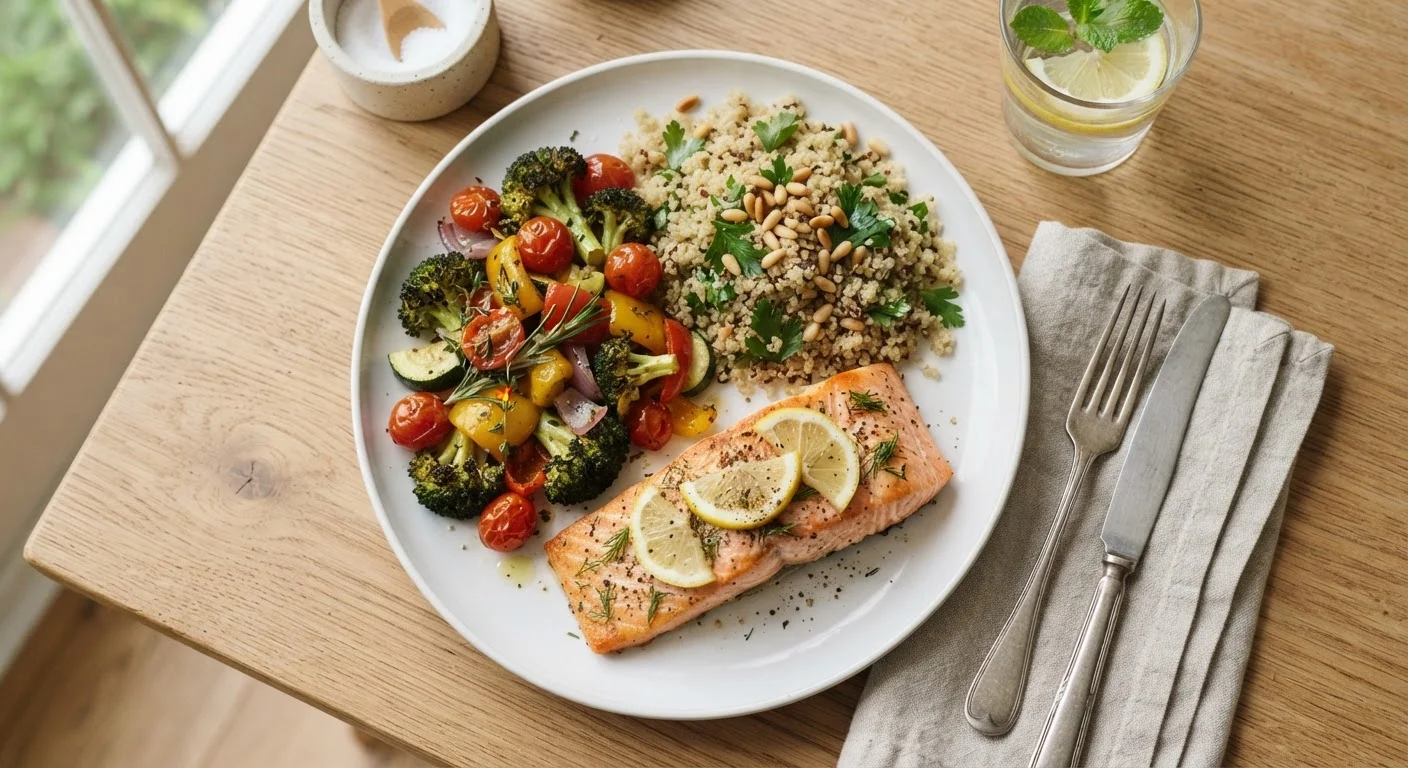
What 'Balanced' Actually Means
Despite what competing diet headlines suggest, broad nutritional science has reached reasonable consensus on a few structural principles that hold whether you eat meat, follow a plant-based pattern, or land somewhere in between. The term "balanced plate" refers not to a rigid formula, but to approximate proportions of food groups that, over time, tend to supply the range of macronutrients, micronutrients, fiber, and energy most adults need.
If you're new to thinking about these fundamentals, our introduction to nutrition basics lays out the core vocabulary - calories, macros, food groups - before you dig into plate-building. And if conflicting nutrition headlines have left you unsure where to start, understanding why healthy eating feels complicated can help you filter signal from noise.
The principles below reflect current guidance from mainstream nutrition and public health science. They are general information, not personalized dietary advice - always consult a qualified healthcare professional or registered dietitian for guidance specific to your health situation.
Core Plate-Building Practices
The following practices represent the structural decisions that most evidence-informed dietary frameworks share, regardless of whether they are omnivorous, Mediterranean, plant-based, or otherwise.
Fill roughly half your plate with vegetables and fruit at most meals.
Vegetables and fruit supply fiber, vitamins, minerals, and phytonutrients that are consistently under-consumed in typical Western eating patterns. Prioritizing them by volume - rather than treating them as a side - naturally shifts overall diet quality without requiring strict calorie counting.
Choose whole grains over refined grains as a default.
The milling process that creates refined grains strips out the bran and germ, removing fiber, B vitamins, and minerals. Whole grains retain these components, contributing to better digestive function and steadier energy levels over time.
Include a quality protein source at every main meal.
Protein supplies essential amino acids the body cannot synthesize on its own, and it supports muscle maintenance, satiety, and a range of metabolic functions. Varying protein sources - across animal and plant options - broadens the range of complementary nutrients received.
Don't eliminate dietary fat - choose it wisely.
Fat is essential for absorbing fat-soluble vitamins (A, D, E, and K), supporting cell membrane integrity, and maintaining cardiovascular health when the right types are prioritized. Unsaturated fats, found in foods like olive oil, nuts, seeds, and avocado, are well-supported by nutrition research as beneficial over the long term.
Limit heavily processed foods and added sugars without aiming for perfect elimination.
Ultra-processed foods - defined by the degree of industrial processing and the presence of additives not typically used in home cooking - have been associated in observational research with poorer diet quality overall. Reducing their frequency, rather than attempting rigid elimination, is a sustainable and evidence-consistent approach.
Putting It Into Practice
Knowing the principles is one thing; applying them at a busy weeknight dinner is another. A few practical realities are worth acknowledging.
One important nuance: what goes on your plate may need to shift depending on your life stage. Protein needs, calcium requirements, and calorie thresholds evolve meaningfully from early adulthood into later decades. Our overview of how nutritional needs shift with age explores those changes in plain terms.
If you follow - or are curious about - a plant-based pattern, the proportions above still apply, but a few nutrients require closer attention. Our comparison of plant-based and omnivorous diets walks through where those gaps can appear and how to address them through food choices. For signs that your current pattern may already be missing key nutrients, see common indicators of nutritional gaps.
Finally, what you eat works alongside how you move. Incorporating regular physical activity complements good nutrition in ways that neither habit achieves alone.
This article is for general informational and educational purposes only and does not constitute medical or dietary advice. Consult a qualified healthcare professional or registered dietitian before making significant changes to your diet, especially if you have a health condition or specific nutritional concerns.
The content on this site is for informational purposes only and is not a substitute for professional advice. Always consult a qualified professional for guidance specific to your situation.