

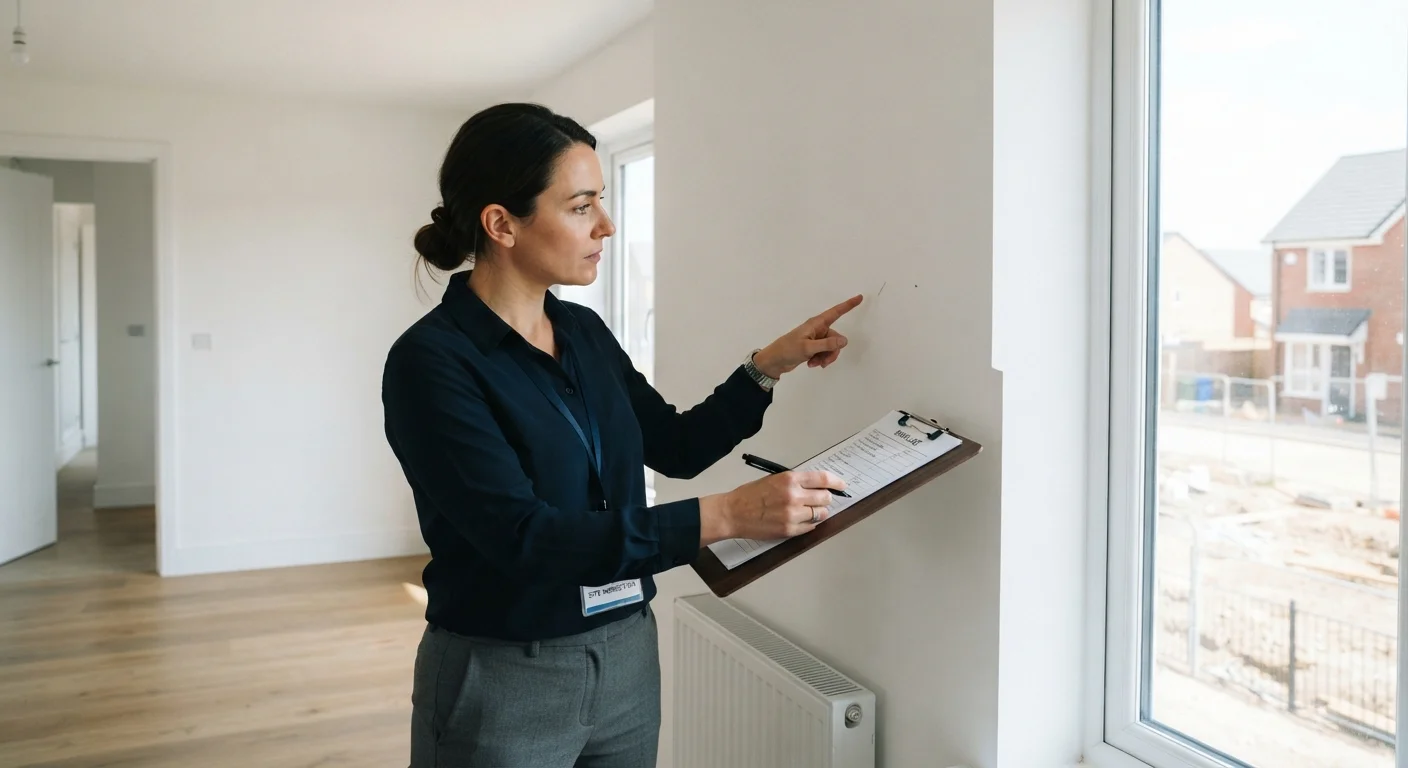
What a Snagging List Actually Covers
A snagging list captures everything in a new home that is not quite right - from minor cosmetic flaws to functional problems that could affect daily life. Items typically fall into two broad categories:
- Cosmetic defects: paint drips, scuffed walls, uneven grout lines, scratched windows, poorly cut carpet edges, and gaps around trim or molding.
- Functional defects: doors and windows that do not open or close properly, electrical outlets that do not work, plumbing that drains slowly, heating and cooling systems that underperform, and insulation that was not correctly installed.
A thorough list goes room by room and includes exterior elements - roofing, gutters, driveways, grading around the foundation, and landscaping that was part of the contract. Incomplete or improperly installed items are just as important to flag as visibly damaged ones.
Because construction involves many trades working in sequence, it is common for later crews to damage work completed earlier. The snagging process catches this overlap before it becomes the buyer's problem to resolve.
Why Timing Is Critical
The most effective moment for a snagging inspection is before you close on the property. At that point, the builder still has a clear financial and contractual incentive to address defects - they want to complete the sale. Once you have signed final paperwork and received the keys, your leverage shifts considerably.
That said, some defects only emerge after move-in: settling cracks in drywall, condensation problems that appear in cold weather, or plumbing issues that surface under regular use. Most new-home contracts and warranty programs allow buyers to submit a secondary snagging list within a defined window - often 30 to 60 days after closing. Check your purchase agreement for the exact terms.
Bring Your Own Inspector - Even on Builder Walkthroughs
Builders routinely offer a pre-closing orientation walkthrough, but this tour is designed to familiarize you with the home's systems - not to serve as a comprehensive defect inspection. Hiring an independent snagging professional ensures you have an unbiased set of eyes on the property before you commit. Schedule independent access at least a week before your closing date to allow time for findings to be addressed.
Even if your builder schedules a formal walkthrough before closing, bring your own notes or hire an independent inspector. A builder-led tour is not a substitute for an independent review.
How the Process Typically Works
Here is how a snagging inspection generally unfolds for new-build buyers:
- Schedule access: Coordinate with the builder to walk through the finished home - ideally a week or more before closing, so there is time to address findings.
- Inspect systematically: Move through each room methodically. Check walls, floors, ceilings, windows, doors, fixtures, appliances, and mechanical systems. Bring a flashlight, an outlet tester, and a level.
- Document everything: Photograph each defect alongside something that shows scale. Note the room and location precisely so there is no ambiguity about what needs to be fixed.
- Submit in writing: Compile the list into a formal document and send it to the builder in writing. Keep a timestamped copy.
- Confirm remediation: Before closing, do a follow-up walkthrough to verify that agreed fixes were actually completed correctly.
Once you are settled in, keeping a home maintenance log is a smart next step - it gives you a running record that supports warranty claims and helps tradespeople diagnose future issues faster.
Should You Hire a Professional Snagging Inspector?
While any buyer can walk a property and note obvious problems, professional snagging inspectors bring construction expertise and specialized tools - including thermal cameras that can detect insulation gaps and moisture meters that reveal hidden water intrusion. Studies and industry reports consistently show that professional inspections identify significantly more defects than self-conducted walkthroughs.
90%+
New-build homes found to have at least one defect
Industry surveys in the residential construction sector consistently find the vast majority of newly completed homes contain at least one snagging item requiring correction.
~150
Average defects found per new-build home
Professional snagging inspectors frequently report finding well over 100 individual items per property, ranging from cosmetic blemishes to functional installation problems.
A professional snagging inspector typically delivers a detailed written report with photographs, organized by room and trade. This format is far easier to hand to a builder's project manager than a personal list of notes.
If you later take on any improvements of your own and need to engage contractors, the experience of a snagging inspection - knowing what to look for, what questions to ask, and how to document work - provides a solid foundation. See our guide on hiring a builder or contractor for the questions worth asking before you sign anything.
For first-time buyers especially, the process of buying new construction introduces different risks than purchasing an existing home. What new homeowners often get wrong in their first year of upkeep is worth reading once you are through the snagging process and settling in.
Frequently Asked Questions
Ideally, schedule the inspection after the home is substantially complete but before you close on the property. This gives you the strongest leverage to require the builder to fix defects. Some buyers also conduct a follow-up inspection after moving in, since certain issues - like settling cracks or heating performance - only become visible over time.
Yes, any buyer can walk through the home and note visible issues. However, a professional snagging inspector has construction knowledge and systematic tools that typically surface far more defects than an untrained eye would catch. For most buyers, professional help is worth considering given the size of the investment.
Start by submitting the list formally in writing and keeping a copy. If the builder does not respond adequately, you may have recourse through your purchase contract, any applicable new-home warranty program, or a dispute resolution process. Consulting a real estate attorney about your options is advisable if items remain unresolved.
For an average-sized home, a professional snagging inspection usually takes two to four hours on-site. The written report is typically delivered within a day or two. Larger or more complex properties naturally take longer.
No - they serve different purposes. A structural warranty (such as a 10-year builder warranty) covers major construction defects that emerge over time. A snagging list addresses immediate workmanship issues visible at handover, which may not rise to the level of a warranty claim but are still the builder's responsibility to correct.
Snagging lists apply equally to newly built condos and apartments. In multi-unit buildings, you would focus your inspection on your individual unit, plus any shared or common-area elements you are entitled to use.
The content on this site is for informational purposes only and is not a substitute for professional advice. Always consult a qualified professional for guidance specific to your situation.