

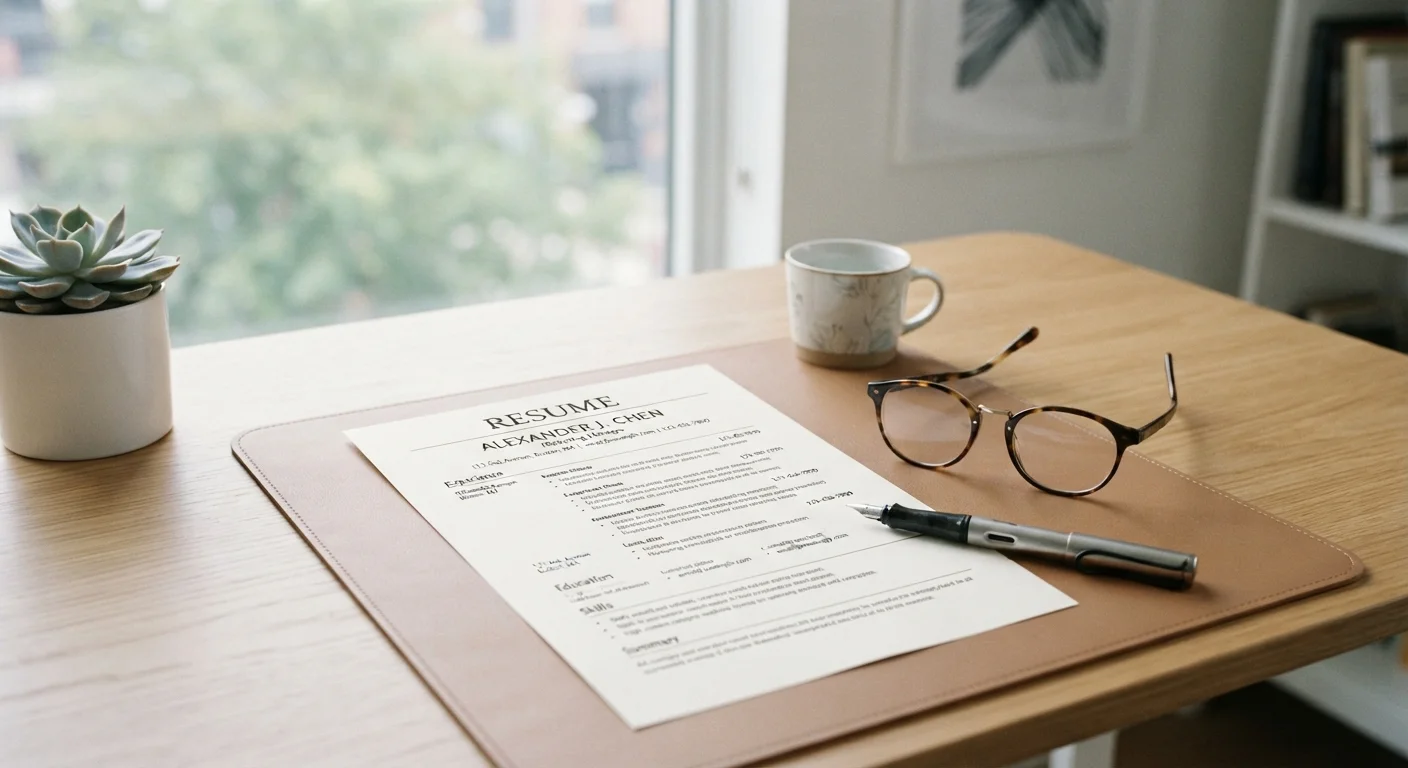
Why the First 30 Seconds Matter
Recruiting is a high-volume activity. A single job posting can attract hundreds of applicants, and hiring professionals rarely have the time to read every resume in full on a first pass. Research consistently shows that initial resume reviews are brief - often well under a minute - and rely heavily on visual scanning rather than careful reading.
That means the signals your resume sends before anyone reads a single sentence carry real weight. Layout, density, hierarchy, and the placement of key information all influence whether a recruiter moves forward or moves on. Understanding what those signals are - and how to control them - is one of the most practical things you can do before submitting any application.
For a broader foundation before you start applying, see our job search preparation checklist to make sure every submission is built on solid ground. You can also explore more resume and interview tips in our dedicated hub.
Visual clarity and white space
Before reading a single word, a recruiter registers whether your resume looks approachable or overwhelming. Dense blocks of text, inconsistent spacing, or cluttered layouts create friction. A well-structured resume uses adequate margins, clear section breaks, and consistent line spacing to guide the eye naturally down the page.
This isn't about decoration - it's about cognitive ease. A recruiter scanning 80 resumes in an afternoon will linger longer on a document that doesn't require effort to parse. Aim for generous but not excessive white space, and resist the urge to shrink margins or font size to fit more content onto one page.
Visual clarity signals professionalism before a recruiter reads a single word.
The opening summary - specific or generic?
Many resumes open with a summary that could describe almost anyone: "Results-driven professional with strong communication skills seeking a challenging role." Recruiters recognize this pattern immediately, and it conveys almost nothing useful.
A focused, role-specific summary - one that names the relevant discipline, years of experience, and one or two concrete strengths - signals that the candidate has done their homework. It tells a recruiter: this person read the job description and understands what you need. That specificity earns a second look. For more on how recruiters use this opening window, see our companion piece on what recruiters actually do in the first 30 seconds.
A role-specific summary signals that the candidate read and understood the job description.
Quantified results versus vague duties
Bullet points that describe responsibilities - "Responsible for managing client accounts" - tell a recruiter what a candidate was asked to do, not what they actually accomplished. Bullets that include measurable outcomes - "Managed a portfolio of 40+ client accounts, reducing churn by 18% over 12 months" - communicate impact.
Recruiters scanning quickly are drawn to numbers because they break visual monotony and convey specificity. Even approximate figures, percentages, or timeframes are more compelling than descriptive prose. If your current bullets are duty-focused, the single highest-value revision you can make is converting at least three of them to outcome-focused statements.
Numbers break visual monotony and communicate impact in a way that prose cannot.
Relevance of the most recent role
The top third of your resume receives the most attention during a quick scan. That means your most recent position - its title, employer, and dates - is often the first substantive signal a recruiter evaluates. If the role is clearly relevant to the position being filled, it validates the application. If it appears unrelated, the recruiter may stop reading.
This doesn't mean hiding a career pivot, but it does mean leading your most recent role's description with the transferable elements most relevant to the target job. Prioritize the responsibilities and achievements that map most directly to the new role's requirements, even if they weren't the primary focus of the position.
The top third of your resume is where recruiters spend the most time - use it deliberately.
Contact information accuracy and professionalism
An outdated phone number, a broken email address, or an unprofessional email handle are small details that carry outsized weight. They signal carelessness - and if a recruiter can't easily reach you, the conversation ends before it begins.
Check that your email address uses a professional format (typically first name and last name), that your phone number is current, and that your LinkedIn URL, if included, is a customized profile link rather than an auto-generated string of characters. These details take minutes to verify but are frequently overlooked.
A broken email or outdated number signals carelessness - verify every contact detail before sending.
Formatting consistency as a proxy for attention to detail
Mixed font sizes, inconsistent date formats (some written as "Jan 2022," others as "01/2022"), bullet points that switch between styles, and section headings that don't match in weight or capitalization are all flags that a recruiter notices - even subconsciously.
Formatting consistency is a proxy signal. It suggests that the candidate pays attention to detail, follows through on tasks completely, and produces polished work. Inconsistency suggests the opposite. Before submitting, view your resume at 100% zoom and check every heading, date, and bullet for uniformity.
Formatting inconsistencies function as a proxy for the candidate's attention to detail.
Putting It All Together
Each of these signals functions like a chapter heading - it tells a recruiter whether your resume is worth reading in full. None of them require reinventing your career story; they require presenting it with intention. Tailor the opening summary for each role, keep formatting clean and consistent, lead with impact, and verify the details that are easiest to overlook.
It's also worth understanding what happens before a human ever sees your resume. Applicant tracking systems screen applications first, so the signals discussed here need to survive automated filtering before reaching a recruiter's desk. And if your resume includes employment gaps, our guide on addressing work history gaps can help you frame them with confidence. Strong first impressions open doors - but the content that follows needs to back them up.
Test your resume at a glance
Print your resume or view it at full size, then look away and glance back at it after five seconds. Notice where your eye lands first - that's where a recruiter's attention goes too. If your most important qualifications aren't in that zone, reorder or reformat until they are. This simple exercise reveals layout problems that are easy to miss when you're deep in editing mode.
The content on this site is for informational purposes only and is not a substitute for professional advice. Always consult a qualified professional for guidance specific to your situation.