

Why ATS Software Exists - and How Widespread It Is
When a single job posting attracts hundreds or even thousands of applicants, human screening alone isn't feasible. Applicant Tracking Systems solve that problem by automating the first pass. Employers configure the software with criteria tied to the specific role, and the ATS does the initial sorting.
According to research from job-market analysts, the majority of Fortune 500 companies rely on ATS platforms to manage hiring volume. But the technology has spread well beyond large corporations - many mid-sized businesses use it too, particularly when recruiting through major job boards.
Understanding this landscape is a foundational step in effective job searching. If your resume isn't formatted and worded in a way the ATS can read, it may never reach the recruiter - regardless of your qualifications.
75%
Resumes rejected before human review
Industry estimates suggest roughly three in four resumes are screened out by ATS software before a recruiter sees them, according to career research organizations.
98%
Fortune 500 companies using ATS
Research from recruiting technology analysts indicates nearly all large U.S. employers rely on some form of applicant tracking software.
250+
Average applications per corporate job posting
Data from LinkedIn and HR research firms shows corporate roles routinely attract hundreds of applicants, making automated screening a practical necessity.
How ATS Parsing Works
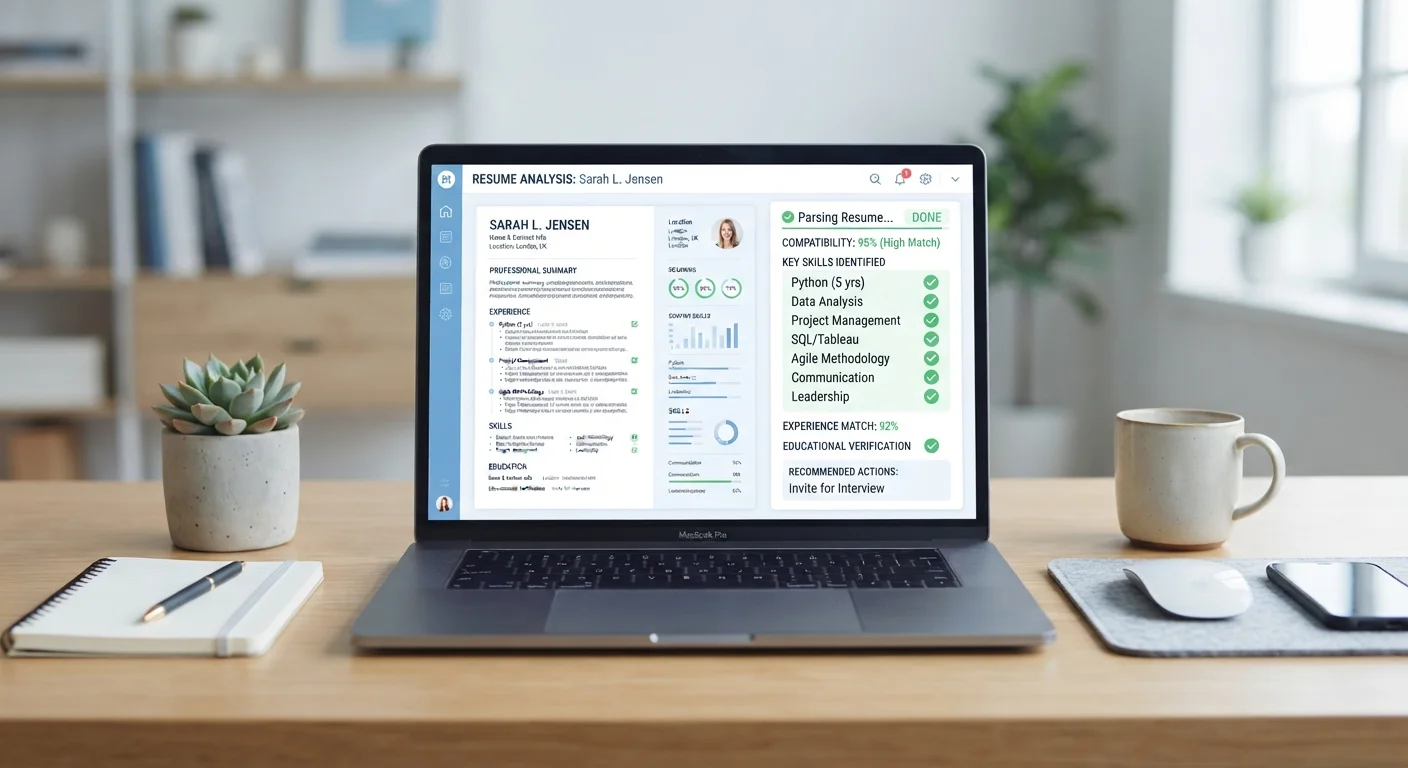
When you submit a resume, the ATS extracts structured data from it - a process called parsing. The system identifies discrete fields: your name and contact details, work history (employer names, job titles, dates), education credentials, and skills. It then maps that data against the job's requirements.
Most systems use keyword matching as a core scoring mechanism. If the job posting asks for "project management" and your resume uses "program oversight" instead, some ATS platforms won't make that connection - even though the meaning is similar. Newer systems incorporate semantic analysis to handle synonyms, but the safest approach is still to mirror the posting's exact language where it accurately reflects your experience.
Hard filters can eliminate candidates automatically. If an employer sets a requirement for a bachelor's degree and your resume doesn't include one, the system may disqualify your application before any human sees it. These filters are set by the employer, not the ATS vendor, so they vary by company and role.
Formatting Choices That Hurt ATS Compatibility
Resume design that looks polished to a human eye can actively confuse ATS parsers. Common formatting problems include:
- Tables and text boxes: Content inside these elements is often skipped entirely during parsing.
- Headers and footers: Contact information placed in a document header may not be extracted correctly.
- Graphics, icons, and charts: Visual elements are unreadable to ATS software - skills displayed as progress bars, for example, won't be captured.
- Non-standard fonts and symbols: Decorative fonts and special characters can produce parsing errors or garbled text.
- Multi-column layouts: ATS parsers typically read left to right, top to bottom. Columns disrupt this flow and can scramble your work history.
A clean, single-column resume using standard headings (Work Experience, Education, Skills) and a common font is consistently the most ATS-compatible format.
Writing Your Resume to Work With ATS
ATS optimization doesn't mean gaming a system - it means communicating clearly in the language employers are looking for. Here's how to approach it honestly:
- Study the job posting carefully. Note the exact terms used for skills, tools, and responsibilities. Use those terms in your resume where they genuinely apply to your background.
- Use standard section headings. "Work Experience" is better than "Where I've Made an Impact." ATS parsers are trained on conventional resume structure.
- Spell out acronyms. Write "Search Engine Optimization (SEO)" rather than assuming the system will recognize the abbreviation.
- Include a skills section. A dedicated list of relevant hard skills makes keyword matching more reliable and also helps human reviewers scan quickly.
- Use consistent date formatting. Month-year format (e.g., January 2021-March 2023) is parsed more reliably than ambiguous formats.
Once your resume clears the ATS, it reaches a recruiter - and that's a different challenge entirely. See what recruiters actually do with your resume in the first 30 seconds for what happens next.
What ATS Can't Do - and Why That Matters
ATS software is a filter, not a judge. It can match keywords and parse dates, but it can't assess your actual accomplishments, your communication skills, or the quality of your thinking. That's why a resume that's technically ATS-compatible still needs to be compelling to a human reader.
ATS also can't account for context. A two-year gap in employment looks the same to the software whether it was for caregiving, a health issue, or a recession layoff. It's your cover letter and interview that provide that context.
Finally, ATS isn't infallible. Parsing errors happen - a poorly formatted resume can have data assigned to the wrong fields, which is another reason clean formatting matters. Some platforms let candidates view or correct their parsed profiles after submission, so it's worth checking when that option is available.
For a fuller picture of how employers evaluate candidates after the ATS pass, explore what hiring managers actually do with your application.
Frequently Asked Questions
Large and mid-sized companies almost universally use ATS software, but smaller employers and startups may not. If you're applying through a company's own career portal or a major job board, there's a strong likelihood an ATS is involved. Direct applications via email or networking introductions may bypass the system entirely.
A plain .docx or simple PDF file is generally reliable, though some older ATS systems handle Word documents better than PDFs. Avoid submitting image-based PDFs or documents with heavy design elements - the text in those files often can't be extracted correctly.
Keyword stuffing - repeating terms excessively or hiding white text - is strongly discouraged. Many ATS platforms flag this behavior, and if a resume does reach a recruiter, keyword-stuffed text reads as dishonest and unprofessional. Use relevant keywords naturally and in context.
Yes. Tailoring your resume to reflect the specific language and requirements of each job posting significantly improves both your ATS score and your impression on human reviewers. You don't need to rewrite your resume from scratch - focus on adjusting your skills list, summary, and job description language to match each posting.
Yes. Many systems allow employers to set hard filters - such as minimum years of experience or required degrees - that automatically disqualify applicants who don't meet them. If you don't meet a stated requirement, your application may never reach a human reviewer.
The content on this site is for informational purposes only and is not a substitute for professional advice. Always consult a qualified professional for guidance specific to your situation.