

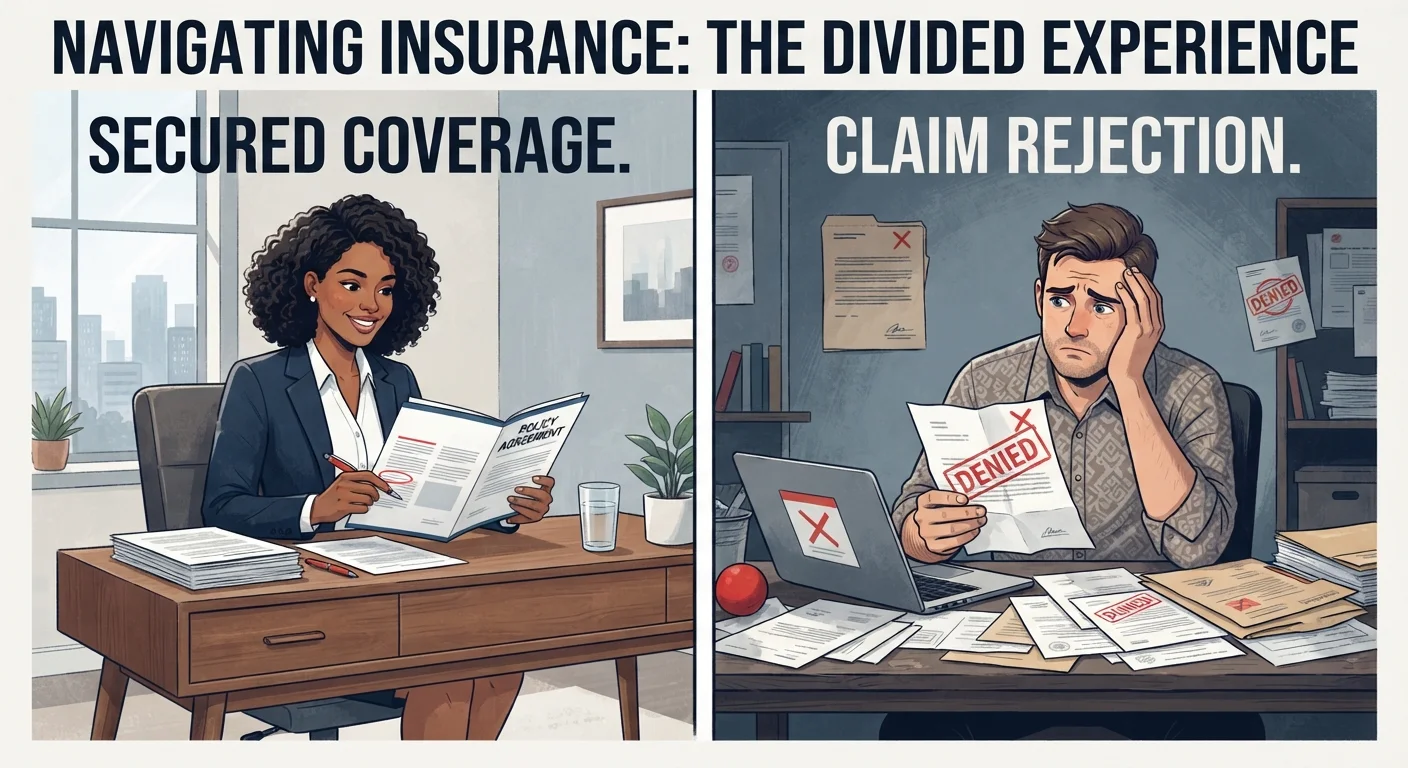
Why Insurance Myths Are a Financial Risk
Insurance exists to transfer financial risk - but only if you carry the right coverage in the right amounts. Misconceptions about how policies work can lead people to skip necessary protections, choose inadequate limits, or assume coverage exists where it doesn't. The result is often a costly surprise at precisely the moment a policy was supposed to help.
This article is general financial information, not personalized insurance or legal advice. Coverage terms, exclusions, and regulations vary by provider and state. Always read your actual policy documents and consult a licensed insurance professional for guidance tailored to your situation.
For a foundational look at how insurance works, see our insurance explainer. The myths below represent some of the most consequential misunderstandings consumers carry into coverage decisions.
Myth
Red cars cost more to insure because insurers charge more for brightly colored vehicles.
Fact
Vehicle color has no bearing on auto insurance premiums. Insurers do not use color as a rating factor.
This is one of the most durable insurance myths in circulation. Auto insurers set premiums based on factors such as the vehicle's make, model, age, engine size, safety record, repair costs, and the driver's history - not exterior color. When shopping for a vehicle, color is a personal preference, but it will not move your insurance quote in either direction.
Myth
Renters don't need their own insurance because the landlord's policy covers the building.
Fact
A landlord's property insurance covers the building structure - not a tenant's personal belongings or personal liability.
Landlord policies are designed to protect the property owner's investment: the physical structure, fixtures, and in some cases lost rental income. If a fire, burst pipe, or theft destroys or damages a tenant's furniture, electronics, clothing, or other possessions, the landlord's insurer has no obligation to reimburse those losses. Renters insurance is a separate, generally affordable policy that protects personal property and can also provide liability coverage if a guest is injured in the rental unit.
Myth
Carrying the state-minimum auto liability coverage is enough because it's the legal requirement.
Fact
Legal minimums define the floor, not an adequate level of protection. Serious accidents routinely exceed minimum limits, leaving drivers personally exposed.
State minimum liability limits exist to ensure some baseline of financial responsibility, but they were not designed to fully cover the costs of a significant accident. A multi-vehicle collision involving injuries, emergency care, and property damage can generate claims well above what minimum limits pay. When a judgment exceeds your policy limits, the difference can be pursued from your personal assets - savings, wages, or property. Many financial professionals recommend evaluating limits relative to your net worth and potential exposure, not just the legal minimum.
Myth
Having health insurance means you won't face large medical bills.
Fact
Health insurance reduces costs but rarely eliminates them. Deductibles, coinsurance, out-of-pocket maximums, and network exclusions can still result in substantial bills.
A health insurance policy is not a guarantee against large expenses - it's a cost-sharing arrangement. Depending on plan design, a policyholder may owe a deductible (a set amount paid before coverage kicks in), coinsurance (a percentage of costs after the deductible), and copayments for specific services. Care received outside a plan's network may be covered at a much lower rate or not at all. Understanding your plan's out-of-pocket maximum - the most you'd pay in a plan year - is one of the clearest ways to gauge actual financial exposure before a medical event occurs.
Myth
Life insurance through work provides reliable long-term coverage for your family.
Fact
Employer-provided life insurance is typically group coverage tied to employment - it generally ends when the job does.
Group life insurance offered as an employee benefit can be a useful supplement, but it carries a significant limitation: coverage is usually contingent on active employment. A layoff, career change, or retirement can sever that coverage immediately. Conversion options sometimes exist but may come at substantially higher individual premiums. Relying solely on employer-sponsored life insurance without understanding portability terms can leave dependents unprotected during transitions - often without warning.
Myth
Homeowners insurance covers all water damage, including flooding.
Fact
Standard homeowners policies typically cover sudden, accidental water damage but explicitly exclude flood damage from external sources.
Homeowners insurance policies generally distinguish between internal water damage - such as a burst pipe or a washing machine malfunction - and flooding caused by external water sources such as rising rivers, storm surge, or heavy rainfall runoff. The latter is almost universally excluded from standard homeowners policies. Flood coverage is typically available through separate policies, including those offered through the National Flood Insurance Program (NFIP) and some private carriers. Many homeowners in lower-risk flood zones assume they don't need flood coverage, but flood losses can and do occur outside designated high-risk areas.
What Getting Coverage Wrong Actually Costs
Each of these myths represents a real financial exposure. Carrying minimum-only auto liability limits can leave you personally responsible for tens of thousands of dollars after a serious accident. Believing a landlord's policy protects your belongings means losing everything in a fire with no reimbursement. Assuming employer-sponsored life insurance travels with you can leave dependents unprotected after a job change.
Policy Language Controls - Not Your Assumptions
What you believe your policy covers and what it actually covers can be entirely different things. Insurers are bound by the written policy document, not by common assumptions or verbal summaries. Before a loss occurs, review your declarations page and read the exclusions section of your policy carefully. If any language is unclear, a licensed agent can help you interpret it.
The pattern across all of these myths is similar: people make coverage decisions based on assumptions rather than policy language. Coverage gaps are rarely discovered until a claim is filed - often the worst possible time to learn. Our article on common coverage gaps explores specific shortfalls that catch households off guard.
A periodic policy review - comparing what you assume is covered against what your declarations page and policy language actually say - is one of the most straightforward ways to close these gaps. A licensed agent or independent broker can help you read policy exclusions and assess whether your limits remain appropriate as your assets and circumstances change. No article, including this one, can substitute for that professional review.
This article is for general informational purposes only and does not constitute insurance, financial, or legal advice. Policy terms, coverages, and regulations vary significantly by insurer and state. Consult a licensed insurance professional before making decisions about your coverage.
The content on this site is for informational purposes only and is not a substitute for professional advice. Always consult a qualified professional for guidance specific to your situation.