

Our Verdict
Bundling home and auto insurance is a financially sound move for many households, but it is not universally advantageous. The discount can be meaningful, and the administrative simplicity is genuine - yet neither benefit justifies accepting weaker coverage or paying more than separate policies would cost. Treat bundling as one option to price out, not a default decision.
Bundling is likely to work well for homeowners who already carry both policy types, prefer streamlined billing, and find that a single insurer offers competitive coverage terms and pricing for both lines.
What Bundling Actually Means
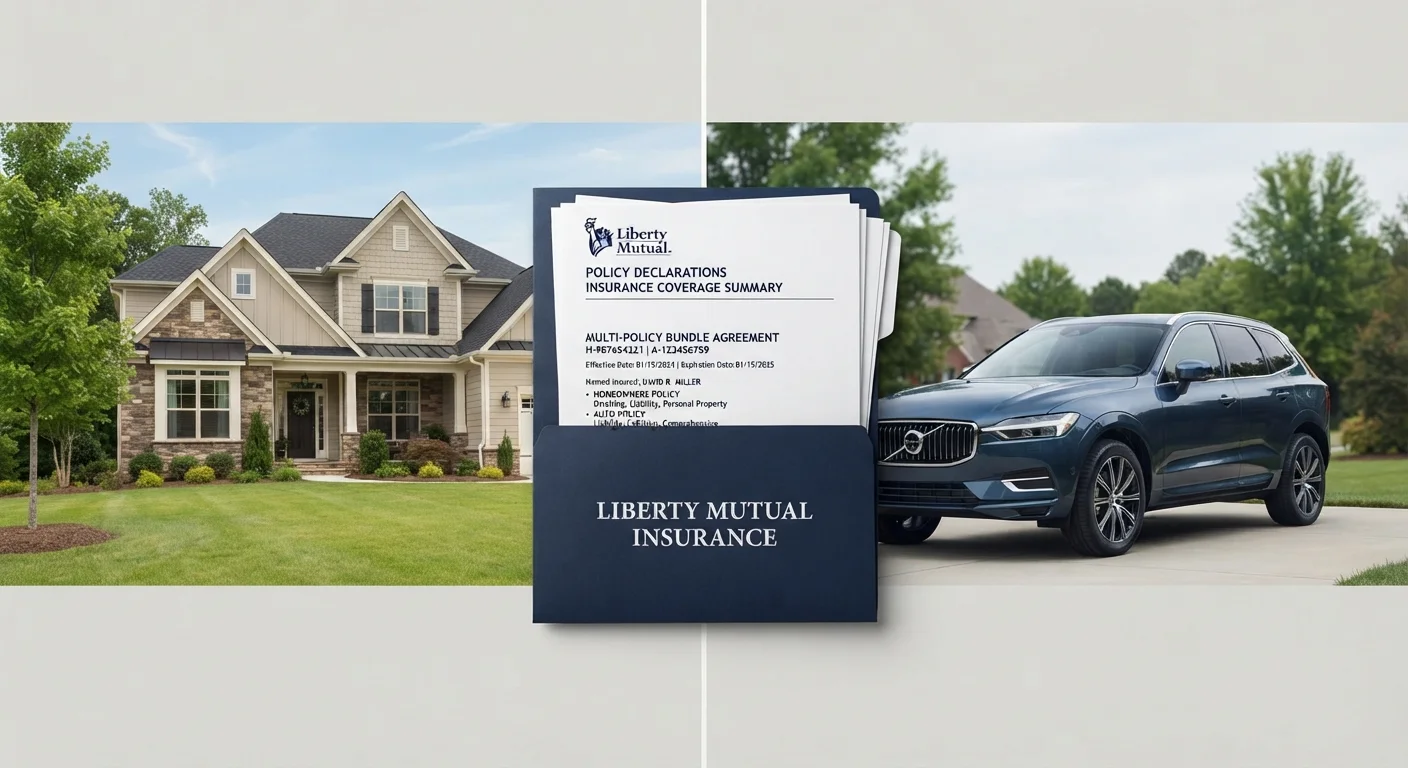
Bundling - sometimes called a multi-policy discount - refers to purchasing two or more insurance policies from the same carrier. In the home and auto context, it typically means your homeowners (or renters) policy and your auto policy are issued by the same company, often managed through a single account. Before weighing the trade-offs, it helps to understand the basics. If you are newer to how these policies are structured, this overview of how insurance works covers premiums, deductibles, and coverage fundamentals.
Insurers offer bundling discounts partly because retaining multiple lines of business from one customer is efficient for them - it reduces acquisition costs and increases loyalty. That shared interest creates the discount, but it does not guarantee the discount outweighs all other considerations.
The Case For Bundling
There are several genuine advantages to consolidating your home and auto coverage under one roof.
Multi-policy discounts can reduce total premium costs
Many insurers offer discounts ranging roughly from 5% to 25% when policies are bundled, though actual savings depend on the carrier, your location, and your coverage profile. Always verify the net cost against separate quotes.
Simplified billing and account management
One insurer means one set of login credentials, one billing cycle, and one point of contact for renewals and changes - reducing administrative friction for busy households.
Coordinated claims when incidents overlap
When a single event affects both your home and vehicle, having one insurer can streamline the claims process and reduce the back-and-forth between separate companies.
Potential for a single combined deductible
Some carriers allow a single deductible to apply when one event triggers claims on both policies simultaneously, which can limit out-of-pocket exposure in qualifying situations.
Loyalty perks and easier policy reviews
Consolidated customers may find it easier to conduct annual coverage reviews and, in some cases, access additional loyalty-based benefits or preferred renewal terms.
5-25%
Typical multi-policy discount range
Industry estimates suggest bundling home and auto can yield discounts in this range, though actual figures vary significantly by carrier, state, and individual risk profile.
~65%
U.S. households with both home and auto insurance
A large share of American households carry both policy types, making bundling a widely applicable consideration rather than a niche strategy.
Beyond savings, having a single insurer means one renewal cycle to track, one customer service relationship to manage, and potentially smoother claims handling when an incident involves both your vehicle and your property - for example, a car driven into a garage door. Some insurers also offer a single deductible option when a claim touches both policies simultaneously, which can reduce out-of-pocket costs in overlapping scenarios.
The Case Against Bundling
Bundling is not the right call in every situation, and the arguments against it are worth taking seriously.
The bundle discount may not be the lowest total cost
Specialist carriers for auto or home may offer base rates that outperform a bundled discount from a generalist insurer. Without running separate quotes, it is impossible to know which structure costs less overall.
Switching one policy requires moving both
If your auto insurer significantly raises rates or your claims experience with one line is poor, you face the friction of shopping and moving two policies at once rather than replacing just the underperforming one.
Concentrates risk with a single company
A carrier that becomes financially distressed, exits your state's market, or handles claims poorly affects all your coverage at once rather than just one line.
Coverage quality may be uneven across lines
An insurer's strength in auto underwriting does not guarantee equal quality in homeowners coverage. Bundling can mean accepting weaker coverage on one policy to preserve the discount.
Discount amounts can change at renewal
Bundling discounts are not locked in permanently. Carriers may restructure pricing at renewal, meaning the savings that justified the bundle initially may narrow over time.
It is also worth noting that some carriers are stronger in one line than another. An insurer well-regarded for auto coverage may carry lower ratings for home claims satisfaction - or vice versa. Bundling forces a compromise. For a deeper look at how policy language and exclusions affect what you actually receive, reading an insurance policy without getting lost in the fine print is a useful next step.
How to Evaluate Whether Bundling Makes Sense for You
The clearest way to assess bundling is to gather parallel quotes: one from a carrier offering both policies as a bundle, and separate quotes from specialists in each line. Compare total annual premiums, but also compare coverage limits, deductibles, and exclusions - not just price.
Renters Insurance Counts Too
Bundling is not limited to homeowners. Renters who carry renters insurance alongside an auto policy are often eligible for the same multi-policy discounts. The same evaluation logic applies: compare the bundled total against separate specialist quotes before deciding. If you are considering expanding liability coverage beyond standard home and auto limits, umbrella insurance is a related concept worth understanding.
Ask each insurer what the discount actually represents. Some carriers list a bundling discount but offset it with higher base rates, meaning the net price is not materially different from competitors. Questions worth asking an insurance agent before committing can help you probe past the discount language to understand total value. If you own a vehicle and are still learning the coverage components involved, auto insurance basics every car buyer should understand provides a helpful foundation for that side of the comparison.
This article is for general informational purposes only and does not constitute personalized insurance, financial, or legal advice. Coverage terms, discounts, and regulations vary by insurer and state. Consult a licensed insurance agent or adviser to evaluate options specific to your circumstances.
The content on this site is for informational purposes only and is not a substitute for professional advice. Always consult a qualified professional for guidance specific to your situation.