

More Than a Personality Quiz
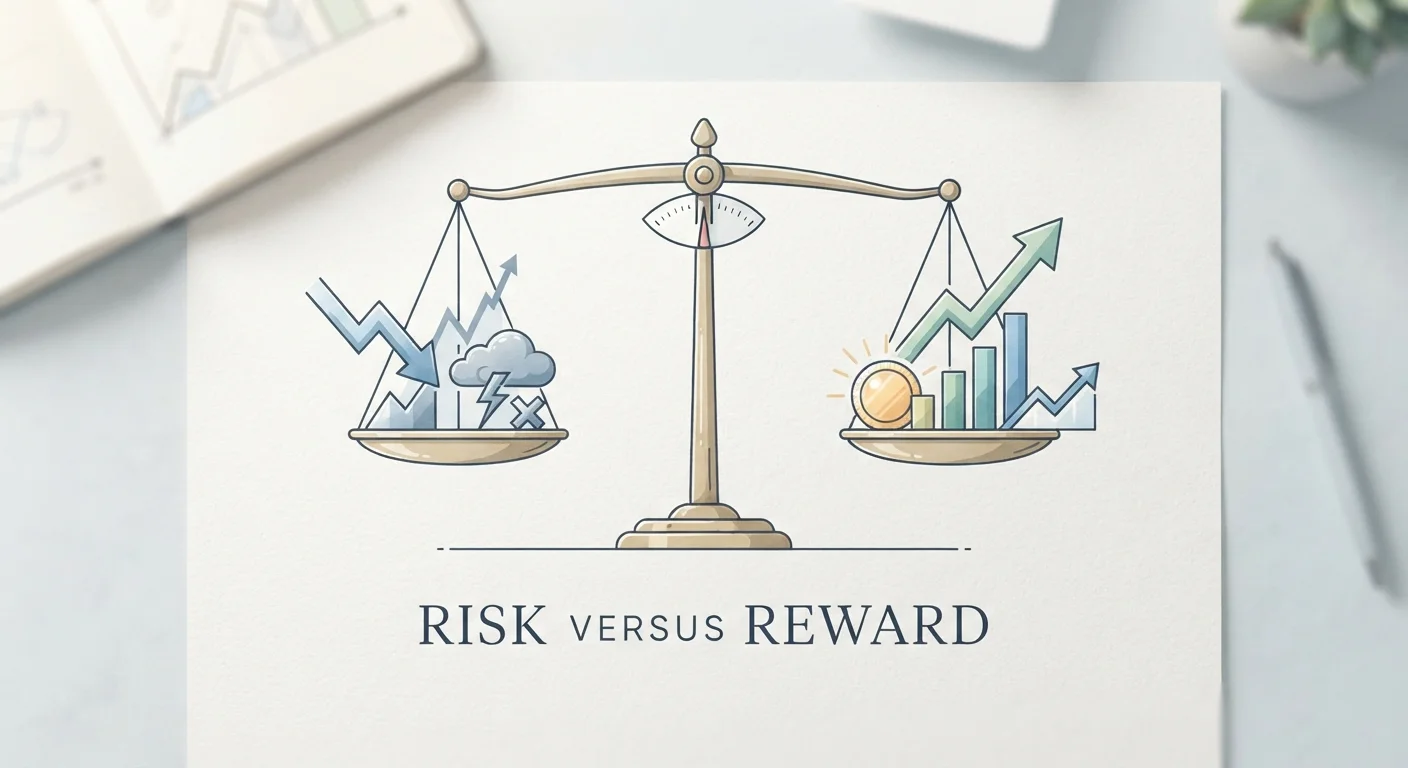
When financial advisers ask about risk tolerance, they are not simply trying to gauge whether you are a cautious or adventurous person. Risk tolerance is a structured concept that sits at the intersection of psychology and financial planning. It shapes decisions about which investment vehicles to use, how to allocate assets across categories, and how to respond when markets move against you.
Most introductory investing resources - including our guide to key investing terms - touch on risk as part of the vocabulary every new investor needs. But risk tolerance deserves its own examination, because it functions as a filter through which nearly every other investment decision passes.
At its core, it answers one question: how much uncertainty can you genuinely live with? The answer is not just emotional - it is practical, shaped by timelines, income stability, and the consequences of getting it wrong.
The Two Dimensions: Willingness and Capacity
Professionals typically split risk tolerance into two components that do not always move together.
- Risk willingness is psychological - your gut reaction to seeing an account balance drop 20% in a quarter. Some investors view that as an opportunity; others find it deeply distressing. Neither response is wrong, but ignoring your honest reaction leads to poor decisions under pressure.
- Risk capacity is financial - whether your income, savings, and time horizon can absorb a significant loss without derailing essential goals. A 35-year-old with stable employment and decades before retirement has more capacity than someone who retires in two years and relies on their portfolio for income.
Both dimensions matter. A high willingness to accept risk does not help if a loss would mean missing mortgage payments. Conversely, a strong financial position does not protect you from panic-selling when markets turn sharply negative.
Risk Tolerance Is Not Static
Many investors treat risk tolerance as a fixed characteristic, but it evolves. A significant pay raise, the arrival of a child, or approaching retirement can all shift both your willingness and your capacity for risk. Periodic review - often annually or after major life changes - helps ensure your portfolio remains aligned with your current situation rather than where you were years ago.
How Risk Tolerance Is Assessed
Financial professionals use several approaches to gauge where a client falls on the risk spectrum:
- Questionnaires: Standardized surveys ask how you would react to hypothetical loss scenarios, your investment timeline, income predictability, and existing financial obligations. The output is a general profile - commonly categorized as conservative, moderate, or aggressive.
- Time horizon analysis: Longer time horizons generally support higher risk because there is more runway to recover from downturns. A 30-year retirement savings plan can weather volatility more easily than a five-year college savings fund.
- Financial snapshot: Income, existing savings, debt levels, and dependents all feed into capacity. An emergency fund, for instance, reduces the risk that an investor would need to liquidate investments at an inopportune moment.
No questionnaire perfectly captures the complexity of individual circumstances, and self-reported answers can be optimistic. Many people overestimate their emotional tolerance until they experience a real drawdown. This is why the process is most useful when treated as a starting point for conversation rather than a definitive verdict.
Risk Tolerance, Asset Allocation, and Diversification
Once risk tolerance is understood, it directly informs asset allocation - how a portfolio is divided among different categories such as stocks, bonds, and cash equivalents. Generally speaking:
- Higher risk tolerance points toward a larger allocation to equities, which carry greater volatility but historically higher long-term return potential.
- Lower risk tolerance typically favors a larger share of fixed-income instruments like bonds, which tend to be less volatile but offer lower return potential.
Risk tolerance also intersects with diversification - the practice of spreading investments across asset types and geographies to reduce exposure to any single point of failure. Our article on diversification and portfolio logic explores this relationship in depth. Diversification does not eliminate risk, but it can help manage how risk is distributed within a portfolio that is already calibrated to your tolerance.
This article is for general informational and educational purposes only and does not constitute personalized financial, investment, or tax advice. Consult a qualified financial adviser before making decisions based on your individual circumstances.
Frequently Asked Questions
Risk tolerance refers to how emotionally comfortable you are with the possibility of losing money. Risk capacity is about whether your financial situation can actually sustain a loss without threatening your goals. Both matter when building a portfolio - high emotional tolerance doesn't help if a loss would derail essential plans.
Financial professionals commonly use questionnaires that probe your investment time horizon, income stability, reaction to hypothetical market downturns, and prior investment experience. These tools produce a general profile - conservative, moderate, or aggressive - which helps guide asset allocation decisions.
Yes. Risk tolerance is not a permanent trait. It often shifts with age, as people approaching retirement typically reduce exposure to volatile assets. Major life events - job loss, inheritance, health changes - can also alter both your emotional tolerance and financial capacity for risk.
Higher risk is associated with the potential for higher returns, but it also means a greater chance of significant losses. The relationship is probabilistic, not guaranteed. Past performance of any asset class does not ensure future results.
A mismatch often surfaces during market downturns. Investors holding more risk than they can emotionally handle may sell at a loss during volatility, locking in negative returns. Conversely, an overly conservative portfolio may fail to grow enough to meet long-term goals.
The content on this site is for informational purposes only and is not a substitute for professional advice. Always consult a qualified professional for guidance specific to your situation.