

Start here
Understanding the Scale of the East Coast
Next
The Major Destinations at a Glance
Then
Getting Between Cities
When you're ready
Climate, Seasons, and Timing
Before you book
Entry, Visas, and Practical Logistics
Understanding the Scale of the East Coast
One of the most consistent planning mistakes international visitors make is underestimating how large Australia actually is. The east coast — running from Cairns in far north Queensland down through Brisbane, Sydney, and Melbourne — spans roughly 2,700 kilometers (about 1,700 miles). That is comparable to driving from New York City to Dallas.
This scale matters enormously for itinerary planning. Visitors who allocate two weeks to "do the east coast" typically find themselves either rushing through cities superficially or cutting stops entirely. A realistic orientation starts with acknowledging that the corridor contains multiple distinct regions, each requiring dedicated time.
Distances Are Deceptive on Maps
Standard world maps compress Australia's size relative to familiar continents. The Sydney–Melbourne drive alone takes roughly 8–9 hours by car under good conditions. When planning your itinerary, always check actual travel times rather than relying on map appearance.
If you are new to planning international trips, see our complete trip planning guide for a structured framework before you commit to any itinerary.
The Major Destinations at a Glance
Each of the three anchor cities on the east coast has a distinct character, and treating them as interchangeable stops is a mistake.
- Brisbane is Queensland's capital — a subtropical, relatively compact city that serves as the gateway to the Gold Coast beaches to the south and the Sunshine Coast to the north. It has a more relaxed pace than its southern counterparts.
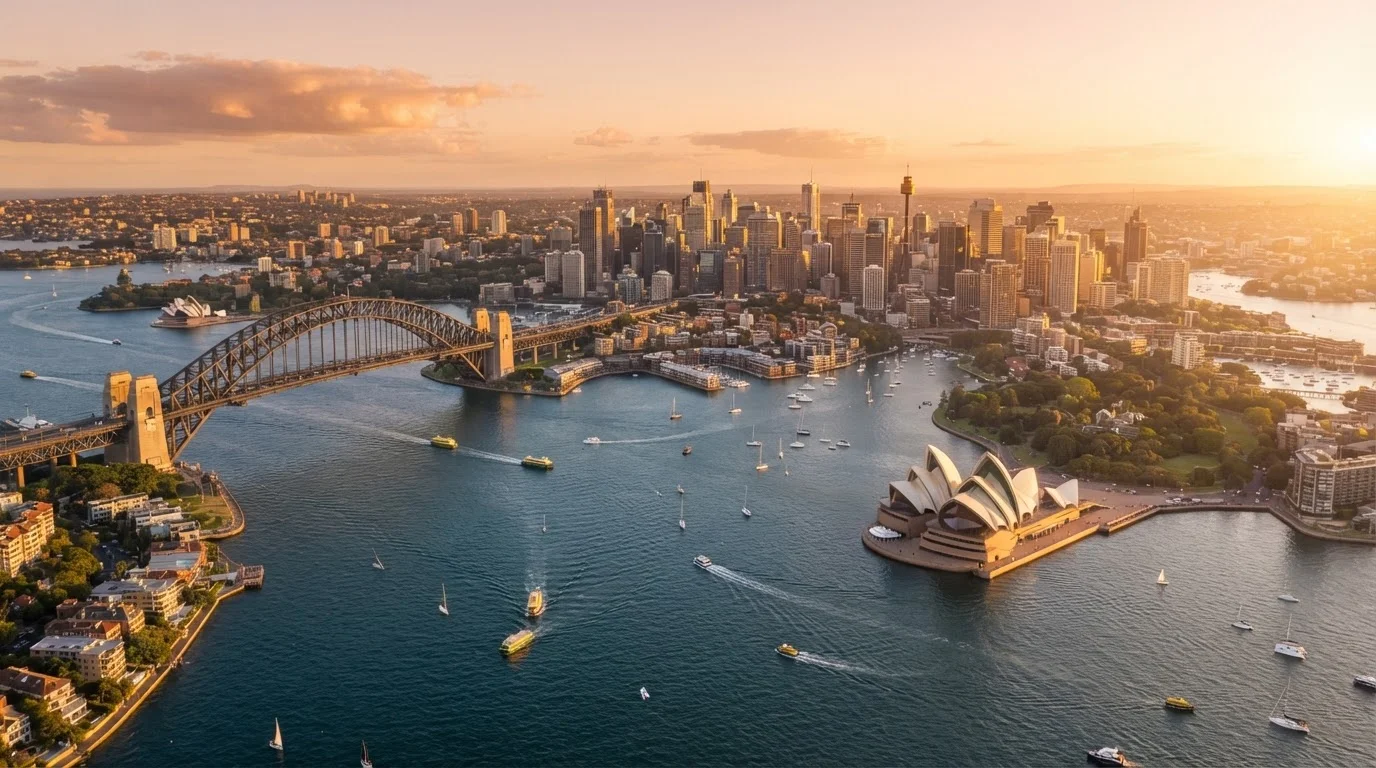
- Sydney is Australia's largest city and the most internationally recognized. Its harbor geography is central to the experience, and it rewards visitors who spend at least four to five days here. It is also a common international arrival point.
- Melbourne is the cultural and culinary center of the corridor — known for laneways, arts institutions, and café culture. It sits at the southern end of the route and has a notably different urban feel from Sydney.
Beyond these cities, the corridor includes significant regional draws: the Hunter Valley wine region north of Sydney, the Great Ocean Road southwest of Melbourne, and — much further north — the Whitsundays and Cairns as gateways to the Great Barrier Reef.
Getting Between Cities
Sequence Your Cities North to South (or Vice Versa)
Flying into one city and out of another — rather than returning to your starting point — eliminates backtracking and often costs no more. For example, arriving in Brisbane and departing from Melbourne creates a natural linear journey. Confirm one-way flight pricing early, as it varies significantly.
Domestic flights connect the major cities frequently throughout the day. The Sydney–Melbourne route is one of the busiest domestic air corridors in the world, with flights taking approximately one hour and fifteen minutes. Brisbane to Sydney takes roughly one hour and twenty minutes by air.
Intercity rail exists — most notably the XPT train between Sydney and Melbourne — but journey times are long (around eleven hours overnight) and pricing is not consistently lower than flying. Rail travel suits those who prefer a slower pace or want to see countryside, but it is not the default efficient choice for time-limited visitors.
Renting a car gives flexibility for regional exploration but is not practical or necessary for city-to-city movement on the main corridor. Australian roads use the left-hand lane; visitors from left-hand-drive countries should factor in an adjustment period.
Climate, Seasons, and Timing
The east coast spans multiple climate zones, so seasonal planning is more nuanced than it appears. Australia's summer runs December through February — the southern hemisphere is opposite to North America and Europe.
| Region | Summer (Dec–Feb) | Winter (Jun–Aug) |
|---|---|---|
| Brisbane / Queensland | Hot, humid, wet season | Mild, dry — often ideal |
| Sydney | Warm, occasional heat waves | Cool, mostly dry |
| Melbourne | Hot but highly variable | Cold, rainy |
Shoulder seasons (March–May and September–November) are generally the most comfortable periods across the full corridor. School holiday periods in Australia — particularly late December through January — bring heavy domestic tourism, higher accommodation costs, and crowded attractions.
Entry, Visas, and Practical Logistics
Most international visitors to Australia — including US citizens — require an Electronic Travel Authority (ETA) or a conventional visa before arrival. Australia does not offer visa-on-arrival to the majority of nationalities. The ETA is available through official government channels and must be linked to your travel passport before departure.
Don't Leave Visa Applications to the Last Minute
Australia does not grant visas on arrival to most nationalities, including US citizens. Processing times can vary, and traveling without the correct authorization can result in denied boarding. Check the official Australian Department of Home Affairs website for current requirements well before your departure date.
Beyond the visa, a few practical orientations help. Australia uses the Australian Dollar (AUD). Electrical outlets require a Type I adapter. Emergency services are reached by dialing 000. Tipping is not culturally expected the way it is in the US, though it is appreciated in some service contexts.
For a full pre-departure checklist covering documents, finances, and health considerations, the pre-trip checklist walks through each category systematically. First-time international travelers may also find useful grounding in what first-timers wish they'd known before departure.
Travel conditions, visa requirements, and entry rules can change. Always verify current requirements with the Australian Department of Home Affairs and your country's relevant consular resources before booking travel.
Frequently Asked Questions
A meaningful trip covering Brisbane, Sydney, and Melbourne with some regional stops typically requires three to four weeks minimum. Rushing it into two weeks means skipping most of what makes each city worth visiting. Many travelers underestimate the distances involved.
Flights are usually faster and often similarly priced to full-price rail tickets on long routes like Sydney–Melbourne. Trains offer scenery and a more relaxed pace but take significantly longer. The choice depends on your schedule and travel style.
Yes. US citizens are not visa-exempt and must apply for an Electronic Travel Authority (ETA) or another visa before traveling. The ETA is typically obtained online through official channels. Always verify current requirements with Australian government immigration sources before booking.
Shoulder seasons — March to May and September to November — generally offer moderate weather across most of the corridor and fewer crowds than peak summer. Summer (December–February) brings heat and humidity in the north, while Melbourne's weather is famously variable year-round.
Not directly. The primary gateway to the Great Barrier Reef is Cairns, in far north Queensland, which is well north of Brisbane. Most visitors fly from Brisbane or Sydney to Cairns as a separate leg of their trip rather than driving.
Australia is generally considered an expensive destination by international standards. Daily costs vary widely depending on accommodation type and activities, but budget travelers should expect to spend more than in many comparable countries. Research current accommodation and food costs before finalizing a budget.
The content on this site is for informational purposes only and is not a substitute for professional advice. Always consult a qualified professional for guidance specific to your situation.