

Our Verdict
A weekend in Rome is absolutely worthwhile, but it rewards focused planning over ambition. Visitors who choose three or four sites, book entry tickets in advance, and stay centrally will leave with a genuine sense of the city. Those who try to pack in every major landmark often spend their time in queues and transit rather than actually experiencing Rome.
Best for travelers who can accept a curated, selective experience and are comfortable doing meaningful advance research before they arrive.
What Two Days in Rome Can Realistically Deliver
Rome is one of the most historically dense cities in the world. Within a few square miles, you'll find layers of civilization spanning more than two millennia — and that density is both the appeal and the challenge for a short visit.
On a genuine two-day trip (arriving Friday evening, departing Sunday night, for example), most travelers can expect to visit between three and five major sites with reasonable depth. That typically means one anchor site per half-day — the Colosseum and Roman Forum in one block, the Vatican Museums and St. Peter's Basilica in another, and perhaps the Pantheon or Borghese Gallery as a third focus.
What fills the gaps matters just as much: the walk along cobbled streets between sites, a sit-down lunch, an unplanned detour through a neighborhood piazza. These moments are part of Rome's actual appeal, and rushing past them to tick off more landmarks usually produces a less satisfying trip. See how to build an itinerary that leaves room for flexibility for a framework that applies directly here.
The Case for a Short Rome Trip
Historic core is compact and walkable
Key landmarks in central Rome are close enough to cover on foot, reducing the need for taxis or metro rides between sites.
High visual impact even in limited time
Rome's ancient structures within a modern city create an immediate, powerful impression that doesn't require an extended stay to experience.
Strong transport links from both airports
Fiumicino and Ciampino both have reliable rail and bus connections to the city center, making arrival and departure straightforward.
Rich food culture accessible at any pace
Rome's food scene — from espresso bars to trattorias — is woven into the streets, meaning meals are part of the experience rather than a detour from it.
Rome's historic core is surprisingly walkable. The Pantheon, Piazza Navona, Campo de' Fiori, and the Trevi Fountain are all within a 15-minute walk of each other. A well-placed hotel means you lose very little time to transportation. The city also has excellent public transit connections from both main airports, which simplifies arrival logistics.
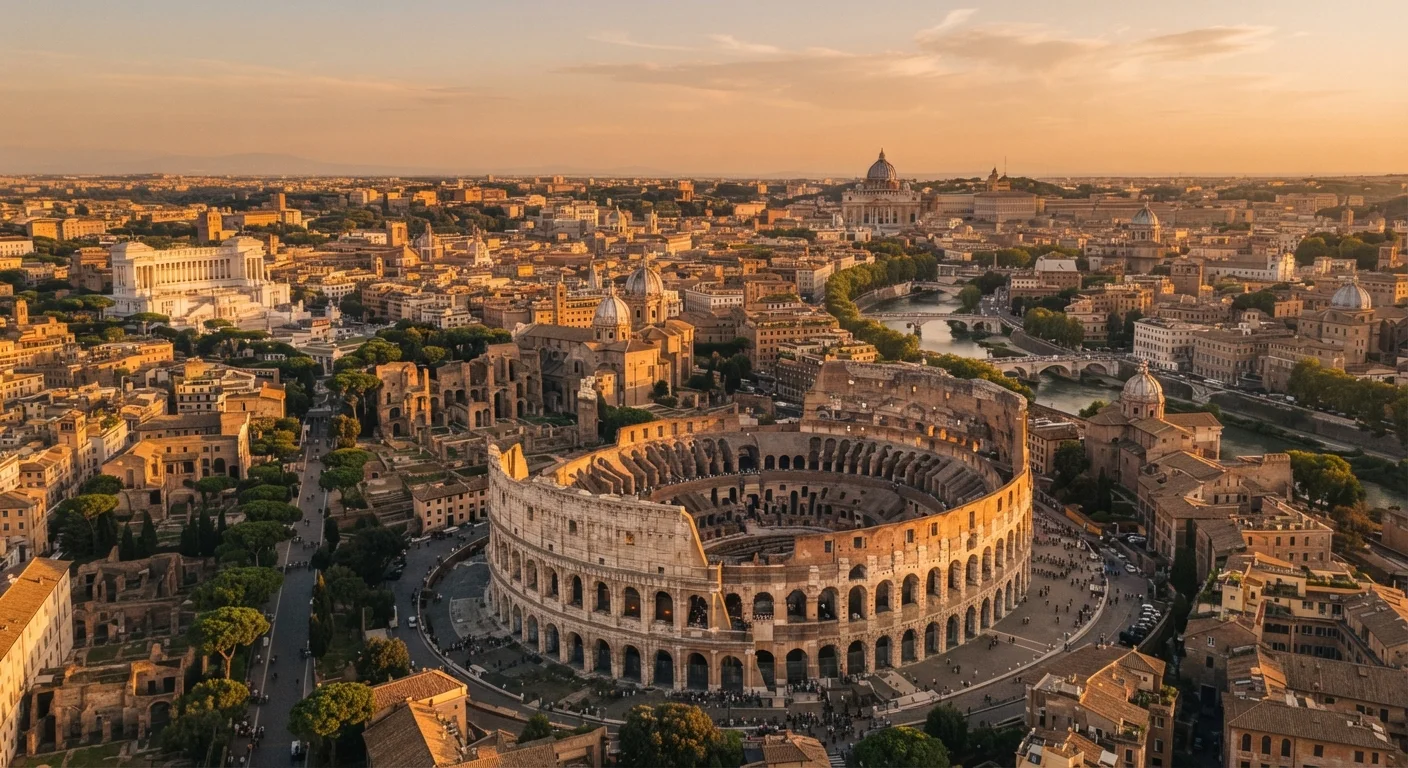
For first-time visitors, even a compressed introduction to Rome tends to be memorable. The sheer visual impact of ancient structures set into a living, functioning city is unlike almost anywhere else. You don't need a week to feel that — two focused days can be enough to make the trip feel worthwhile.
What a Weekend Trip Leaves Out
Most major sites require advance ticket booking
The Colosseum, Vatican Museums, and Borghese Gallery all use timed-entry systems that frequently sell out, especially in spring and summer.
Distances longer than maps suggest
What looks like a ten-minute walk on a map often takes 20–30 minutes on Rome's uneven cobblestones, especially in summer heat.
No time for neighborhoods or day trips
Areas like Trastevere, Testaccio, and sites like Ostia Antica require more time than a weekend itinerary can absorb without sacrificing major landmarks.
Museum fatigue limits what you can absorb
The Vatican Museums and Roman Forum are each multi-hour experiences; combining them in one day leaves most visitors mentally saturated by mid-afternoon.
Crowds are a constant at top sites year-round
Even in shoulder season, the Trevi Fountain, Colosseum exterior, and Vatican Square draw large crowds that affect both experience and movement.
The honest trade-off is that Rome has far more than a weekend can accommodate. Day trips to Ostia Antica, Tivoli, or the Appian Way are effectively off the table. Neighborhoods like Trastevere, Pigneto, and Testaccio — which offer a less tourist-concentrated version of Roman life — often get reduced to a single evening stroll at best.
Museum fatigue is also a real factor. The Vatican Museums alone can take three to four hours, and trying to follow that with the Colosseum the same day typically means diminishing returns for both. A weekend forces you to choose between breadth and depth, and most travelers find they underestimate how long each site actually takes.
Short Breaks Require a Different Planning Logic
A weekend trip isn't a condensed version of a longer holiday — it's a different kind of trip entirely. Decisions about what to skip are just as important as decisions about what to include. Consider what you actually want to feel at the end of two days, and plan backward from that rather than forward from a list of landmarks.
Consider how the same planning logic applies when comparing a short break to a longer trip. Planning a long trip versus a short break involves genuinely different decision-making from the start.
Crowds, Queues, and the Booking Reality
Rome's most visited sites have implemented timed-entry ticketing systems, particularly the Colosseum and the Vatican Museums. This isn't optional guidance — showing up without a pre-booked slot often means being turned away or waiting hours. Tickets for peak periods can sell out days or weeks in advance depending on the season.
7M+
Annual visitors to the Colosseum
The Colosseum is consistently among the most visited paid attractions in the world, contributing to its advance-booking requirement for most entry slots.
6M+
Annual visitors to Vatican Museums
Vatican Museums draws roughly six million visitors per year, making same-day or walk-up entry highly unreliable during peak travel periods.
Visitors who don't book ahead frequently report losing a significant portion of their available time to queue management rather than sightseeing. This is one of the most concrete ways a short trip goes wrong, and it's entirely avoidable with advance planning. For a fuller picture of how to structure your pre-trip logistics, trip planning from scratch covers the full sequence from research to booking order.
Making the Most of a Limited Window
A few practical decisions shape the quality of a Rome weekend more than any specific itinerary. Staying within the historic center — roughly bounded by the Tiber and the main ancient sites — eliminates transit time that would otherwise eat into your days. Eating at off-peak hours (lunch before 12:30 or after 2:00, dinner after 8:00 PM local time) reduces wait times at restaurants and gives you more time on your feet exploring.
It also helps to define upfront what you actually want from the trip. If the priority is Roman antiquity, concentrate on the Forum, Palatine Hill, and the Colosseum. If it's art and religious history, the Vatican and Borghese Gallery form a coherent focus. Mixing both in two days is possible, but only if you're honest about the pace required — and what you're willing to move quickly through.
Budget planning is worth addressing before you go. Entry fees for major Rome sites, combined with accommodation in a central neighborhood, make this a trip where costs can escalate quickly. Building a travel budget that holds up is a useful reference for anticipating the full cost picture before you book.
The content on this site is for informational purposes only and is not a substitute for professional advice. Always consult a qualified professional for guidance specific to your situation.