

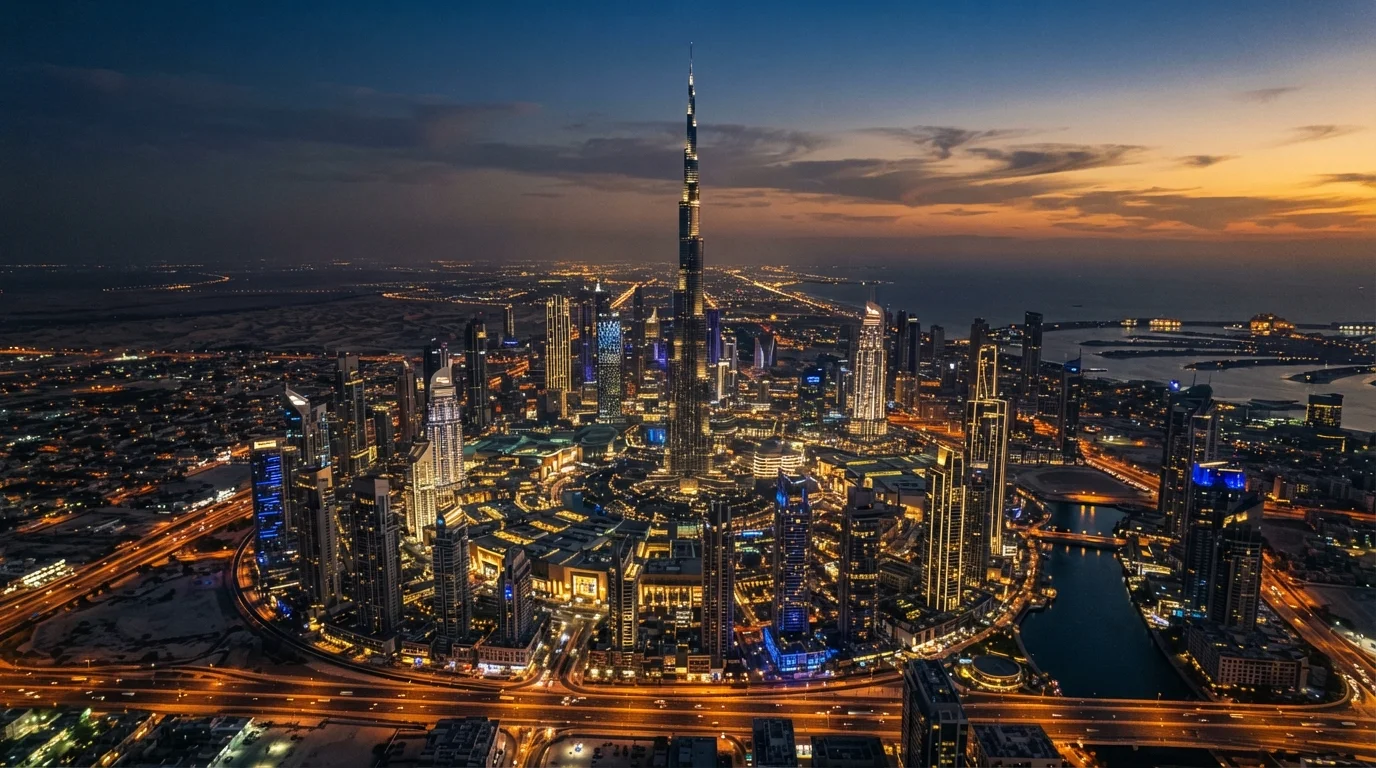
What Dubai Actually Is — and Where It Sits
Dubai is one of seven emirates constituting the United Arab Emirates, a federal Gulf nation bordered by Saudi Arabia and Oman, with coastline on the Persian Gulf. Within the UAE, Abu Dhabi is the capital and the wealthiest emirate by oil reserves; Dubai built its modern economy largely on trade, real estate, tourism, and financial services after its oil reserves proved limited.
Geographically, the city spans a flat desert landscape along a roughly 40-mile stretch of coastline. The urban core is dense with skyscrapers, while older neighborhoods — Deira and Bur Dubai on either side of the historic Dubai Creek — retain a market-town character that predates the modern building boom. Visitors who spend time only in new districts like Downtown Dubai or Dubai Marina will see a very different city than those who explore the creek-side souks and older residential quarters.
Dubai vs. the UAE: A Useful Distinction
Rules and norms vary by emirate. Sharjah, adjacent to Dubai, prohibits alcohol entirely and enforces stricter public conduct standards. Abu Dhabi, the federal capital, has its own distinct cultural and regulatory character. Travelers visiting multiple emirates in one trip should research each location separately rather than assuming Dubai's norms apply throughout the country.
The Legal and Cultural Environment
The UAE operates under a dual legal system: federal civil law and Islamic (Sharia) law, which applies primarily to family and personal status matters for Muslims. For non-Muslim visitors, the practical implications are mainly behavioral. Public displays of affection beyond handholding can result in fines. Same-sex relationships are criminalized under UAE law — LGBTQ+ travelers should research current conditions carefully and consult travel advisories from their government before visiting.
Ramadan, the Islamic holy month, significantly changes the city's rhythm. Eating, drinking, and smoking in public during daylight hours is prohibited for everyone, not just Muslims. Most hotels and malls provide designated areas. Travelers visiting during Ramadan encounter a quieter, more reflective city — one that many find unexpectedly rewarding, though the scheduling adjustments are real.
Before You Book: Check Official Travel Advisories
The US Department of State and the UAE's Federal Authority for Identity and Citizenship both publish current entry requirements, safety conditions, and legal notices for travelers. Laws around social media posts, VPN use, and certain medications imported from abroad have caught travelers off guard — reviewing official sources before departure is strongly recommended, not optional.
Who Dubai Is For — and Who May Find It Limiting
Dubai works well for travelers drawn to architecture and urban spectacle, international cuisine, luxury retail, desert excursions, and major events. It functions as one of the world's premier transit hubs, and many travelers pass through without a dedicated stay. Business travelers will find world-class infrastructure, a stable currency pegged to the US dollar, and a city oriented around efficiency.
Travelers seeking immersive cultural authenticity may find Dubai's older districts — the Al Fahidi Historical Neighbourhood, the spice and gold souks — more rewarding than the gleaming newer zones. The city is not, however, a destination defined by ancient ruins, deep indigenous culture, or untouched nature. It is a deliberately constructed modern metropolis, and visitors who arrive expecting otherwise often leave disappointed.
Travelers with tighter budgets will find Dubai manageable if expectations are calibrated. Mid-range hotels and affordable dining exist, particularly outside the marina and downtown corridors. That said, the city's marketing and dominant narrative skew heavily toward luxury. Just as first-time visitors to Southeast Asia often carry mismatched expectations, Dubai frequently attracts visitors who misread it as either more restrictive or more permissive than it actually is.
~85%
Expatriates as share of Dubai's population
Widely cited in UAE government and international demographic analyses; Emirati nationals make up a small minority of the city's residents.
88M+
Annual passengers through Dubai International Airport
Dubai International has ranked among the world's busiest airports by international passenger volume in recent years, per Airports Council International data.
40 years
Approximate age of Dubai's modern skyline
Most of Dubai's iconic architecture was constructed after the 1980s; the Burj Khalifa, the world's tallest building, opened in 2010.
Key Things Dubai Is Not
Dubai is not a country. Travelers sometimes conflate it with the UAE broadly, or assume that norms observed in Dubai apply uniformly across the federation — Abu Dhabi and Sharjah, for example, have meaningfully different rules around alcohol and public entertainment.
It is also not a destination frozen in tradition. The Dubai of the 1970s barely resembles the city today; the skyline was built almost entirely within the last 40 years. Visitors arriving with romanticized Gulf imagery — endless dunes, pearl diving heritage, untouched desert life — will find that those elements exist but are largely curated for tourism rather than lived daily reality.
Finally, Dubai is not uniformly expensive or uniformly affordable. Cost depends heavily on which layer of the city a traveler engages with. Setting clear expectations before booking — about accommodations, activities, and behavioral norms — is the single most effective way to avoid a frustrating trip.
Frequently Asked Questions
US passport holders generally receive a visa on arrival for stays up to 30 days, with possible extensions. However, visa rules can change, so verify current requirements through the UAE government's official immigration portal or your nearest UAE embassy before traveling.
Yes, alcohol is legally available in licensed hotel bars, restaurants, and private clubs. It is not sold in public spaces or non-licensed venues. Public intoxication is a criminal offense under UAE law, regardless of where the alcohol was consumed.
Dubai is relatively relaxed compared to other Gulf cities, but modest dress is expected in public spaces, malls, and religious sites — meaning shoulders and knees covered. Swimwear is appropriate at beach and pool areas. Overly revealing clothing in shopping areas or residential streets can draw official attention.
Dubai is generally considered safe for solo female travelers by regional and global standards. Women travel there extensively for business and leisure. That said, understanding local norms around dress and behavior in public spaces helps avoid unwanted friction.
November through March offers the most comfortable outdoor temperatures, typically ranging from the mid-60s to low 80s °F. Summer months (June–September) see extreme heat, often exceeding 105°F, which limits outdoor activity significantly.
Yes. Dubai has an extensive dining, culture, and leisure scene that does not revolve around alcohol. Many restaurants are fully alcohol-free, and the city's malls, souks, beaches, and cultural attractions are accessible to all visitors regardless of lifestyle.
The content on this site is for informational purposes only and is not a substitute for professional advice. Always consult a qualified professional for guidance specific to your situation.