

What Travel Advisories Are Actually Designed to Do
Travel advisories exist because governments have access to intelligence, on-the-ground diplomatic reporting, and coordination with foreign officials that individual travelers simply don't. The goal isn't to scare people away from destinations — it's to share a structured, current assessment of conditions so travelers can factor real risk into their planning decisions.
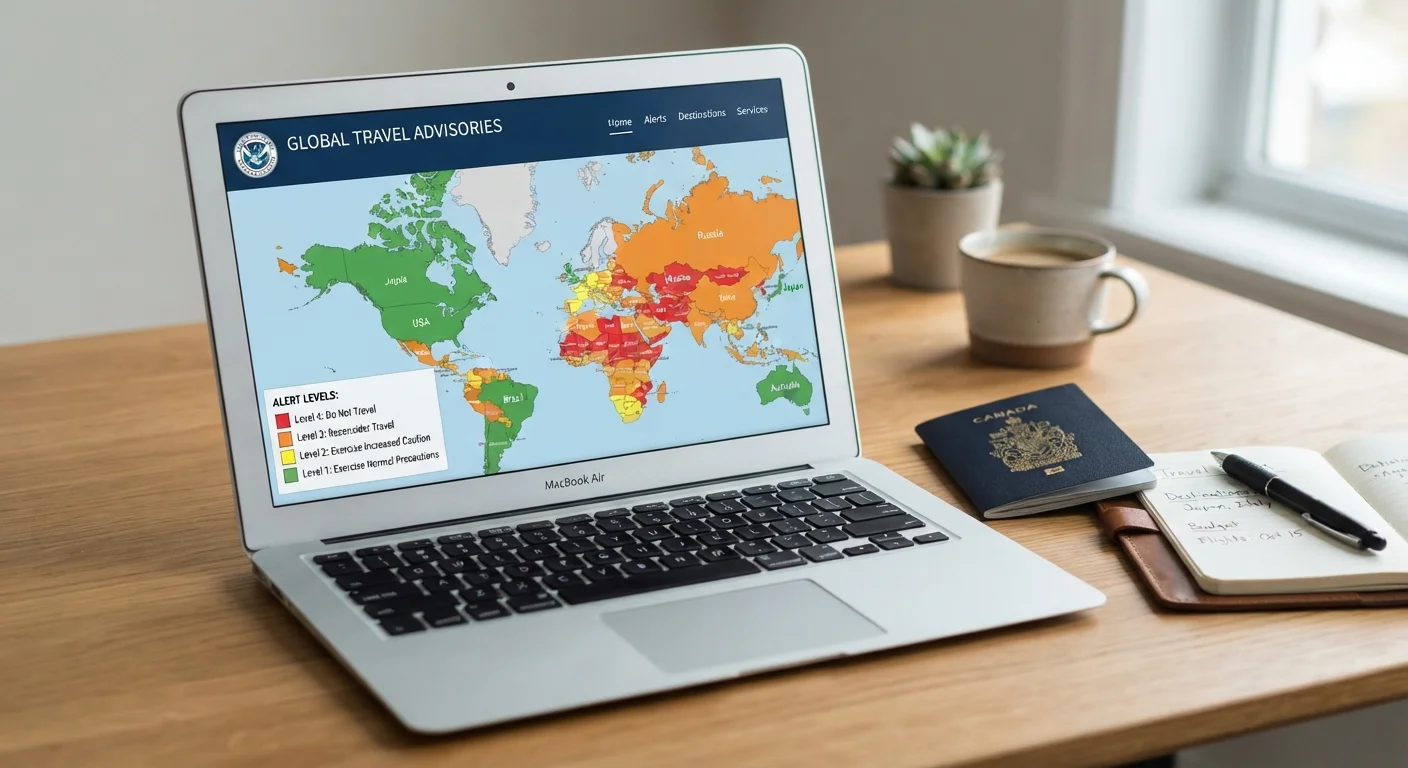
The U.S. State Department's system uses four levels. Level 1 (Exercise Normal Precautions) means conditions are broadly comparable to other international destinations. Level 2 (Exercise Increased Caution) flags specific concerns — a high petty crime rate in certain tourist zones, for example — that warrant extra awareness. Level 3 (Reconsider Travel) signals that safety and security conditions are serious enough that the State Department believes travelers should weigh the risks carefully before going. Level 4 (Do Not Travel) is reserved for places with life-threatening danger from armed conflict, extreme civil unrest, or similar conditions.
Understanding this scale is the starting point — but it's not the whole picture. See our travel planning glossary for definitions of related terms you may encounter during trip research.
Why One Country Can Have Multiple Risk Levels
A common misconception is that an advisory covers an entire country uniformly. In practice, many country advisories include regional breakdowns that tell a more nuanced story. A nation might carry an overall Level 2 rating while specific states or border zones within it are flagged at Level 3 or Level 4.
This matters enormously for trip planning. A traveler visiting a capital city for a business conference faces a different risk environment than someone driving to a remote border region — even within the same country-level advisory. Always read the full country page on travel.state.gov, not just the headline level, and look for the regional detail sections and embedded maps where they exist.
If you're also reviewing entry requirements for your destination, be aware that visa rules interact with advisory status in important ways. Our piece on how travelers misread visa requirements covers the assumptions that most often lead to confusion at the border.
How to Weigh an Advisory Against Your Actual Trip
An advisory is an input to your decision, not the decision itself. Here's how to use one effectively:
- Read the reasoning, not just the level. The country page explains what specific threats drove the rating — crime type, geographic concentration, political situation — which lets you assess relevance to your itinerary.
- Cross-reference with other sources. The CDC's travel health notices address disease risk independently. Your destination country's foreign ministry also publishes advisories that can offer a different perspective.
- Check the date. Advisories can lag behind rapidly evolving situations. Conditions on the ground may have improved or deteriorated since the last update. Look at local English-language news sources as a supplement.
- Consider your insurance implications. Travel insurance policies often exclude coverage for incidents in destinations under a Level 3 or Level 4 advisory — or they may void certain benefits if you travel against a high-level warning. Review your policy terms carefully before booking. Our guide to travel insurance coverage explains what to look for.
Register Before You Depart
The State Department's Smart Traveler Enrollment Program (STEP) is free and takes only a few minutes to complete at travel.state.gov. Once enrolled, you'll receive automatic advisory updates for your destination, and the nearest embassy will have your contact information on file if an emergency arises. It's one of the simplest, most practical steps any international traveler can take.
Also be aware that some widely circulated safety assumptions about certain destinations don't hold up. Our article on travel safety myths separates evidence-informed practices from outdated guidance that could leave you exposed.
Staying Current Before and During Travel
Advisory status can change after you've booked. Enrolling in the State Department's free Smart Traveler Enrollment Program (STEP) at travel.state.gov lets you receive automatic updates for your destination and helps the nearest U.S. embassy or consulate reach you in an emergency.
Check the advisory again within a week of your departure date — not just at the initial planning stage. If you're traveling to a destination with any elevated advisory level, also identify the location of the nearest U.S. embassy or consulate before you go. This basic preparation is among the most practical things first-time international travelers overlook. For more foundational trip-planning knowledge, see our overview of what first-time international travelers wish they'd known.
Travel advisories are one layer of a broader pre-trip research process — not a substitute for it. Used correctly, they give you a reliable starting point for understanding where you're going and what conditions to prepare for.
This article is for informational purposes only. Always verify entry requirements, safety conditions, and visa rules directly with official government sources before traveling, as conditions can change without notice.
Frequently Asked Questions
The U.S. Department of State is the primary issuer of travel advisories for Americans traveling abroad. The CDC also issues separate travel health notices focused on disease risk. Both systems use tiered levels but are independent of each other.
Level 1 (Exercise Normal Precautions) indicates a relatively low-risk destination. Level 2 (Exercise Increased Caution) flags heightened concerns in certain areas. Level 3 (Reconsider Travel) signals serious risks that may outweigh the benefits of visiting. Level 4 (Do Not Travel) is reserved for destinations with extreme danger.
Advisories are not legally binding travel bans for U.S. civilians, except in a small number of cases involving restricted travel (such as certain sanctioned nations). However, traveling against a high-level advisory may affect your travel insurance coverage and limits the consular assistance the U.S. government can provide if something goes wrong.
The State Department reviews advisories regularly and updates them when conditions change significantly. However, there is no fixed review schedule, so it's important to check close to your departure date rather than only at the initial planning stage.
Yes. Advisories increasingly include sub-national detail, with some regions of a country rated at a different level than the national advisory. The State Department's country pages often include maps and notes identifying higher-risk states, provinces, or cities within an otherwise lower-rated country.
The State Department publishes all current advisories at travel.state.gov. You can search by country, sign up for alerts, and enroll in the Smart Traveler Enrollment Program (STEP) to receive updates and help the embassy locate you in an emergency.
The content on this site is for informational purposes only and is not a substitute for professional advice. Always consult a qualified professional for guidance specific to your situation.