

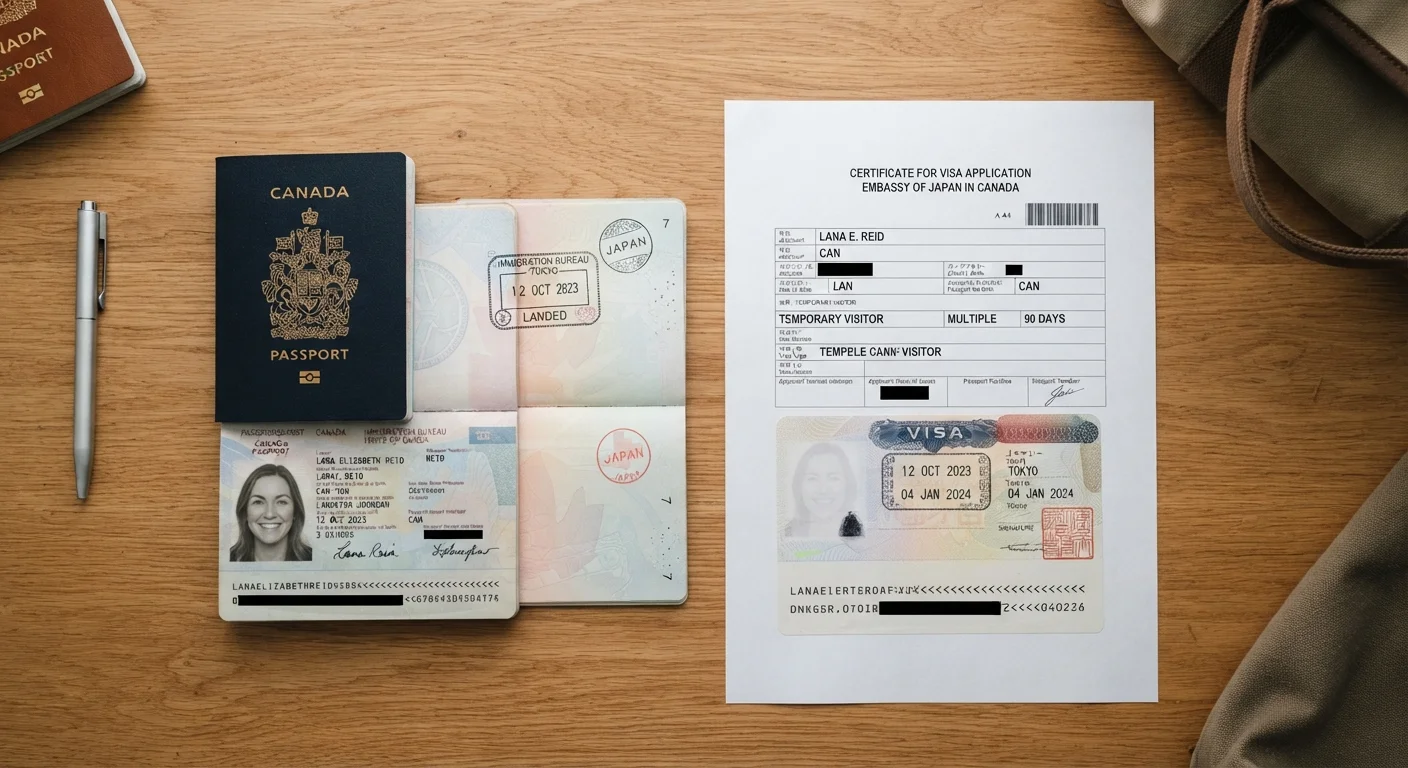
The Core Documents and What They Mean
When a border officer asks for your documents, they are checking at least two distinct things: who you are and whether you are authorized to enter. Different documents answer each of those questions, and confusing one for the other is one of the most common sources of travel stress.
Passport
A government-issued travel document that certifies the holder's identity and citizenship. It allows the holder to travel internationally and request consular assistance abroad, but does not by itself grant entry to any foreign country.
Visa
An official authorization issued by a destination country permitting a foreign national to enter for a specific purpose and duration. Visas may be stamped into a passport, issued as a sticker, or granted electronically.
ETA (Electronic Travel Authorization)
A pre-travel clearance required by some countries in lieu of a traditional visa. It is applied for online, linked to the traveler's passport electronically, and typically processed quickly. It is not the same as a visa but serves a similar gatekeeping function.
Entry permit / arrival card
A document issued at the port of entry that records the specific terms of a traveler's admission — including authorized length of stay. It is separate from the visa and determines how long the traveler may legally remain in the country.
Visa validity period
The date range during which a visa may be used to enter a country. Attempting to enter after the validity period has expired will result in denial, regardless of when the visa was originally issued.
Duration of stay
The number of days a traveler is authorized to remain in a country after entering. This is often shorter than the visa validity period and is typically recorded on the entry stamp or arrival card.
Visa on arrival
A visa issued directly at a country's port of entry rather than through a consulate or online application in advance. Eligibility is determined by the traveler's nationality and should always be confirmed before departure, as rules can change.
Transit visa
A visa that permits a traveler to pass through a country — typically during a layover — without formally entering as a visitor. Required in some countries when the traveler leaves the international transit zone.
Here is how the foundational documents break down:
- Passport: Your primary proof of citizenship and identity, issued by your home country. It does not grant you entry anywhere — it simply establishes who you are and which country vouches for you.
- Visa: Permission granted by a foreign country allowing you to enter, stay for a defined period, and engage in specified activities (tourism, work, study). A visa can be a physical stamp or sticker in your passport, or an electronic authorization tied to your passport number.
- Entry permit / arrival card: A document — sometimes paper, increasingly digital — collected at the border that records the specific terms of your entry: how long you can stay and under what conditions. Even visa-free travelers are often issued one.
Think of it this way: your passport is your ID, your visa is your invitation, and your entry permit is the record of you walking through the door.
For a full pre-travel document review, see our pre-trip checklist.
Visas: Types, Formats, and What the Fine Print Means
Not all visas work the same way. The type you need — and what it permits — depends on the destination country, your citizenship, and your purpose of travel.
| Passport validity requirement | 6 months beyond departure date (many countries) (Requirement varies by destination; verify with official immigration authority) |
| E-visa vs. traditional visa | Same legal authority; different delivery format (Acceptance at specific ports of entry should always be verified) |
| Visa-free ≠ no requirements | ETAs, funds, onward tickets may still be required (Entry conditions set by destination country's border authority) |
| Authorized stay determined by | Entry stamp or arrival card — not the visa (Overstaying can result in fines, bans, or deportation) |
| Common visa entry types | Single, double, or multiple entry (Specified on the visa itself; re-entry rules vary by issuing country) |
| Processing time range | Same day to several weeks (Varies by country, consulate workload, and application type) |
Common visa types
- Tourist / visitor visa: Permits leisure travel and short stays. Generally does not allow paid employment.
- Transit visa: Allows passage through a country without formally entering it — typically required if you have a layover and leave the international zone.
- Work visa / employment visa: Authorizes living and working in the destination country. Usually requires employer sponsorship.
- Student visa: Tied to enrollment at an approved institution; often carries restrictions on work hours.
- E-visa (electronic visa): The same legal authorization as a traditional visa but issued online and linked electronically to your passport. You may print a confirmation, but there is no physical sticker. Always verify whether your destination accepts e-visas at the specific port of entry you plan to use.
- Visa on arrival: Issued at the border rather than in advance. Eligibility is strictly nationality-based and can change without much notice — verify before departure.
Key visa terms to understand
- Validity period
- The window during which you may use the visa to enter. Entering after this date is refused, even if you obtained the visa months earlier.
- Duration of stay
- How long you may remain once you enter — often shorter than the validity period. Overstaying can result in fines, deportation, or future entry bans.
- Single / double / multiple entry
- Whether you may enter once, twice, or an unlimited number of times within the validity period.
Visa rules are frequently misread. Our article on common visa requirement mistakes walks through the most consequential assumptions to avoid.
Visa-Free Travel, ETAs, and the Difference Between 'No Visa' and 'No Requirements'
Citizens of certain countries enjoy visa-free access to many destinations — meaning no prior visa application is required. But visa-free does not mean entry is unconditional or automatic.
Many countries that waive the traditional visa now require travelers to obtain an Electronic Travel Authorization (ETA) or similar pre-clearance before boarding a flight. ETAs are typically low-cost, processed online within minutes to days, and tied electronically to your passport. Examples include Canada's eTA, Australia's ETA, and the UK's Electronic Travel Authorisation (ETA). Not having one can result in being denied boarding — even though no visa is needed.
At the port of entry, even visa-free travelers must satisfy a border officer that they meet entry conditions: sufficient funds, a return or onward ticket, a valid reason for visiting, and no prior entry violations. Visa-free status affects the application process, not the officer's discretionary authority.
Always Verify With Official Sources
Entry requirements — including visa rules, ETA programs, and passport validity thresholds — can change with relatively little public notice. The most reliable sources are the destination country's official immigration or foreign ministry website and your own government's travel advisory portal. Third-party summaries, including this one, are educational starting points, not substitutes for current official guidance.
Always verify requirements directly with the destination country's official government immigration website and, where relevant, your own government's travel advisory pages. Conditions can change, and third-party summaries may not reflect the latest rules.
If something goes wrong with your documents while traveling, understanding what to do next matters. Our guide on losing a passport abroad covers the steps involved and how to prepare before it happens.
Practical Tips Before You Travel
Even experienced travelers benefit from a structured document review before departure. A few habits can prevent nearly every avoidable entry problem:
- Check passport validity: Many countries require six months of validity beyond your intended departure date. A passport expiring in three months may be refused even if technically not expired.
- Confirm blank pages: Some countries require one or two blank pages for stamps. Check before you travel, especially if your passport is well-used.
- Apply for visas early: Processing times vary from days to weeks. Public holidays, high seasons, and consulate backlogs can all slow approvals.
- Carry physical and digital copies: Photograph your passport, visa, and any entry authorization and store copies separately from originals — in email, secure cloud storage, or with a trusted contact at home.
- Know your authorized stay: Your entry stamp or arrival card — not your visa — determines how long you may remain. Read it carefully upon entry.
Our pre-departure checklist covers document verification alongside other practical steps to complete before you board.
The content on this site is for informational purposes only and is not a substitute for professional advice. Always consult a qualified professional for guidance specific to your situation.