

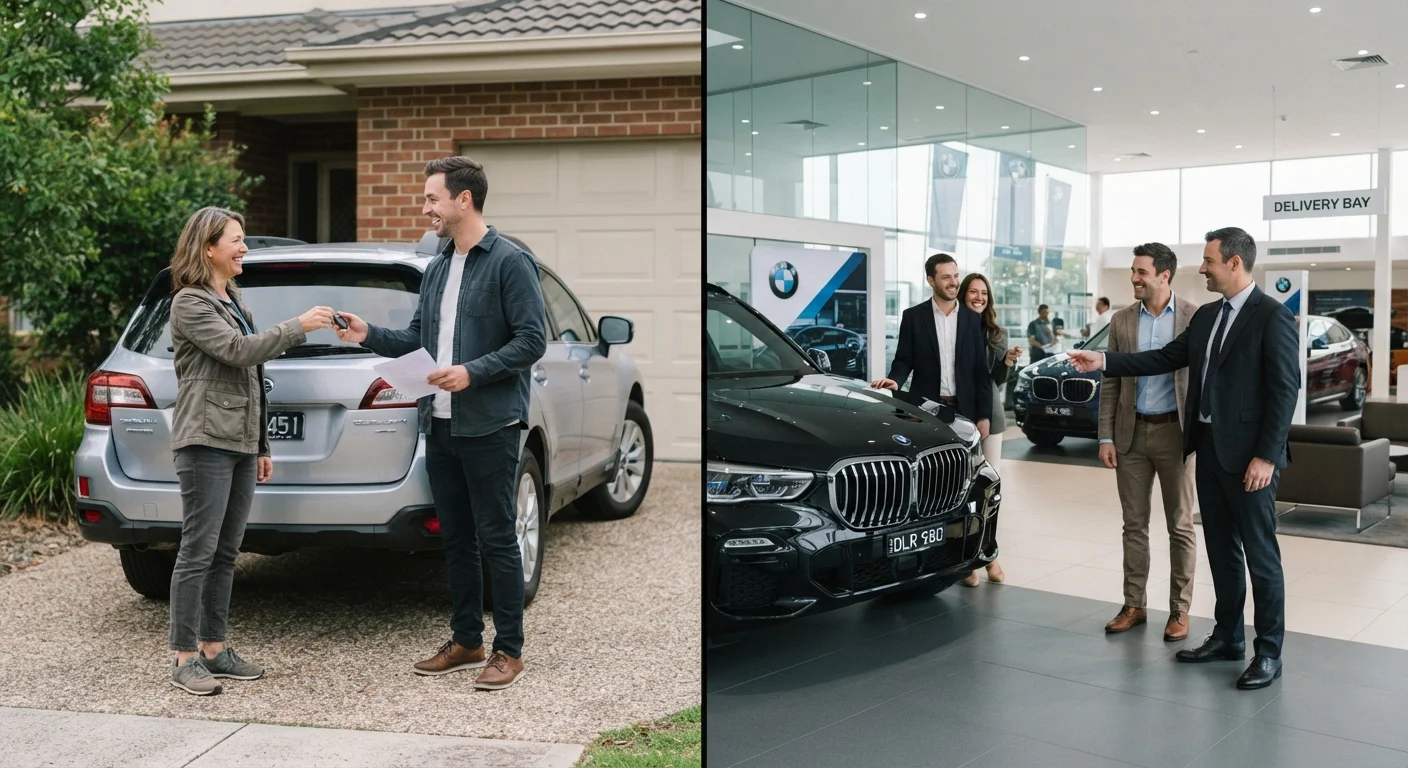
Our Verdict
Neither buying channel is universally better - each suits a different type of buyer. Private sales tend to favor confident, cash-ready shoppers who can do their own due diligence. Dealerships suit buyers who want financing options, documented vehicle history, and a more structured process with built-in consumer protections.
| Best for | Recommended |
|---|---|
| Budget-conscious buyers who can pay cash and vet a vehicle independently | Private Seller |
| Buyers who need financing or want warranty coverage and legal recourse | Dealership |
| First-time buyers or those unfamiliar with the car-buying process | Dealership |
| Experienced buyers seeking a specific used vehicle at a lower price | Private Seller |
How Pricing and Negotiation Work in Each Setting
Private sellers typically list vehicles closer to or below market value because they're not carrying overhead costs - no lot fees, no sales staff commissions, no reconditioning charges built into the price. That gap can be meaningful, but it's not guaranteed. Some private sellers anchor high based on emotional attachment to the vehicle or simply misjudging the market.
Negotiating with an individual seller is often more direct: you're talking to the decision-maker, and a motivated seller may move quickly on price. However, dealership negotiation is more layered. You may interact with a sales consultant, a sales manager, and a finance and insurance (F&I) office - each with their own objectives. Understanding that structure helps. See our guide to common car-buying myths for a closer look at negotiation assumptions that often mislead shoppers.
| Private Seller | Dealership | |
|---|---|---|
| Typical Price | Often lower; no overhead costs built in | Includes reconditioning, fees, and margin |
| Negotiation Style | Direct with decision-maker | Multi-stage; involves sales team and F&I office |
| Consumer Protections | Limited; usually sold as-is | FTC Buyers Guide required; state dealer laws apply |
| Financing Access | Must arrange independently (bank/CU) | In-house lender network; may include rate markup |
| Warranty Options | None typically | CPO programs and extended warranties available |
| Paperwork Handling | Buyer and seller manage title transfer | Dealer handles title, registration, DMV filing |
| Vehicle History Transparency | Varies; buyer must obtain independently | Dealers typically provide or disclose reports |
Legal Protections and Consumer Rights
This is one of the starkest differences between the two channels. When you buy from a licensed dealership, you benefit from state-regulated consumer protections. Dealers are required to disclose known defects in many states, must provide a Buyers Guide on used vehicles (a federal FTC requirement), and are subject to fraud and misrepresentation statutes that private sellers generally are not.
Private sales are typically completed "as-is" with no implied warranty, no right of return, and limited recourse if problems emerge after the transaction. The seller is also usually not a licensed professional, so enforcement is harder. That doesn't mean private sales are inherently risky - but it does mean the buyer bears more responsibility for due diligence. Always get a pre-purchase inspection from an independent mechanic before finalizing a private purchase.
Financing, Warranties, and Add-Ons
Financing a private purchase typically requires arranging a loan through your own bank or credit union before you start shopping - most private sellers won't wait while you line up funding. This can actually be an advantage: arriving with pre-approved financing gives you a clear budget ceiling and makes you a more credible buyer. For a detailed breakdown of how direct lending compares to dealer-arranged financing, see our article on financing through a dealership vs. your own bank.
Dealerships, by contrast, offer in-house financing through lender networks. This can be convenient, but the dealer may mark up the interest rate as part of their revenue model. On the upside, dealerships offer certified pre-owned (CPO) programs that come with manufacturer-backed warranties, roadside assistance, and multi-point inspections - none of which are available in private transactions. Add-ons like extended warranties and GAP insurance are also sold at the F&I stage; whether those are worthwhile depends heavily on the specific terms. Review our guide to purchase agreement terms before signing anything.
Paperwork, Title Transfer, and the Closing Process
At a dealership, the administrative process is handled in-house. Title transfer, registration, sales tax collection, and lien releases are typically managed by the dealer's title clerks, with documents submitted to the DMV on your behalf. This is convenient but adds fees - documentation fees ("doc fees") vary by state and can range from modest to several hundred dollars.
In a private sale, both parties are responsible for completing the transfer correctly. The seller must provide a clean, signed title; the buyer must register the vehicle and pay applicable taxes directly through the DMV. This process varies by state. If the seller still has a lien on the vehicle, payoff coordination must happen before or at the time of sale - a process that requires careful handling. Errors in private title transfers can cause significant delays or legal complications. For a full breakdown of the buying process from start to finish, see our complete car-buying walkthrough.
The content on this site is for informational purposes only and is not a substitute for professional advice. Always consult a qualified professional for guidance specific to your situation.