

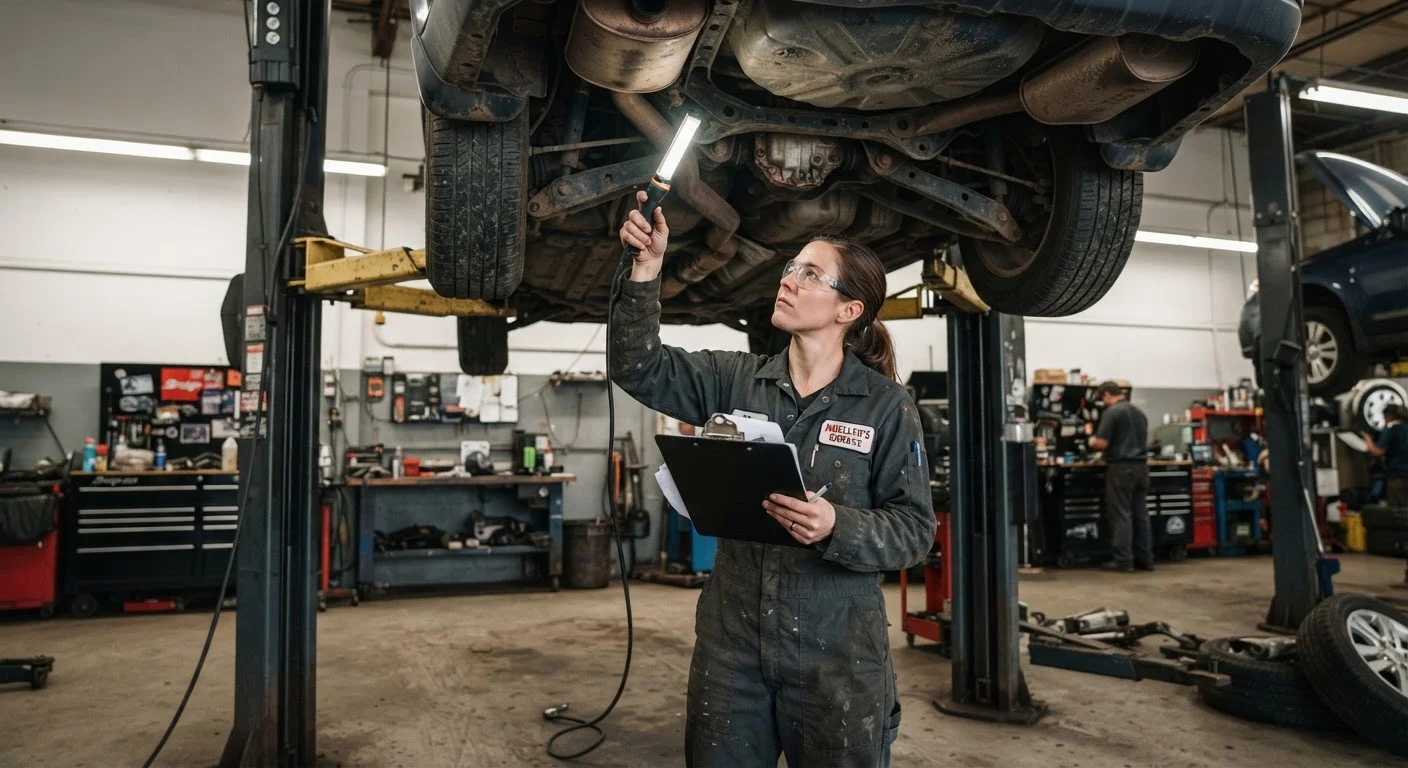
What a Pre-Purchase Inspection Actually Covers
A professional PPI is a systematic evaluation of a vehicle's condition across all major systems. While the exact scope can vary by shop and vehicle type, a thorough inspection typically includes the following areas:
- Engine and drivetrain: The mechanic checks for oil leaks, unusual wear, coolant condition, belt and hose integrity, and signs of overheating or prior engine damage.
- Transmission and differential: Fluid condition and level, shifting behavior, and any signs of slippage or noise under load.
- Brakes: Pad and rotor thickness, brake fluid condition, caliper function, and brake line integrity.
- Suspension and steering: Worn ball joints, tie rod ends, shocks, and struts - components that affect both handling and tire wear.
- Electrical systems: Battery health, alternator output, lighting, and any diagnostic trouble codes stored in the vehicle's onboard computer.
- Body and frame: Evidence of prior collisions, rust, misaligned panels, or structural repairs that may not appear on a history report.
- Undercarriage: Exhaust system condition, frame integrity, and signs of fluid leaks from above.
- Tires: Tread depth and wear patterns, which can indicate alignment or suspension problems.
The mechanic typically provides a written report summarizing findings, often categorized by urgency - from items needing immediate attention to items to monitor over time. See our pre-purchase checklist for a broader look at what to evaluate before committing to a used vehicle.
When You Should Insist on One
Not every car purchase carries the same risk, but in several situations a PPI is not optional - it's essential.
Choose Your Own Mechanic
Always select the inspection shop yourself - do not rely on a mechanic recommended by the seller. Find a licensed, independent shop with good local reviews, or ask your regular mechanic if they perform PPIs. Some AAA-approved repair facilities also offer this service. Independence is what gives the inspection its value.
High-Mileage or Older Vehicles
The older a vehicle and the more miles it has accumulated, the more likely it is to have wear on critical components. A seller's asking price may not reflect the true cost of ownership once deferred maintenance is factored in. A PPI surfaces those costs before you're legally committed to the purchase.
Private-Party Sales
When you buy from a private individual, there is typically no warranty, no return policy, and limited legal recourse after the transaction is complete. An independent inspection is the primary tool you have to protect yourself in this situation.
Any Vehicle with a Complicated History
Even if a vehicle history report comes back clean, some damage - particularly from flooding or cosmetic repairs - may not be fully documented. A mechanic can often detect evidence of water intrusion or repainted body panels that history reports miss.
Out-of-State or Remote Purchases
If you cannot physically be present to evaluate the vehicle yourself, a local mechanic at the seller's location can serve as your eyes and hands on the car before you arrange transport or travel.
How to Arrange One - and What to Do with the Results
Arranging a PPI is straightforward. Choose a licensed, independent mechanic or a shop that is not affiliated with the seller. You pay for the inspection directly, and the results belong to you. If buying from a dealership, expect to bring the car to an off-site shop rather than the dealership's own service department.
Once you have the report, use it in one of three ways:
- Negotiate the price. If the inspection uncovers needed repairs, you have documented leverage to ask for a price reduction that reflects those costs.
- Request repairs before purchase. In some cases - particularly with dealers - you can ask that specific items be remedied before closing the deal.
- Walk away. If the findings are significant and the seller is unwilling to adjust the terms, you have every reason to decline the purchase without financial loss.
It's worth noting that a PPI is a point-in-time assessment, not a guarantee of future reliability. For ongoing maintenance guidance after your purchase, see the Car Maintenance hub. And if you're considering a certified pre-owned vehicle and wonder whether their built-in inspections are sufficient, CPO programs vary more than many buyers expect.
A PPI is not a guarantee of future reliability - mechanical components can fail unexpectedly regardless of their condition at inspection. What an inspection does provide is meaningful, professional information that lets you make an informed decision rather than a hopeful one.
Frequently Asked Questions
Costs vary by location and shop, but a thorough PPI generally ranges from about $100 to $200. Specialty vehicles or inspections requiring more time may cost more. That fee is modest compared to unexpected repair bills that could run into the thousands.
Yes. A PPI is especially valuable in private-party sales because those vehicles carry no dealership warranty or certification. Simply ask the seller to make the vehicle available at a shop of your choosing for a few hours.
No - they serve different purposes. A vehicle history report reveals past ownership, accidents, and title issues, while a PPI assesses the car's current mechanical and structural condition. Using both together gives you the most complete picture.
Treat refusal as a serious red flag. Legitimate sellers with nothing to hide typically welcome an inspection. Walking away from a deal because the seller blocks an inspection is a sound consumer decision.
CPO programs include their own manufacturer inspections, but the thoroughness and coverage of those inspections vary widely. An independent PPI provides a second opinion from someone who has no financial stake in the sale.
Most thorough inspections take one to two hours. More complex vehicles or those requiring a detailed diagnostic scan may take longer. Plan for a half-day if you want to be present while the mechanic works.
The content on this site is for informational purposes only and is not a substitute for professional advice. Always consult a qualified professional for guidance specific to your situation.