

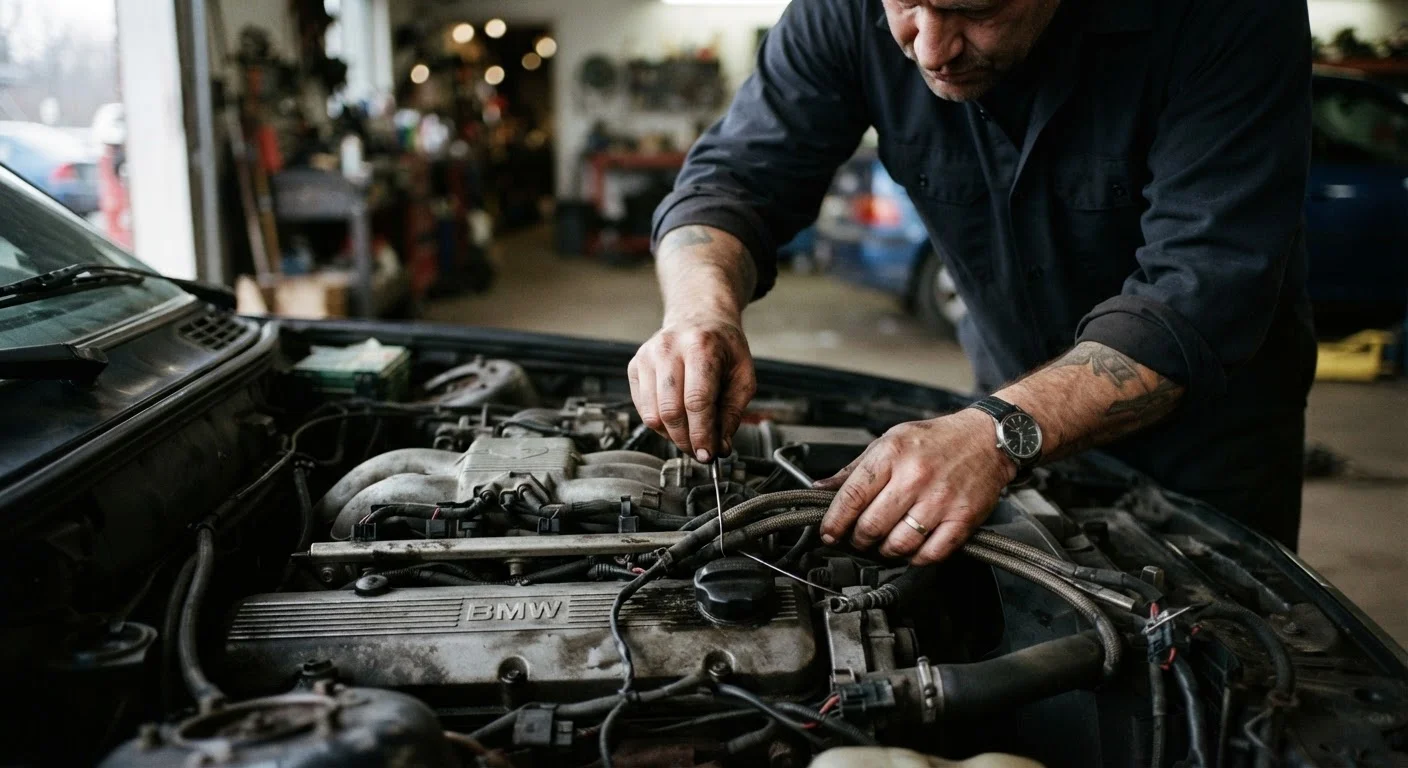
Why Winter Is the Harshest Season for Your Vehicle
Cold weather doesn't just make driving harder - it stresses nearly every major system in your vehicle simultaneously. Batteries lose cranking power, tyre pressure drops with the temperature, fluids thicken, and visibility decreases. The result is that small maintenance gaps that were manageable in mild weather can become real problems once the temperature falls.
The good news: most of what makes a vehicle winter-ready can be checked in under an hour. The steps below walk through the checks that matter most, ordered roughly by the risk they carry if skipped. For most drivers, the under-hood work and tyre inspection can be done at home; a battery load test and brake inspection are worth taking to a shop if you're unsure.
If you're also preparing your home for the season, the same methodical approach applies - see getting your home ready for winter for a parallel walkthrough.
Tyre pressure gauge
Measures tyre inflation so you can correct for cold-weather pressure loss.
Antifreeze/coolant tester
Checks the freeze-protection level of your coolant - inexpensive strip or float types available at auto parts stores.
Flashlight or work light
Illuminates the engine bay, tyre sidewalls, and undercarriage for a thorough visual inspection.
Tread depth gauge
Provides an accurate reading of remaining tyre tread rather than relying on the penny/quarter approximation.
Battery load tester (or shop visit)
Tests whether your battery can deliver sufficient cranking power under cold-weather load - more reliable than a simple voltage check.
How to Run Through the Checks
Work through these steps with the engine off and cooled unless a step specifies otherwise. Give yourself a flat, well-lit surface - a garage or driveway in daylight is ideal. Refer to your owner's manual whenever a step involves topping up a fluid, since the correct specification varies by vehicle.
What you will need
Test the battery
Battery capacity drops sharply in cold weather - some estimates put the loss at 20-30% at freezing, and higher still below that. A battery that starts your car reliably in September may leave you stranded in January.
Check for corrosion (white or blue-grey crust) around the terminals and clean it off with a wire brush. For an accurate read of remaining capacity, have the battery load-tested at a shop or auto parts store - many do this free. If the battery is more than four or five years old, factor that into your decision. See signs of battery decline for more on what to watch for before it fails.
Check tyre pressure and tread depth
Tyre pressure drops roughly 1 PSI for every 10°F decrease in ambient temperature. Check pressure when tyres are cold (the car has been parked for at least three hours) and inflate to the figure in your owner's manual or door-jamb sticker - not the maximum printed on the tyre sidewall.
For tread, insert a quarter into a groove with Washington's head pointing down. If you can see the top of his head, tread depth is at or below 4/32", which is the point most safety experts recommend replacement - don't wait for the legal minimum of 2/32". For a fuller picture of both checks, see tyre pressure and tread depth guidance.
Inspect coolant and antifreeze levels
Your engine's coolant does double duty: it prevents overheating in summer and freezing in winter. Check the reservoir level against the MIN/MAX markings and top up with the correct coolant type if low. Then use an inexpensive antifreeze tester to verify freeze protection - for most US climates, you want protection to at least -34°F.
If coolant looks rusty or has visible debris, a flush may be overdue. Consult your owner's manual for the recommended service interval.
Check brake fluid, oil, and washer fluid
Brake fluid absorbs moisture over time, which lowers its boiling point and can make it more susceptible to performance changes in temperature extremes. Check the reservoir level and note the fluid's color - it should be pale yellow, not dark brown.
Verify your motor oil level and condition on the dipstick. If you're due for an oil change, doing it before winter is worthwhile - cold-thickened oil is harder on an engine during start-up. Some drivers in very cold climates use a slightly lower-viscosity oil in winter; check your manual for guidance specific to your engine.
Finally, fill your windshield washer reservoir with a fluid rated for freezing temperatures. Standard water-based fluid will freeze in the lines and nozzles.
Inspect wiper blades and lights
Run your wiper blades through a full cycle on a wet windshield. Any streaking, skipping, or chattering means the rubber is worn and replacement is overdue - winter precipitation demands a clean, clear wipe. Winter-specific wiper blades have a shell that prevents snow and ice from packing into the blade frame, which is worth considering in heavy-snow areas.
Walk around the vehicle and check that all lights work: headlights (low and high beam), brake lights, reverse lights, and turn signals. Shorter daylight hours and low-visibility conditions make lighting reliability especially important. Driving in adverse weather also depends heavily on correctly functioning lights.
Build or refresh your winter emergency kit
Store the following in your trunk before temperatures drop: a ice scraper and snow brush, a small bag of sand or kitty litter for traction, jumper cables or a portable jump starter, a basic first-aid kit, a blanket, a flashlight with fresh batteries, and a phone charger. If you frequently drive on rural or mountain roads, add a reflective triangle or road flares.
This kit won't prevent a breakdown but can make a significant difference in comfort and safety while you wait for help. For a broader year-round reference, see the seasonal car maintenance checklist.
Keep a Simple Record of What You Checked
Write down the date, tyre pressures, fluid levels, and battery age after completing your pre-winter check. This takes two minutes and gives you a useful baseline for spotting changes over the winter. A note in your phone or a card in the glovebox both work fine.
Once you've completed the inspection, note anything that needs a shop visit and schedule it before the first hard freeze. For guidance on what to look out for on each drive through winter, the pre-trip vehicle safety check is a useful companion reference.
The content on this site is for informational purposes only and is not a substitute for professional advice. Always consult a qualified professional for guidance specific to your situation.