

Summary
22 items · 10-20 minutes
Why a Quick Check Before Every Drive Matters
Most vehicle breakdowns and a significant share of accidents involve factors a driver could have spotted before leaving the driveway - low tire pressure, a burned-out headlight, or a wiper blade that smears rather than clears. This checklist gives you a structured walkthrough of the items worth verifying before any trip of consequence, whether that's a daily commute or a multi-state drive.
This list is focused on the driver's own inspection, not a mechanic's service visit. For a deeper look at what professional inspections involve, see our guide on car maintenance essentials. If you're preparing for a long road trip and want to coordinate vehicle prep with broader travel logistics, the pre-trip checklist for every kind of traveller covers the full picture.
Work through this checklist with a cold or recently parked vehicle whenever possible - fluid levels read more accurately, and you won't risk burns from a hot engine or exhaust system.
Don't Check Fluids on a Hot Engine
Opening a coolant reservoir cap on a hot engine can cause pressurized fluid to spray and cause burns. Always wait at least 30 minutes after driving before checking coolant levels. Oil and other fluid checks are also more accurate when the engine is cold or has been sitting for several minutes.
Dashboard Warning Lights Are Not Decorative
A check engine, brake, oil pressure, or battery warning light that stays on after startup is telling you something specific is wrong. Driving with an active warning light - especially brake or oil pressure - can lead to mechanical failure or unsafe conditions. Consult your owner's manual or a mechanic before proceeding.
The Full Pre-Trip Safety Checklist
The items below are grouped by where you'll be looking - outside the vehicle first, then under the hood, then inside the cabin. Print this page or bookmark it for reference before significant drives.
Exterior - Lights
Exterior - Tires
Under the Hood - Fluids
Cabin - Visibility and Controls
For cold-weather trips specifically, some checks - particularly battery condition, tire pressure, and washer fluid freeze rating - deserve extra attention. Our pre-winter vehicle check guide goes deeper on those. And if you want to understand how your vehicle's safety systems work alongside your own checks, understanding ABS, ESC, and blind-spot monitoring is worth a read.
Tools That Make This Faster
You don't need a full mechanic's toolkit to run through this checklist. A few inexpensive items make it quicker and more accurate.
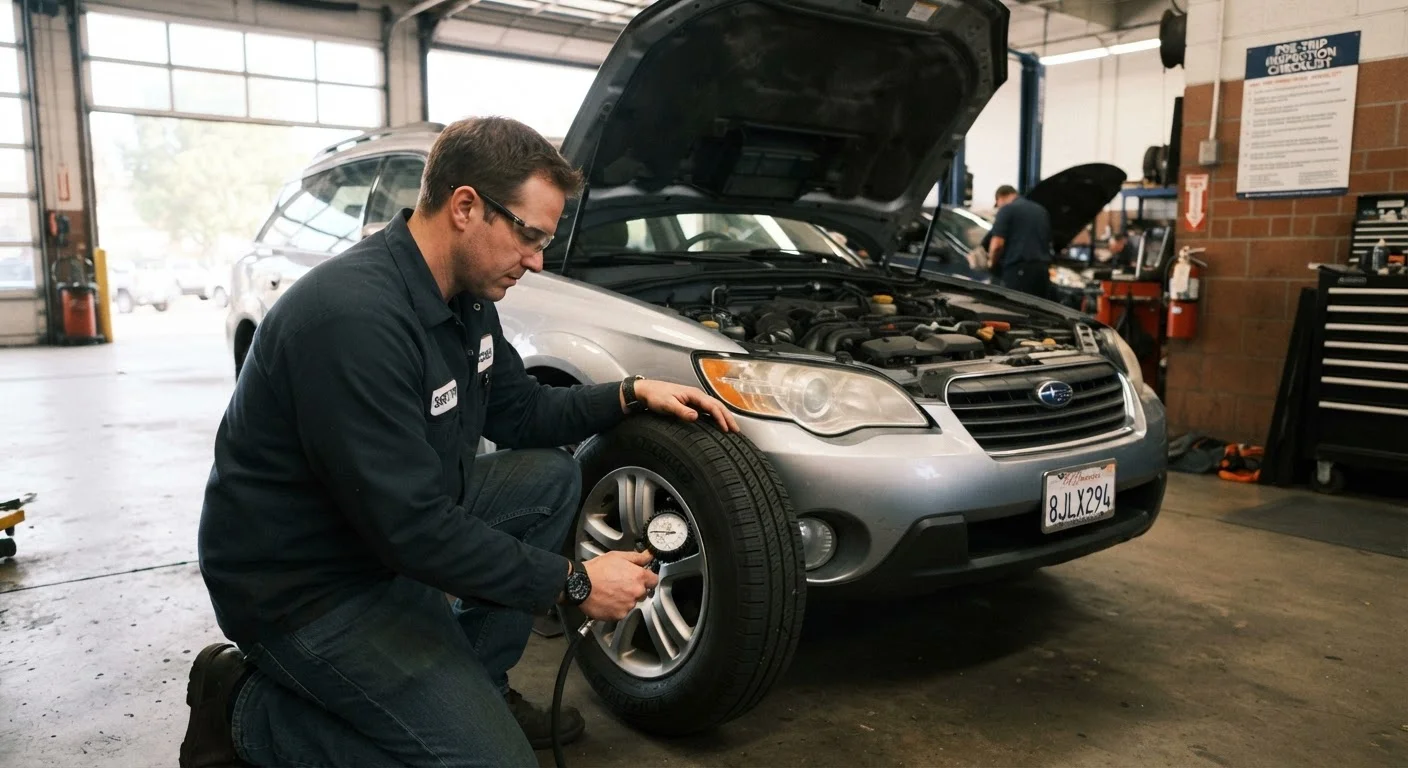
Tire Pressure Gauge
Gives an accurate PSI reading so you can inflate to the correct level rather than guessing by feel.
Flashlight or Headlamp
Lets you see fluid levels, tire sidewalls, and under-hood components clearly in low-light conditions.
Tread Depth Gauge
Provides a precise measurement of remaining tire tread, more reliable than the penny test alone.
Owner's Manual
Specifies correct fluid types, reservoir locations, and warning light meanings specific to your vehicle.
Microfiber Cloth
Useful for wiping dipsticks cleanly and clearing smudges from lights or mirrors before checking them.
Adjusting Your Checks for Conditions
Not every check carries equal weight on every trip. Rain, fog, or snow shift the priority - lights, wipers, and tire tread depth matter more when visibility and road grip are reduced. Our guide to driving in adverse weather explains how conditions should also change your speed and following distance once you're underway.
For broader seasonal prep - not just before a single trip but across the year - the seasonal car maintenance checklist is a practical companion to keep in your glovebox. And if you're evaluating a vehicle you don't yet own, the pre-purchase checklist for used car buyers applies a similar structured approach to that specific scenario.
This article is for general informational purposes. Always follow your vehicle manufacturer's guidelines found in your owner's manual, and consult a qualified mechanic when you're unsure about a vehicle's condition or safety.
The content on this site is for informational purposes only and is not a substitute for professional advice. Always consult a qualified professional for guidance specific to your situation.