

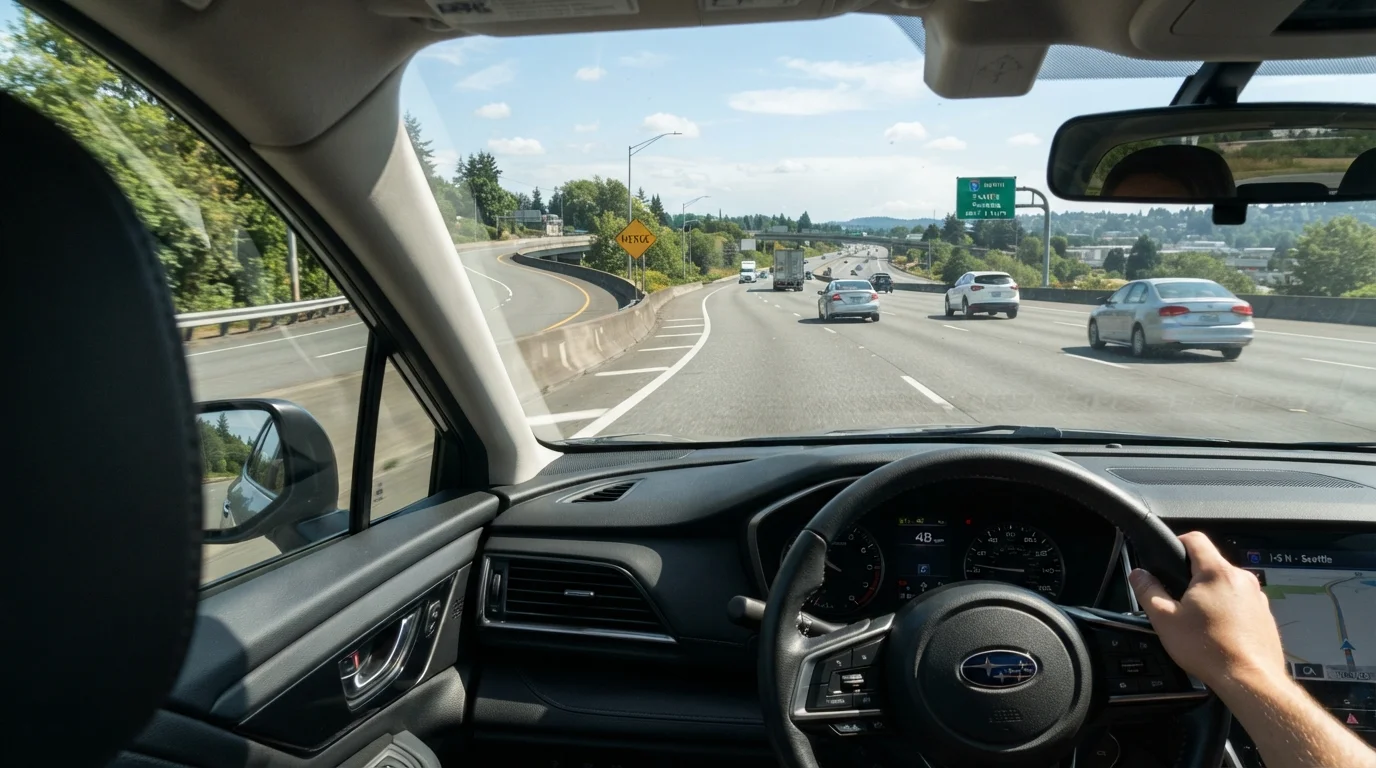
Why Highway Merging Feels Harder Than It Is
For many drivers - especially newer ones - merging onto a freeway triggers a spike of anxiety that can actually make the maneuver more dangerous. The sensation of accelerating toward fast-moving traffic while simultaneously monitoring mirrors and judging gaps is a genuine multitasking challenge. But the difficulty is largely perceptual: with a clear mental framework, highway merging becomes a predictable sequence of manageable steps rather than a split-second gamble.
Much of the anxiety stems from uncertainty about right-of-way. In most US states, merging drivers are expected to yield to highway traffic - not the other way around. That said, highway drivers often accommodate safe merges as a courtesy. Understanding this dynamic is useful context. For a deeper look at how merging fits into the broader right-of-way picture, see our guide on right-of-way rules drivers routinely get wrong.
The physical setup also matters. On-ramps are designed to give you time and distance to reach highway speed - they are not decoration. Using the full length of the ramp is not optional; it's the design intent. Drivers who brake or hesitate midway through a ramp are working against the system rather than with it.
What you will need
What to Do When Conditions Aren't Ideal
Standard merging assumes moderate traffic and a clear gap. Real-world conditions often differ. Here's how to adapt:
- Heavy congestion: When traffic on the highway is slow-moving or stop-and-go, the zipper merge becomes the appropriate technique. Each vehicle in the merging lane takes turns with each vehicle in the travel lane, one at a time, at the point where lanes end. This method is formally endorsed by traffic engineers and reduces overall delay compared to drivers trying to merge far in advance.
- Short or tight ramps: Some urban ramps offer very little distance. In these cases, acceleration must happen faster, and your gap identification must begin earlier - even before you enter the ramp. Scan the highway as you approach the ramp entrance.
- Aggressive or distracted drivers: If a driver in the adjacent lane accelerates to close a gap, do not force the merge. Ease off slightly and find the next available opening. Merging confrontations escalate quickly and are never worth the risk. For context on how everyday driving behavior contributes to road tension, our piece on road rage myths that make driving more dangerous is worth a read.
- Night or wet conditions: Reduced visibility and longer stopping distances mean you should give yourself more buffer time when assessing gaps. Increase your target gap from three seconds to at least four.
Practice Before Peak Hours
If you're building confidence with highway merging, choose low-traffic windows - early weekend mornings are ideal. Light traffic means more available gaps and less pressure, which gives you the mental space to focus on technique rather than survival instinct. Once the sequence feels automatic, gradually work up to busier conditions.
The content on this site is for informational purposes only and is not a substitute for professional advice. Always consult a qualified professional for guidance specific to your situation.