

Our Verdict
The most effective HVAC upkeep strategy divides responsibility clearly: homeowners handle routine, low-risk tasks on a consistent schedule, while licensed technicians manage anything involving mechanical components, refrigerants, or electrical systems. Staying consistent with DIY basics dramatically reduces the frequency - and cost - of professional calls.
| Best for | Recommended |
|---|---|
| Homeowners comfortable with basic upkeep | DIY maintenance tasks |
| Annual system health checks and tune-ups | Licensed HVAC technician |
| Any refrigerant, electrical, or mechanical issue | Licensed HVAC technician |
| New homeowners building maintenance habits | Combination approach with professional baseline inspection |
Why HVAC Maintenance Is a Shared Responsibility
Your heating, ventilation, and air conditioning (HVAC) system is one of the most mechanically complex - and most expensive - systems in your home. A central air conditioner or heat pump can cost several thousand dollars to replace, making preventive care one of the highest-return habits a homeowner can develop.
The good news is that HVAC upkeep isn't all-or-nothing. It breaks naturally into two tiers: tasks that are safe and straightforward for homeowners to handle themselves, and tasks that require training, specialized tools, and in many cases a state-issued license. Mixing these up is where problems start - either by neglecting the easy stuff or, more dangerously, attempting work that carries real risk of injury, equipment damage, or code violation.
For a broader view of where HVAC fits within your overall upkeep schedule, see our seasonal home maintenance calendar that covers tasks month by month.
What Homeowners Can - and Should - Do Themselves
These tasks require no special certifications, minimal tools, and a small time investment. Done consistently, they extend equipment life and catch early warning signs before they escalate.
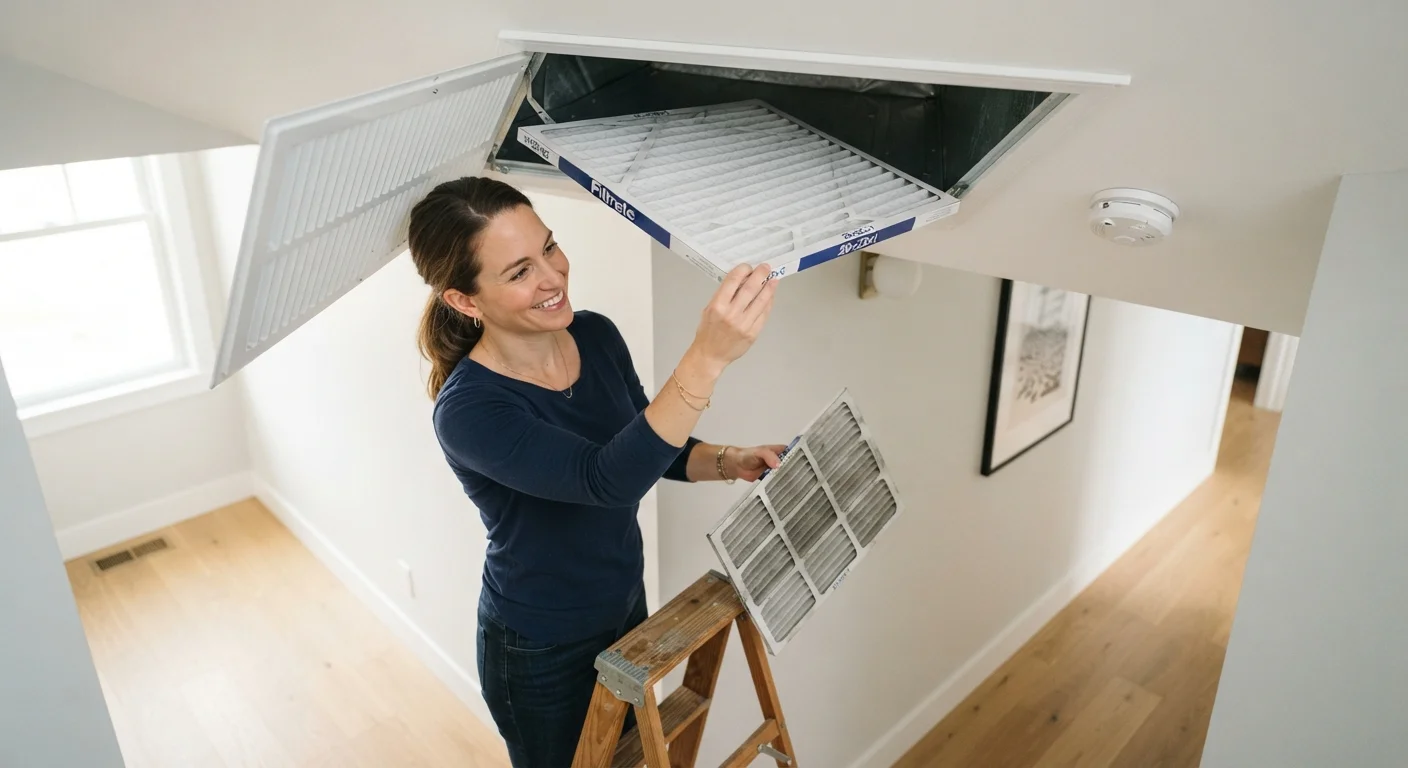
Air Filter Replacement
This is the single most impactful DIY task. A clogged filter forces your system to work harder, reducing efficiency and accelerating wear on the blower motor. Most 1-inch standard filters should be replaced every 1-3 months; thicker media filters (4-5 inches) may last up to 12 months. Check your system documentation for the correct size and MERV rating range your unit can handle - too restrictive a filter can reduce airflow.
Thermostat Checks and Calibration
Verify your thermostat is reading accurately by comparing it against a separate thermometer. Programmable and smart thermostats should have their schedules reviewed seasonally. If your thermostat runs on batteries, replace them annually.
Clearing Vents and Registers
Walk through your home and confirm that supply and return air vents are open and unobstructed by furniture, rugs, or drapes. Vacuum visible dust from grilles. Blocked vents create pressure imbalances that strain the entire system.
Outdoor Unit Maintenance
Keep the area around your outdoor condenser unit clear of at least 2 feet of space on all sides. Remove leaves, grass clippings, and debris from around the base. Gently rinse the fins with a garden hose (never a pressure washer) if visible buildup is present - always turn off power to the unit first at the disconnect box.
Condensate Drain Line
Your air handler produces condensation that drains through a PVC pipe. Pouring a cup of diluted white vinegar into the drain pan access point every few months helps prevent algae buildup that can cause clogs and water damage.
Set a Filter Reminder Right Now
The most common reason homeowners skip filter changes is simply forgetting. Take a moment to set a recurring calendar reminder on your phone - every 30 to 60 days is a reasonable default for most households. Homes with pets, allergies, or heavy dust may need to check even more frequently. Keeping a spare filter on hand ensures you can act immediately when it's time.
What Requires a Licensed HVAC Technician
Some HVAC tasks carry risks that go beyond basic home repair - electrical hazards, refrigerant regulations, and warranty implications among them. These are not situations where a confident DIY approach is appropriate.
Annual System Tune-Up
A professional inspection covers the items homeowners can't safely access or evaluate: measuring refrigerant charge, testing electrical connections and capacitors, inspecting the heat exchanger for cracks, lubricating moving parts, and verifying combustion safety on gas furnaces. Most manufacturers recommend this annually, and many warranties require documented professional service.
Refrigerant Handling
Adding or recovering refrigerant (commonly R-410A or the newer R-32 and R-454B in newer systems) is federally regulated under EPA Section 608. Only technicians with EPA 608 certification may legally purchase or handle refrigerants. Low refrigerant is also a symptom of a leak - adding more without finding and repairing the source is not a fix.
Electrical Components
Capacitors, contactors, and control boards can hold dangerous charges even after power is disconnected. Diagnosing and replacing these components requires proper training and equipment.
Duct Sealing and Balancing
While you can spot obvious disconnected ducts in accessible areas, proper duct testing and sealing requires a blower door and duct pressurization equipment to measure leakage rates accurately.
Any Gas Furnace Work Beyond Filter Replacement
Burner cleaning, heat exchanger inspection, flue examination, and gas valve work all involve combustion safety and should never be attempted without training. A cracked heat exchanger can allow carbon monoxide to enter living spaces - a serious safety hazard. Always ensure you have working carbon monoxide detectors installed.
| Task | DIY-Appropriate | Requires Licensed Technician | |
|---|---|---|---|
| Air filter replacement | Yes - monthly to quarterly | Not needed | |
| Thermostat checks | Yes - seasonally | Only if wiring or replacement needed | |
| Vent and register cleaning | Yes - ongoing | Not needed | |
| Outdoor unit debris clearing | Yes - seasonally | Not needed | |
| Condensate drain treatment | Yes - every few months | If drain is fully clogged | |
| Annual system tune-up | No | Yes - annually | |
| Refrigerant charge or leak repair | No - federally regulated | Yes - EPA 608 certified only | |
| Electrical component replacement | No - shock hazard | Yes - always | |
| Gas furnace service | No - combustion safety risk | Yes - always | |
| Duct leakage testing and sealing | Limited visual only | Yes - for accurate assessment |
Building a Maintenance Routine That Works
The homeowners who avoid costly emergency repairs tend to be the ones who treat HVAC maintenance as a recurring calendar item rather than a reactive one. A practical rhythm looks like this: filter checks monthly, outdoor unit inspection each spring before cooling season, condensate line treatment every few months, and a professional tune-up once or twice a year timed before peak demand seasons.
If you're just getting started, our home maintenance guide for beginners covers how to set priorities and build sustainable habits. The spring home maintenance checklist also includes HVAC-specific steps worth reviewing when warmer months approach.
Keep a simple log - a notes app or a paper folder - recording filter changes, service dates, and any observations like unusual sounds or odors. This record helps technicians diagnose problems faster and can support warranty claims. It's also one of the things new homeowners frequently overlook in their first year of ownership.
When something does seem off - inconsistent temperatures, higher-than-usual utility bills, unusual cycling behavior, or strange sounds - don't wait. Early professional attention almost always costs less than emergency repair or full system replacement.
The content on this site is for informational purposes only and is not a substitute for professional advice. Always consult a qualified professional for guidance specific to your situation.