

Start here
Why Preventive Maintenance Matters More Than You Think
Build knowledge
The Systems Every Homeowner Should Know
Get equipped
Building a Basic Maintenance Toolkit
Know your limits
DIY vs. Calling a Professional: How to Decide
Take action
Creating a Maintenance Schedule That Works
Why Preventive Maintenance Matters More Than You Think
Owning a home means accepting ongoing responsibility for a complex, aging structure. Many first-time owners focus on the purchase and decoration while maintenance quietly falls behind - until something fails. The relationship between neglect and cost is almost always linear: a $15 tube of caulk prevents a $3,000 water-damage repair; a $20 HVAC filter extends the life of a $5,000 system.
Preventive maintenance is not about perfection. It is about consistency. Catching a small roof leak in fall before winter sets in, or noticing a slow-draining sink before it backs up completely, is the practical goal. You do not need to be handy - you need to be attentive. Read our home maintenance myths article to avoid the common assumptions that lead new owners into unnecessary expense.
Document Your Home From Day One
As soon as you move in, photograph the location of your shut-off valves, electrical panel, and any access panels for plumbing or HVAC. Store these photos somewhere easy to find. In an emergency - a burst pipe at midnight - knowing exactly where to go saves critical time and limits damage.
The Systems Every Homeowner Should Know
A house is a collection of interconnected systems. Understanding what each one does - and where it lives - is the foundation of good maintenance.
Preventive maintenance
Routine upkeep performed on a schedule to keep home systems working properly and prevent small issues from becoming larger, more expensive problems.
HVAC
Stands for Heating, Ventilation, and Air Conditioning - the combined system that controls temperature and air quality inside your home.
GFCI outlet
A Ground Fault Circuit Interrupter outlet that shuts off power automatically if it detects an electrical hazard. Required near water sources like kitchens and bathrooms.
Load-bearing wall
A wall that supports the weight of the structure above it. Removing or altering one without professional assessment can compromise the home's structural integrity.
Building permit
Official approval from a local government body allowing specific construction or renovation work to proceed, ensuring it meets safety and building codes.
Weatherstripping
Flexible sealing material applied around doors and windows to block drafts, reduce energy loss, and keep moisture out.
- Plumbing: Know where your main water shut-off valve is located before you need it. Check under sinks and around the water heater periodically for drips or mineral buildup.
- Electrical: Locate your electrical panel and label every circuit if the box is not already marked. Do not add high-draw appliances to circuits that are already at capacity. Any work beyond changing a light fixture generally requires a licensed electrician.
- HVAC: Heating and cooling accounts for roughly half of most home energy bills, making it worth protecting. Our HVAC upkeep guide explains exactly which tasks are owner-appropriate and which require a licensed technician.
- Roof and gutters: The roof protects everything below it. Inspect it visually from the ground after major storms. Keep gutters free of debris so water drains away from your foundation. See our guide to gutter maintenance for a full breakdown.
- Structure and moisture: Look for cracks in exterior masonry, soft spots in floors, and any signs of dampness on walls or ceilings. Moisture problems have several distinct causes that require different responses - our damp identification guide helps you tell them apart before spending money on the wrong fix.
Building a Basic Maintenance Toolkit
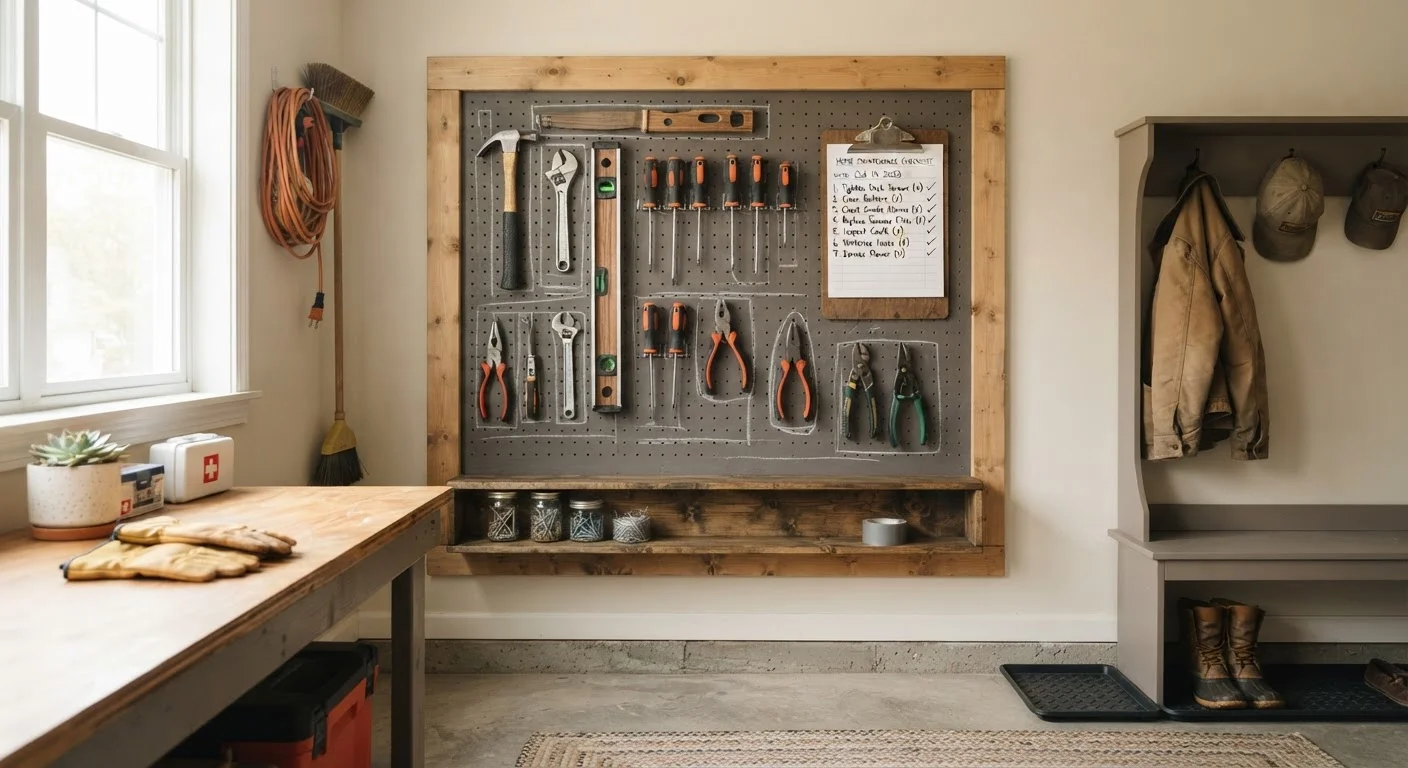
You do not need a fully stocked workshop to handle routine upkeep. A focused starter set covers the vast majority of common tasks:
- Claw hammer
- Flathead and Phillips-head screwdrivers (or a multi-bit driver)
- Adjustable wrench and slip-joint pliers
- Utility knife
- Tape measure
- Level (even a small torpedo level is useful)
- Cordless drill with basic bit set
- Caulk gun and exterior-grade caulk
- Flashlight or headlamp
- Stud finder
Beyond tools, keep a small stock of consumables: spare HVAC filters in the correct size for your system, smoke and carbon monoxide detector batteries, plumber's tape (also called PTFE or thread-seal tape), and a tube of all-purpose caulk. If you are preparing for your first DIY project, that guide covers safety and scope in more depth.
DIY vs. Calling a Professional: How to Decide
Knowing when to stop is as important as knowing how to start. A useful decision framework has three questions: Is this task within my skill level? Could an error cause injury, structural damage, or a code violation? Is a permit required?
Tasks generally appropriate for owner-DIY include filter replacement, minor caulking and weatherstripping, painting interior surfaces, replacing faucet washers, resetting tripped GFCI outlets, and cleaning gutters from a stable ladder. Our honest look at DIY maintenance weighs the real advantages and limitations of doing it yourself.
Work that nearly always requires a licensed professional includes anything involving the electrical panel, gas lines, load-bearing walls, roof replacement, or connections to the main water supply. Many jurisdictions also require permits for these projects - unpermitted work can create problems when you sell or file an insurance claim. When you do hire out, our contractor hiring guide identifies the right questions to ask before signing anything.
Creating a Maintenance Schedule That Works
The most practical maintenance system is a written seasonal checklist rather than a mental list. Organize tasks by frequency:
- Monthly
- Test smoke and carbon monoxide detectors; check under sinks for leaks; inspect HVAC filter (replace every 1-3 months depending on type and household).
- Spring
- Inspect roof and gutters after winter; check exterior caulk and weatherstripping; test outdoor faucets and irrigation after freeze season; service air conditioning before heavy use.
- Fall
- Clean gutters after leaves drop; have heating system serviced; check chimney if wood-burning; seal any gaps where pests could enter before cold weather.
- Annually
- Inspect attic for signs of moisture or pests; test sump pump if present; drain sediment from water heater; walk the exterior perimeter looking for foundation cracks or drainage issues.
Consistency matters more than perfection. A simple spreadsheet or phone calendar reminder is enough to keep the schedule on track. Home maintenance is a long game - small, regular actions protect your investment far more effectively than occasional intensive effort after something fails.
For broader home improvement projects that go beyond routine upkeep, the planning process is different - our renovation planning guide walks through permits, budgets, and contractor vetting before work begins.
Frequently Asked Questions
A widely cited rule of thumb is to set aside 1-2% of your home's purchase price each year for maintenance and repairs. Older homes or those in harsh climates may sit toward the higher end of that range. This is general guidance, not a guarantee - actual costs vary significantly by home age, size, and condition.
Most homeowners can handle tasks like replacing HVAC filters, caulking around tubs and windows, cleaning gutters, testing smoke detectors, and touching up interior paint. These require basic tools and carry low safety risk. Anything involving the electrical panel, gas lines, or load-bearing structure should be left to licensed professionals.
A seasonal inspection - four times a year - is a practical rhythm for most homes. Focus each check on weather-related concerns: heating systems before winter, roof and gutters in fall, exterior drainage in spring, and cooling systems before summer. Monthly checks of smoke detectors and water pressure take only minutes.
Permits are typically required for work that affects the structure, electrical system, plumbing connections to the main supply, or HVAC installations. Requirements vary by municipality. Always check with your local building department before starting significant work - unpermitted repairs can complicate home sales and void insurance claims.
Ignoring small leaks, skipping gutter cleaning, and neglecting HVAC filters are among the most frequent errors that lead to expensive damage. Misidentifying the type of moisture problem - condensation versus true water intrusion - is another common pitfall. Our <a href="/home-garden/home-maintenance/home-maintenance-myths-that-lead-homeowners-into-expensive-mistakes">home maintenance myths article</a> covers these in detail.
Yes - new construction still requires routine upkeep. Caulk shrinks and cracks, HVAC filters collect dust, and gutters clog regardless of a home's age. Skipping maintenance on a new home because it feels unnecessary is one of the most common and costly misconceptions new owners hold.
The content on this site is for informational purposes only and is not a substitute for professional advice. Always consult a qualified professional for guidance specific to your situation.