

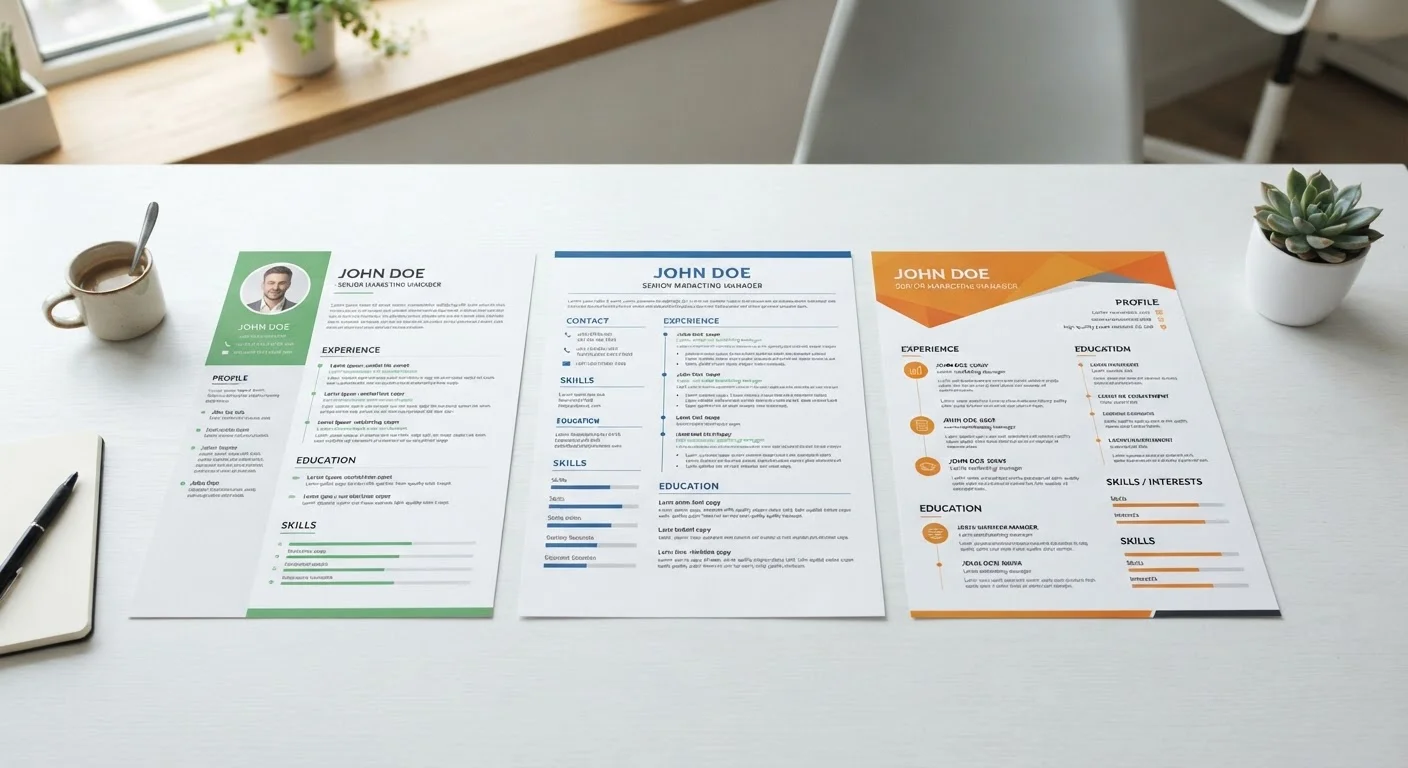
Our Verdict
For most job seekers, the hybrid format offers the most flexibility without sacrificing readability or ATS compatibility. Chronological remains the safest choice for those with a clear, uninterrupted career track. Functional resumes are largely discouraged by hiring professionals and should be used only in narrow circumstances.
| Best for | Recommended |
|---|---|
| Professionals with consistent, relevant work history | Chronological |
| Career changers and mid-level professionals with transferable skills | Hybrid |
| Those returning from a significant career break with skills to highlight | Hybrid |
| First-time job seekers with limited formal experience | Hybrid or Chronological |
Why Resume Format Matters More Than Most People Realize
Your resume format is the structural decision that determines what a hiring manager sees first - and how long they keep reading. Recruiters typically spend seconds scanning a resume before deciding whether to read further, so the sequence and grouping of your information carries real weight.
Format also affects whether your resume passes through an ATS - software that many employers use to parse and filter applications before a human ever sees them. A format that confuses ATS parsing can quietly eliminate you before the review stage. Understanding the three main formats - chronological, functional, and hybrid - lets you make an intentional choice rather than defaulting to whatever template you used years ago.
For a full walkthrough of building a resume from the ground up, see Resume Writing From Scratch, which covers everything from format selection to your first bullet points.
The Three Formats Compared
Each format organizes the same raw material - your experience, skills, and accomplishments - differently. Here's how they stack up across the criteria that matter most to job seekers.
| Chronological | Functional | Hybrid | |
|---|---|---|---|
| ATS compatibility | High | Low | High |
| Recruiter familiarity | Very familiar, preferred | Often viewed with suspicion | Increasingly accepted |
| Best career situation | Steady, relevant work history | Significant gaps or field change | Career change, diverse experience |
| Handles employment gaps | Poorly - gaps are visible | Attempts to hide gaps | Better - skills lead, gaps contextualized |
| Highlights top skills | Indirectly, through roles | Directly, by category | Directly, then supported by history |
| Ease of tailoring per role | Moderate | Moderate | High - summary section adjusts easily |
The differences above aren't just cosmetic. They determine the story your resume tells and how quickly a reader can verify your credentials.
Chronological: The Standard That Employers Expect
The reverse-chronological format lists your work experience starting with your most recent role and works backward. It's the dominant format in most industries for good reason: it gives hiring managers an immediate, linear view of your career progression.
This format works best when your career history is directly relevant to the role you're targeting, your titles have advanced over time, and you have no significant unexplained gaps. It's also the format most ATS platforms are built to parse correctly.
The limitation is equally straightforward: if your recent experience doesn't align well with the job - because you're changing fields, returning after a break, or your most impressive work was several roles ago - chronological order can bury your strongest selling points.
Functional: High Risk, Narrow Use Case
A functional resume leads with a skills summary section, grouping accomplishments by competency rather than employer or date. Work history appears in a condensed list at the bottom, often with minimal detail.
The intent is to foreground what you can do over where and when you did it. In practice, though, this format raises red flags for many recruiters, who recognize it as a way of obscuring gaps or limited experience. It also tends to perform poorly with ATS systems, which are designed to find dated employment entries.
The functional format has a narrow legitimate use case: someone re-entering the workforce after a long absence who has built substantial skills through volunteering, caregiving, or freelance work that doesn't fit neatly into job titles. Even then, a hybrid approach is often preferable.
For guidance on presenting a career that doesn't follow a straight line, Presenting a Non-Linear Career Path on a Resume offers practical framing strategies.
Hybrid: Flexibility Without the Drawbacks
The hybrid (or combination) format opens with a targeted skills or qualifications summary, then moves into a standard reverse-chronological work history. You get the context of a skills section without hiding your employment record.
This structure suits career changers who have transferable skills that aren't obvious from job titles alone, mid-career professionals whose most relevant accomplishments span multiple roles, and candidates returning from a career pause who want to lead with capability before chronology.
The hybrid format is also the most forgiving when you need to tailor your resume to a specific job description - the skills summary can be adjusted role by role without restructuring the entire document. Once your format is set, focus shifts to the quality of each line: The Anatomy of a Strong Resume Bullet Point explains what separates a compelling achievement from a generic job description.
Test Your Format Before You Submit
Before sending any application, copy your resume text into a plain-text document and read it top to bottom. If the order of information still tells a coherent story without formatting, your structure is sound. You can also run your resume through a free ATS simulation tool to see how it's parsed - many universities and career centers offer access to these.
Whatever format you choose, consistency and readability within that format matter as much as the choice itself. A well-executed chronological resume outperforms a poorly structured hybrid every time.
The content on this site is for informational purposes only and is not a substitute for professional advice. Always consult a qualified professional for guidance specific to your situation.