

Your Score Is a Snapshot, Not a Permanent Record
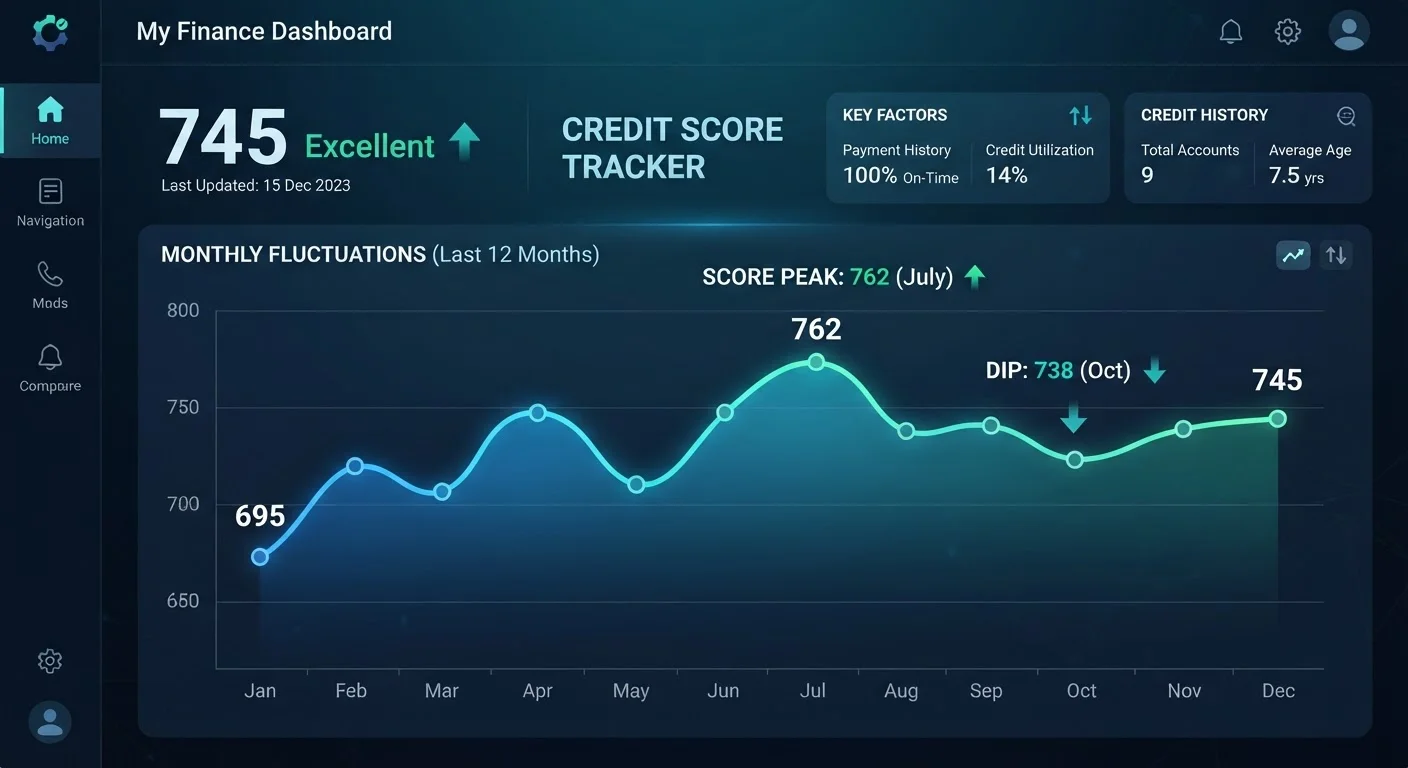
Many people assume their credit score is a stable number that only moves in response to serious financial events. In reality, it's more like a live reading from an instrument that's constantly receiving new input. Your score reflects the data sitting in your credit report at a specific point in time - and that data changes regularly as lenders report your account balances, payment activity, and credit behavior.
To understand why your score shifts, it helps to understand what a credit score actually measures. For a thorough grounding, see our explainer on what a credit score actually measures. In short, scoring models analyze your report across several weighted categories, and any change in those categories can move the number - sometimes noticeably.
35%
Weight of payment history in FICO scoring
According to FICO's published scoring model breakdown, payment history is the single largest factor in a standard FICO score calculation.
30%
Weight of credit utilization in FICO scoring
FICO's model weights amounts owed - primarily utilization on revolving accounts - as the second most influential scoring factor.
1 in 5
Consumers with a credit report error
A Federal Trade Commission study found that roughly one in five consumers had an error on at least one of their three major credit bureau reports.
The Factors Most Likely to Move Your Score Month to Month
Payment history is the single most heavily weighted factor in standard scoring models, accounting for roughly 35% of a FICO score. A payment reported 30 or more days late can cause a meaningful drop. Conversely, a streak of on-time payments steadily reinforces positive history.
Credit utilization - the percentage of your available revolving credit that you're currently using - is the factor most people underestimate. If your credit card balance jumps from $500 to $2,000 between billing cycles, your utilization ratio rises and your score can fall noticeably, even if you pay the full balance later. This makes utilization one of the most volatile score drivers month to month. Our dedicated guide covers why credit utilization carries more weight than most people realize.
New credit inquiries occur when you apply for a loan, credit card, or other credit product. Each application typically generates a hard inquiry on your report, which can lower your score by a few points temporarily. Multiple applications in a short window compound this effect, though scoring models generally group inquiries for the same loan type (such as mortgage shopping) into a single event.
Account changes - including closing an old card, paying off a loan, or having a new account added - can all affect the average age of your accounts or the mix of credit types you carry. These shifts are often modest but can be surprising if you're not expecting them.
When a Score Drop Signals a Real Problem
Not every score change demands action, but certain patterns are worth investigating. A sudden, unexplained drop of 30 or more points - especially without any recent account activity on your part - is a signal to pull your full credit reports and examine them carefully.
Common culprits include a payment recorded incorrectly as late, a collection account that appeared without your knowledge, or fraudulent credit activity. Errors on credit reports are more common than most people realize. If you find something that looks wrong, reading your credit report section by section can help you identify the exact entry to challenge. If you do spot an inaccuracy, our guide on disputing a credit report error walks through the formal process.
It's also worth noting that scoring platform matters. If you monitor your score through a bank app, a credit card issuer, or a third-party service, each may use a different scoring model or even a different bureau's data. A score you see in one place may differ from what a lender pulls - which is normal, not a discrepancy to panic over.
This article is for general informational purposes only and does not constitute personalized financial or credit advice. Consult a licensed financial professional or credit counselor for guidance specific to your situation.
Interpreting Fluctuations Without Overreacting
A useful mindset is to track trends rather than individual data points. A score that oscillates within a 20-point range over several months while trending upward overall is a healthy sign - even if any single month looks flat or slightly lower.
Focus energy on the behaviors that have consistent, lasting impact: paying on time every month, keeping revolving balances well below credit limits, and avoiding unnecessary new credit applications. Avoiding common misconceptions also matters - for example, carrying a small balance does not help your score, and closing old accounts can sometimes hurt it. Our myth-busting piece on what people get wrong about building credit covers these in detail.
Finally, remember that a credit score is one input among many when lenders evaluate an application. Factors beyond your credit score, such as income, employment history, and debt-to-income ratio, also shape lending decisions. Keeping your broader financial picture healthy gives your score the best environment to stabilize and improve over time.
Frequently Asked Questions
Your score is based on your full credit report, not just recent actions. A creditor may have reported a higher balance, a payment may have posted late, or an old positive account may have aged off. Even inactivity - like a lender closing an unused card - can shift your score.
Scores update whenever a scoring model recalculates using fresh credit report data. Creditors typically report account activity to the major bureaus once a month, so most consumers see meaningful score changes on a monthly basis.
Not necessarily. Small fluctuations of 10-20 points are common and often reflect routine account activity like balance changes. A larger or sustained drop warrants a closer look at your credit report to identify the cause.
No. Checking your own score is a soft inquiry and has no impact on your credit. Only hard inquiries - triggered when you apply for new credit - can temporarily lower your score.
Yes, sometimes. Paying off an installment loan closes the account, which can reduce the diversity of account types or shorten your average account age - two factors that influence your score. Any dip is typically minor and temporary.
Start by reviewing your credit report from all three major bureaus - Equifax, Experian, and TransUnion - available free at AnnualCreditReport.com. Many scoring platforms also provide reason codes explaining the top factors currently affecting your score.
The content on this site is for informational purposes only and is not a substitute for professional advice. Always consult a qualified professional for guidance specific to your situation.