

Our Verdict
Each of the four major insurance types addresses a distinct financial risk, and no single policy substitutes for another. Most households benefit from carrying all four in some form, though the appropriate coverage level depends on individual circumstances such as age, assets, dependents, and health status. Consulting a licensed insurance professional or financial adviser is the most reliable way to identify gaps specific to your situation.
| Best for | Recommended |
|---|---|
| Vehicle owners seeking to understand their legal obligations and optional protections | Auto Insurance |
| Homeowners or renters looking to protect property and personal liability | Home or Renters Insurance |
| Those with financial dependents who rely on their income | Life Insurance |
| Anyone managing ongoing or unexpected medical costs | Health Insurance |
What Each Type of Insurance Is Designed to Do
Insurance is a risk-transfer tool: you pay premiums to shift the financial consequences of certain losses to an insurer. But the four cornerstone types - auto, home, life, and health - cover fundamentally different categories of risk. Understanding those distinctions helps you evaluate whether your coverage actually matches your exposure. For a grounding in how insurance mechanisms work generally, see Insurance Explained: What It Is, How It Works, and Why It Matters.
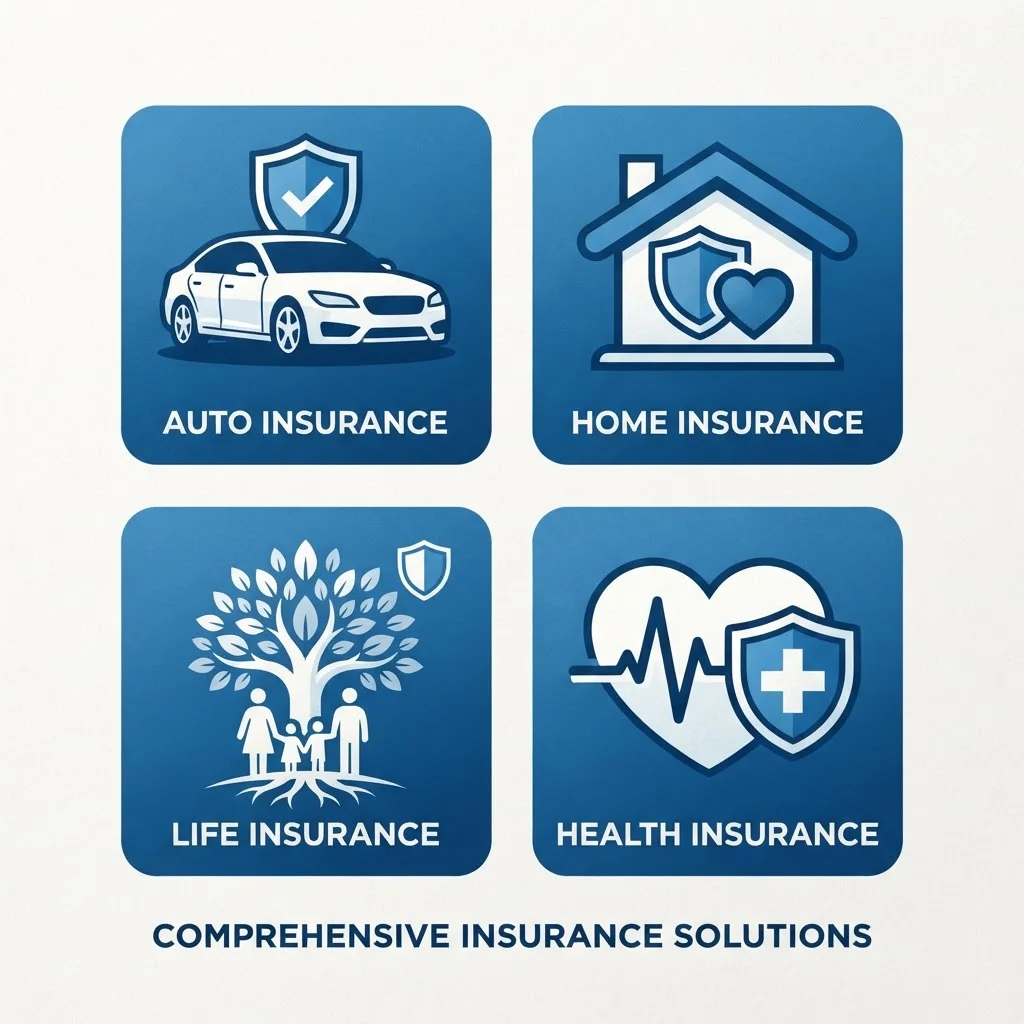
Auto insurance protects against financial loss from vehicle-related incidents - collisions, theft, weather damage, and third-party liability. Home insurance (and its close relative, renters insurance) covers the structure, personal property, and liability associated with where you live. Life insurance provides a death benefit to named beneficiaries, primarily replacing income for financial dependents. Health insurance offsets the cost of medical care, from routine checkups to hospitalizations.
None of these types overlap meaningfully. An auto policy will not pay a hospital bill, and a health policy will not cover your roof after a hailstorm. Treating each as a standalone layer is essential to sound coverage planning.
| Auto Insurance | Home Insurance | Life Insurance | Health Insurance | |
|---|---|---|---|---|
| Primary risk covered | Vehicle damage & liability | Property damage & liability | Income loss at death | Medical care costs |
| Legally required? | Yes, in most states | Not by law (required by lenders) | No | No (individual mandate repealed federally) |
| Key pricing factors | Driving record, vehicle, location | Location, structure, replacement cost | Age, health status, term length | Age, tobacco use, plan tier, location |
| Common exclusions | Flood, mechanical breakdown | Flood, earthquake, wear & tear | Suicide (early period), some causes | Out-of-network care, cosmetic procedures |
| Policy structure | Annual, renewable | Annual, renewable | Term or permanent (multi-year) | Annual enrollment periods |
| Benefit paid to | Policyholder or third party | Policyholder | Named beneficiaries | Policyholder or provider directly |
How Each Type Is Priced
Premiums across all four types are calculated using actuarial risk modeling, but the variables differ by category. Factors that influence how insurers price your policy goes deeper on this topic, but a summary is useful here.
Auto: Driving record, vehicle make and model, annual mileage, location, and credit history (where permitted by state law) all factor in. Young and inexperienced drivers typically face higher premiums.
Home: Location is the dominant driver - proximity to flood zones, wildfire risk, and local crime rates all matter. Construction type, roof age, and the replacement cost of the structure also affect pricing significantly.
Life: Age and health status are the primary inputs. Applicants typically undergo medical underwriting, and premiums rise sharply with age. Term life policies lock in a rate for a fixed period; permanent policies (such as whole or universal life) build a cash value component and carry higher premiums.
Health: Under the Affordable Care Act, individual and small-group plans sold on US marketplaces may not use health status for pricing. Instead, premiums are based on age, tobacco use, plan tier (Bronze through Platinum), and geographic location. Employer-sponsored plans operate under different rules.
Common Coverage Gaps to Know
Each policy type carries exclusions that catch policyholders off guard. Underinsured and Unaware: The Coverage Gaps That Catch People Off Guard examines this topic in depth, but here are the most consequential examples by type.
Auto: State-minimum liability limits may be far too low to cover a serious accident involving multiple vehicles or injuries. Uninsured/underinsured motorist coverage - often optional - protects you when the at-fault driver lacks adequate coverage. See Auto Insurance Basics Every Car Buyer Needs to Understand First for a breakdown of coverage components.
Home: Standard homeowners policies exclude flood damage and earthquake damage by default. Separate flood coverage is available through the National Flood Insurance Program (NFIP) and private carriers. Many homeowners in affected regions carry neither.
Life: Term policies expire without value if the insured outlives the term. Households that rely on a non-earning caregiver often underestimate - or entirely omit - coverage for that person.
Health: Out-of-pocket maximums can still reach thousands of dollars in a given plan year. High-deductible health plans (HDHPs) pair with Health Savings Accounts (HSAs) to offset some cost, but the upfront exposure is real. Network restrictions mean out-of-network care can trigger costs well beyond standard cost-sharing.
Before committing to any policy, Questions Worth Asking an Insurance Agent Before Committing to a Policy can help you move beyond marketing language to understand actual coverage terms.
Thinking About Your Overall Coverage Profile
Most financial planners treat these four types as complementary layers rather than alternatives. Carrying robust health coverage while leaving life insurance gaps creates a different exposure than the reverse. The right balance depends on your age, income, assets, dependents, and whether you own or rent your home.
If you have multiple policies, bundling auto and home with a single insurer is one way some households simplify administration - though it involves trade-offs worth understanding before deciding. The Case For and Against Bundling Home and Auto Insurance examines those trade-offs directly.
For a comprehensive framework covering all policy types together, A Complete Guide to Understanding and Choosing Insurance Coverage provides end-to-end guidance from first principles through claims.
This article is for general informational purposes only and does not constitute personalized financial, insurance, or legal advice. Coverage terms, costs, and availability vary by provider, plan, and state. Consult a licensed insurance agent, broker, or financial adviser to evaluate your specific situation.
The content on this site is for informational purposes only and is not a substitute for professional advice. Always consult a qualified professional for guidance specific to your situation.