

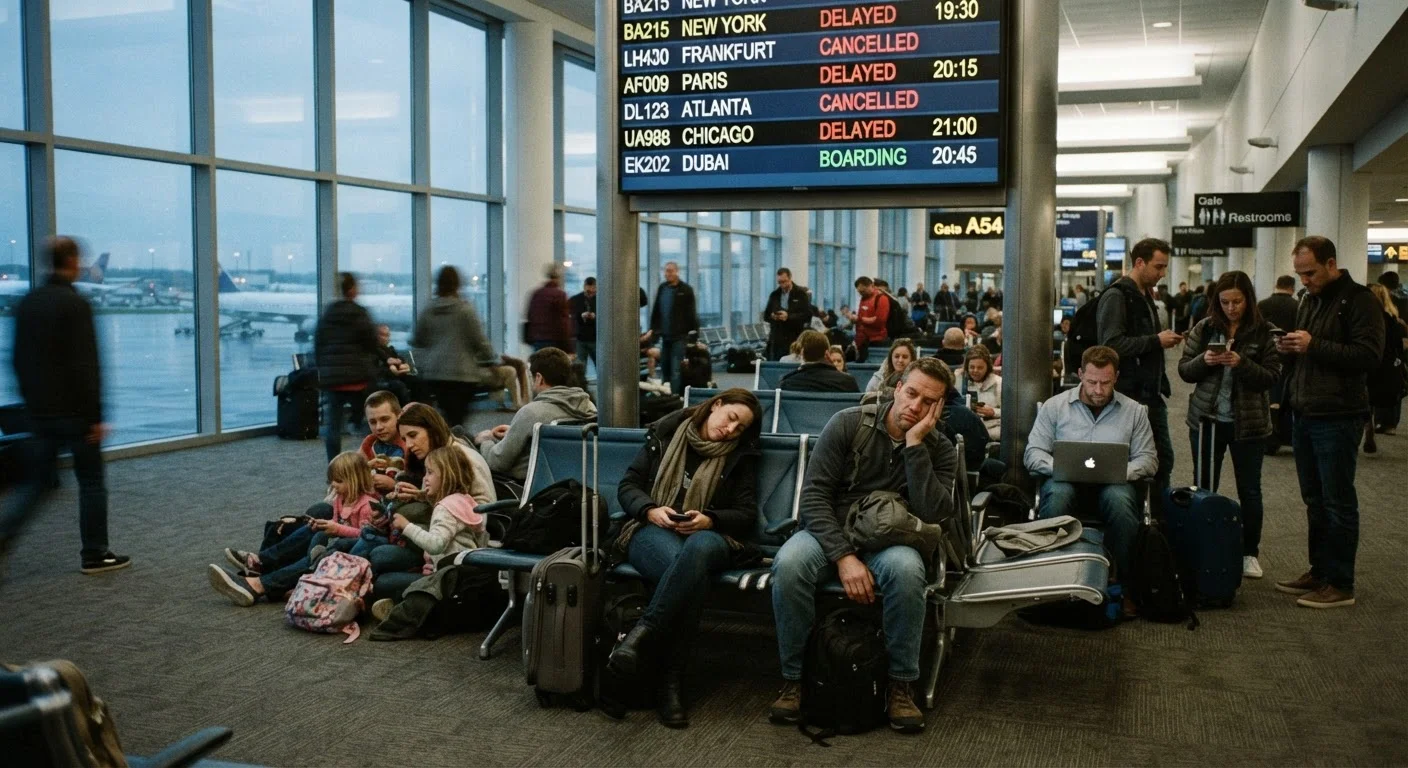
Understanding What Disruptions Generally Involve
Travel disruptions fall into two broad categories: delays, where your service departs later than scheduled, and cancellations, where the service does not operate at all. Both create downstream problems — missed connections, lost accommodation nights, and unplanned expenses — but they're handled differently by carriers and insurers.
A key concept to understand early is extraordinary circumstances. Many carriers use this term to describe events outside their control — severe weather, air traffic control strikes, political unrest — which typically reduce or eliminate their obligation to compensate passengers. Mechanical failures or staffing issues, by contrast, are generally considered within the carrier's control, and passengers may be entitled to more substantial assistance in those cases.
The specific rules that apply to you depend on several factors: the country or region you're departing from, whether the carrier is a domestic or international operator, and the type of ticket you purchased. For accurate, current guidance on your rights, always verify with the relevant government transportation authority or official consumer protection body before travelling. See our travel planning glossary for definitions of common booking and disruption terms.
What Carriers Typically Offer When Things Go Wrong
When a flight is significantly delayed or cancelled, most carriers are expected — and in many regions legally required — to provide some combination of the following:
- Rebooking on the next available service at no additional cost
- Meal vouchers or refreshment allowances during extended waits
- Hotel accommodation if an overnight stay becomes necessary
- Transport to and from accommodation
- A full refund if you choose not to travel
These offerings vary significantly. A short domestic delay may trigger none of the above, while a long-haul cancellation under strong consumer protection regimes may entitle you to financial compensation on top of care. Rail and cruise disruptions follow different frameworks again.
Ask — Carriers Don't Always Volunteer Your Options
Many passengers don't realise they can request a full refund rather than an alternative flight when a cancellation is the carrier's responsibility. At the service desk, ask explicitly: 'What are my options, including a refund?' Having the question framed clearly often produces a more complete answer than waiting for the agent to volunteer information.
One consistent rule across regions: ask. Many carriers do not proactively advertise all the assistance they're obligated to provide. Politely requesting a written explanation of what you're owed — and keeping records of every interaction — puts you in a stronger position for both on-the-spot resolution and any later claim.
How to Navigate a Disruption Step by Step
Being prepared with the right documents and a clear sequence of actions is the best way to reduce the stress of a disruption. Before you do anything else, gather your booking confirmation, passport or ID, and any travel insurance documents.
What you will need
Get official confirmation of the disruption from the carrier
Before taking any other action, confirm the delay or cancellation directly through the carrier's app, website, or departure board. Rely on official sources rather than rumour or fellow passengers. Note the stated reason — this affects what assistance you may be entitled to.
Go directly to the carrier's service desk or contact their helpline
Join the queue at the carrier's service or customer care desk, or call their helpline if queues are long. Ask clearly what rebooking options are available, what care (meals, accommodation) they will provide, and whether you're entitled to any compensation under the applicable regulations. Request written confirmation of any offer made.
Evaluate your rebooking options carefully
If rebooking is offered, consider the time of the next available service, whether it connects smoothly to onward travel, and whether it still makes your trip viable. If the disruption makes your journey pointless (for example, you'll miss a cruise departure), you may be entitled to a full refund instead. Ask what each option entails before committing.
Keep all receipts for any expenses you incur
If you need to buy food, transport, or accommodation while waiting, keep every receipt. Most carriers and insurers require itemised proof of expenditure for reimbursement. Note the time and location on receipts where possible, and stay within reasonable limits — luxury hotel stays or expensive meals are unlikely to be reimbursed in full.
Notify your insurer and document the full timeline
Contact your travel insurer as soon as practically possible to report the disruption. Many policies require notification within a set timeframe. Provide the carrier's written confirmation of the delay or cancellation, your receipts, and a clear chronological account of events. Save copies of all correspondence with the carrier as supporting evidence.
Covering the Gaps With Insurance and Budgeting
Even when carriers provide assistance, out-of-pocket costs can accumulate quickly: meals beyond what vouchers cover, transport between terminals, or a hotel in a city where you never planned to stay. Travel insurance is specifically designed to address these gaps, but what it covers — and what it excludes — depends entirely on the policy.
Policies typically distinguish between trip cancellation (you cancel before departure), trip interruption (disruption mid-journey), and travel delay (costs incurred waiting for a delayed service). Most policies set minimum delay thresholds — often six to twelve hours — before delay benefits activate. Pre-existing conditions, government travel advisories, and carrier-provided compensation can all affect what you can claim. Our travel insurance coverage guide goes deeper on what to look for before choosing a policy.
Building a small contingency buffer into your travel budget from the start is also wise. Even a modest reserve can cover an unexpected meal or taxi without derailing your trip financially. For broader budgeting guidance, see how to build a travel budget that holds up. For a full framework on planning trips with contingencies built in, visit The Full Picture of Trip Planning.
The content on this site is for informational purposes only and is not a substitute for professional advice. Always consult a qualified professional for guidance specific to your situation.