

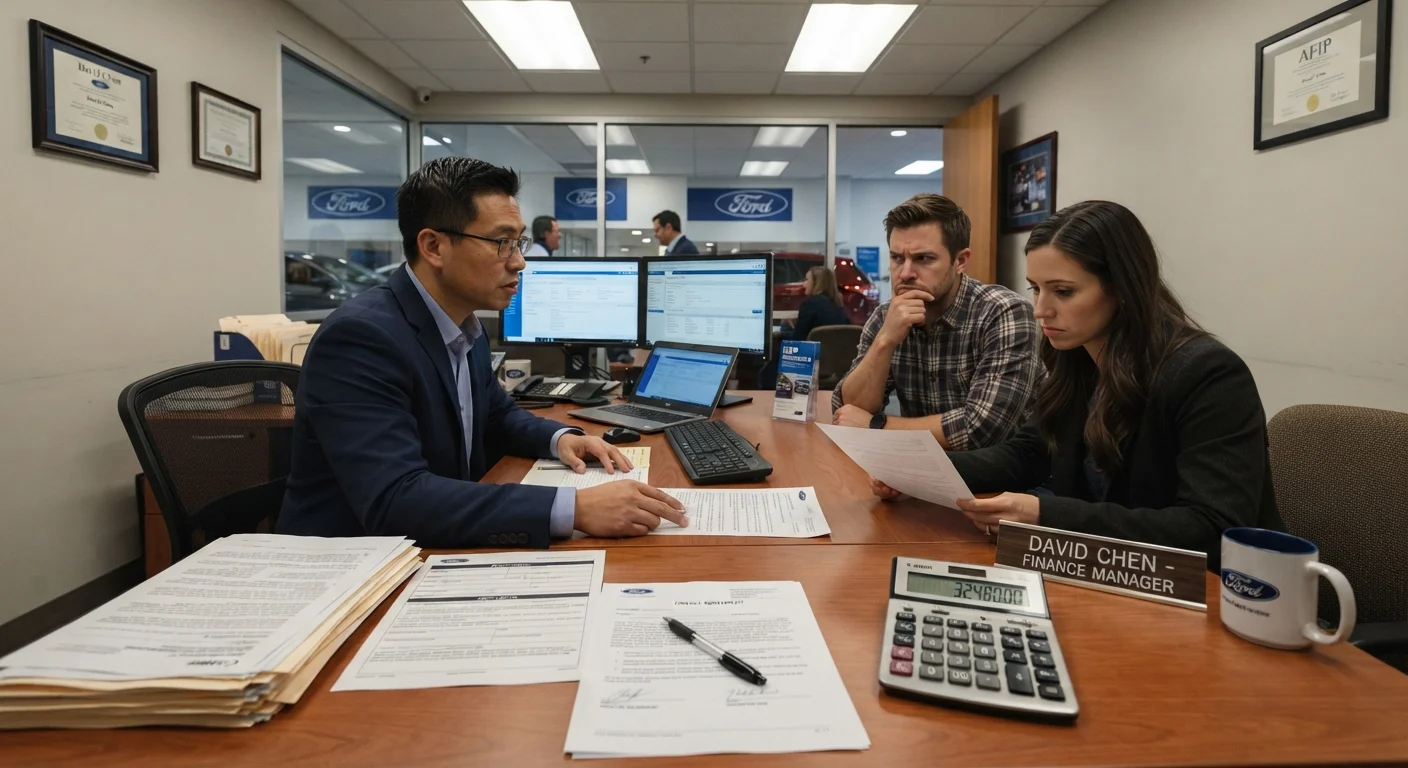
Why the Finance Office Is Where Costs Climb
Most car shoppers focus their energy on negotiating the sticker price on the lot - but a significant share of overpayment happens after the handshake, in the finance and insurance (F&I) office. That room is where loan terms, add-ons, and optional products are presented, often quickly and with confident language designed to make extras feel routine or mandatory.
Understanding the patterns that lead buyers to overpay doesn't require suspicion of every salesperson. Dealerships are businesses with real cost structures, and some products sold in the F&I office do provide value to some buyers. The goal here is to help you recognize what's happening so you can make deliberate choices rather than reactive ones. See our complete car-buying walkthrough for context on the full process.
Negotiating around monthly payments instead of the total price.
Why it happens: Monthly payment figures feel manageable and concrete, while the total vehicle cost is a larger, more abstract number. Dealers know this and will often steer conversations toward "what fits your budget per month."
Accepting dealer-installed add-ons as non-negotiable.
Why it happens: Items like paint protection film, window tinting, or cargo mats are often listed on a separate sheet as already installed, implying they're fixed costs. Buyers assume they have no choice but to pay for them.
Combining the trade-in negotiation with the new car purchase in a single conversation.
Why it happens: Dealers benefit from handling multiple variables simultaneously because it creates more room to adjust figures in ways that aren't immediately obvious. A generous trade-in offer might be offset by less movement on the purchase price.
Agreeing to an extended warranty in the F&I office without comparison shopping.
Why it happens: Extended warranties are presented at the point of sale when buyers are fatigued and eager to finalize. The finance manager often frames them as essential for protection, and the cost is rolled into the monthly payment so it feels small.
Not securing outside financing before visiting the dealership.
Why it happens: Many buyers assume dealer financing will be competitive, or they haven't thought to check in advance. Walking in without a rate means the dealer's offer is the only number on the table.
Patterns Worth Knowing Before You Sit Down
Dealership sales processes are refined over decades. Several structural patterns consistently lead buyers to spend more than they intended - not through deception alone, but through presentation, pacing, and framing that makes scrutiny feel awkward or unnecessary.
~$1,200
Average F&I profit per vehicle sale
Industry data from the National Automobile Dealers Association has consistently shown that finance and insurance products represent a major profit center for dealerships, often exceeding front-end vehicle profit.
72+ months
Common extended loan terms offered today
Longer loan terms have become widespread in auto financing, which lowers monthly payments but increases total interest paid and raises the risk of negative equity early in the loan.
Before you visit, it helps to understand how financing terms affect the overall picture. Our guide on dealer financing vs. bank lending explains the key differences. And if you're unsure what the paperwork actually says once you reach the signing stage, understanding purchase agreement terms is a practical reference. It's also worth reading about common car-buying myths that can cost shoppers time and confidence going in.
Buyers at private sales face a different set of trade-offs. Comparing dealerships with private sellers can help you decide which route suits your situation before committing either way.
The content on this site is for informational purposes only and is not a substitute for professional advice. Always consult a qualified professional for guidance specific to your situation.