

Why Car Batteries Fail Gradually, Not All at Once
A dead battery on a cold Monday morning feels sudden, but the decline leading to it usually unfolds over months. Inside a lead-acid battery, repeated charge and discharge cycles gradually reduce the number of active lead plates capable of storing energy. The battery may still start the car on warm days while already struggling on cooler ones - giving a false sense of reliability.
This slow degradation is why mileage alone is a poor predictor of battery condition. A vehicle driven mostly on short city trips - where the alternator never has enough time to fully recharge the battery - can wear a battery out faster than a highway commuter covering twice the annual distance. If you want a broader view of how wear patterns shift as vehicles age, see our guide to maintaining high-mileage vehicles.
Warning Signs You Should Not Ignore
Recognizing early symptoms gives you time to act on your schedule rather than a tow truck's. The most common indicators include:
- Slow engine crank: If the starter motor sounds labored or takes longer than usual to turn the engine over, the battery may no longer be delivering full voltage under load.
- Frequent need for jump-starts: Needing a jump more than once in a short window is a clear signal the battery is not holding charge between uses.
- Dimming lights or erratic electronics: Headlights that dim noticeably at idle, or power windows that move slower than usual, suggest the battery cannot sustain sufficient voltage.
- Battery or check-engine warning light: Modern vehicles monitor charging system performance. A lit warning light warrants prompt diagnosis.
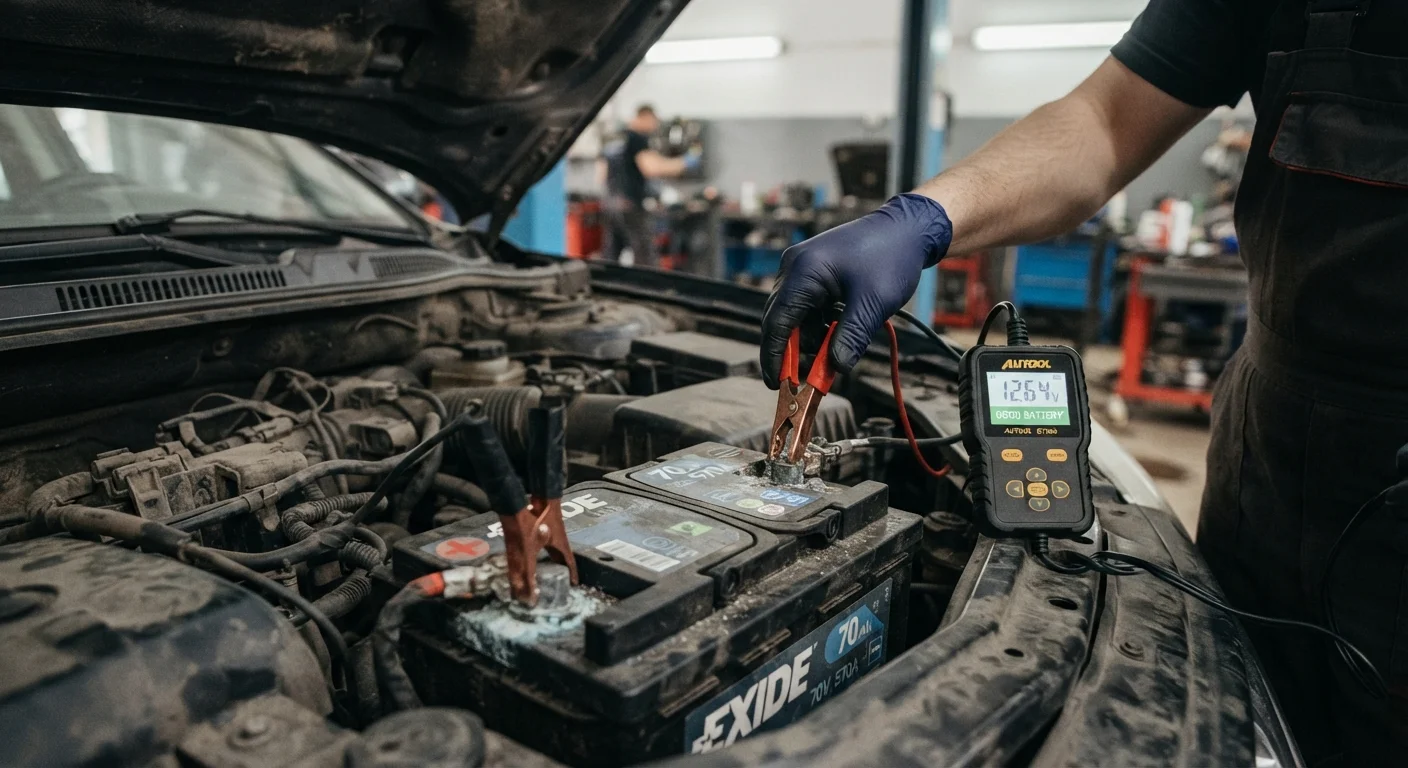
- Visible corrosion on terminals: White or bluish crust around battery terminals disrupts the electrical connection. Corrosion can mimic battery failure, so cleaning terminals first rules out a simpler fix.
- Swollen battery case: Excessive heat can cause the battery casing to warp or bulge - a sign of internal damage requiring immediate replacement.
When Corrosion Is the Real Culprit
Before assuming you need a new battery, inspect the terminals closely. A buildup of white or blue-green residue can create enough resistance to cause slow cranking and electrical issues. A mechanic can clean the terminals safely - sometimes resolving the symptom without any replacement needed.
Factors That Accelerate Battery Wear
Temperature is the single biggest external factor. Heat speeds up internal chemical reactions, causing plates to corrode faster. Cold reduces the battery's ability to deliver cranking amps - the power needed to start a cold engine. A battery weakened by summer heat may simply not have enough reserve to survive its first hard winter. This is a core reason that a pre-winter vehicle check should always include the battery.
Other accelerating factors include: leaving lights or accessories on when the engine is off, a failing alternator that undercharges the battery on every trip, and extended periods of vehicle storage without a maintainer or trickle charger. Parasitic draw - small but constant electrical loads from modules that never fully power down - can drain a battery over days or weeks of inactivity.
3-5 years
Typical car battery service life
AAA and other automotive organizations consistently cite this range as the general average for lead-acid batteries under normal driving conditions.
~50%
Battery power loss in extreme cold
Battery Council International notes that a battery can lose roughly half its cranking power at 0°F compared to its rated output at 80°F.
1 in 4
Vehicles with a weak or failing battery
Industry testing programs have found that approximately one in four vehicles tested carries a battery in need of attention or replacement.
Testing and Knowing When to Replace
A multimeter can show resting voltage, but a load test is the more reliable diagnostic. Load testing draws current from the battery in a way that simulates engine starting and reveals whether the battery can maintain adequate voltage under real demand. Many auto parts stores offer this check at no charge; a mechanic can perform one during a routine service visit.
As a general guideline, batteries older than three years warrant annual testing. If a load test shows the battery is operating below the manufacturer's rated capacity - or if you have experienced multiple warning signs - replacement is typically the more cost-effective path compared to repeated jump-starts and the risk of a no-start situation. Proactive replacement fits neatly into the broader logic of routine care versus reactive repairs: small, planned expenses tend to cost less than emergency ones.
When a replacement is needed, a qualified mechanic can match the correct battery specification - cold cranking amps (CCA) and reserve capacity - to your vehicle's requirements. Installing an undersized battery for short-term cost savings often shortens the replacement interval.
This article is for general informational purposes only. For specific diagnosis or repair of your vehicle, consult a qualified mechanic.
Frequently Asked Questions
Most car batteries have a service life of 3-5 years under normal conditions. Frequent short trips, extreme temperatures, and heavy electrical loads can shorten that range. Regular testing after the three-year mark helps catch decline before failure.
The most common early signs are a sluggish or slow engine crank, dimming headlights at idle, and electronic accessories behaving erratically. A battery warning light on the dashboard is also a prompt to investigate quickly.
Basic voltage checks with an inexpensive multimeter can give a rough indication - a fully charged 12-volt battery typically reads around 12.6 volts at rest. However, a proper load test performed by a mechanic or auto parts store provides a much more accurate picture of real-world capacity.
Cold temperatures significantly reduce a battery's ability to deliver cranking power. A battery that functions adequately in summer may fail its first cold morning of the year. This is why pre-winter battery checks are strongly recommended.
Jump-starting can get you moving, but it is not a long-term fix. Repeatedly jump-starting a failing battery puts strain on the alternator and other electrical components. If you need more than one jump-start in a short period, have the battery tested promptly.
Costs vary depending on battery type, vehicle make, and labor rates, but replacement batteries and installation at a shop commonly range from around $100 to $300 or more. Prices differ by region and vehicle requirements - get a written estimate before proceeding.
The content on this site is for informational purposes only and is not a substitute for professional advice. Always consult a qualified professional for guidance specific to your situation.