

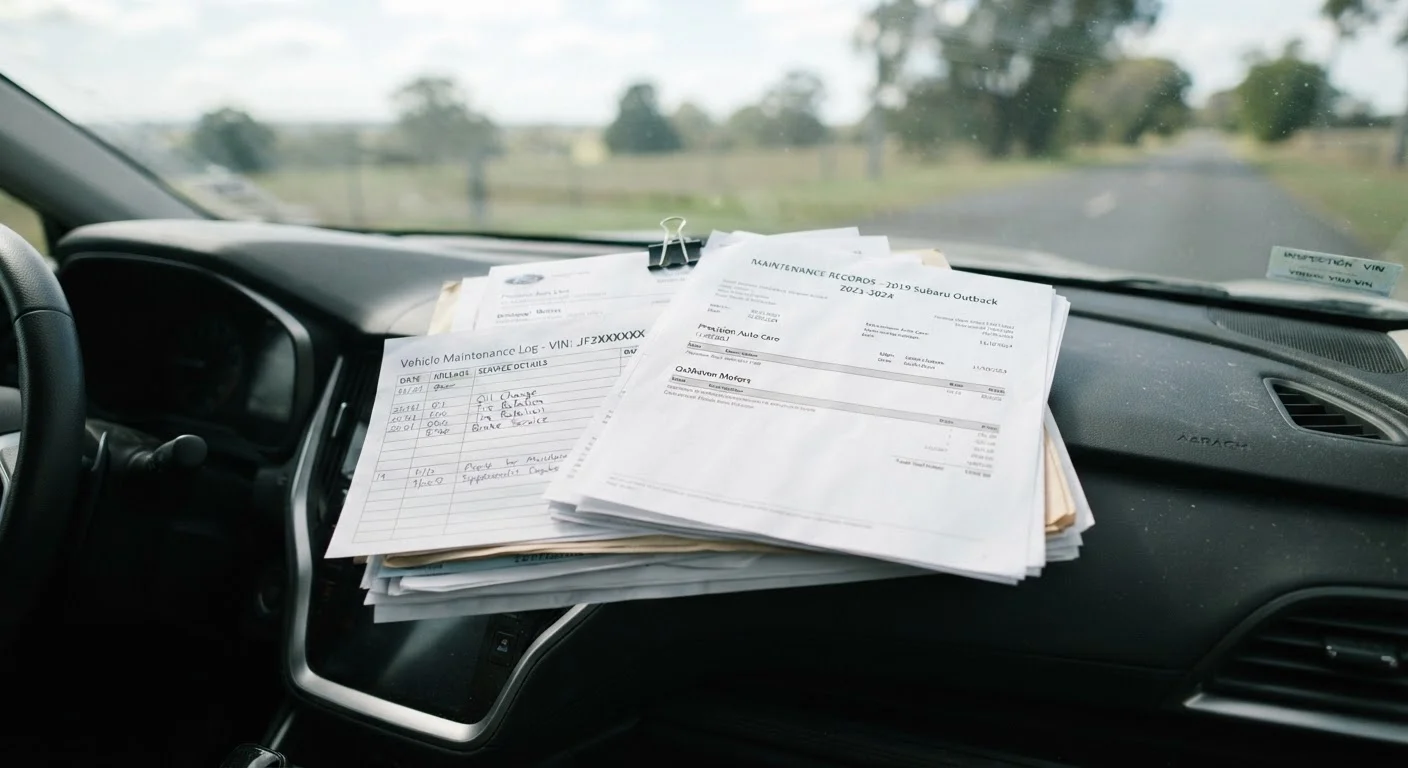
Why Most Drivers Underestimate the Value of a Paper Trail
Ask most drivers where their last oil change receipt is, and you'll get a blank stare. It's understandable - a small slip of paper from a quick-lube shop doesn't feel important in the moment. But over the life of a vehicle, that accumulation of records tells a story that can save money, prevent breakdowns, and significantly affect what a car is worth when it's time to sell.
A service history isn't just a bureaucratic formality. It's evidence that a vehicle has been cared for consistently - something both private buyers and dealerships weigh carefully when assessing a used car. Without it, sellers often have to accept lower offers, or buyers walk away entirely. As our guide on what vehicle history reports contain explains, documented maintenance is one of the clearest signals of how well a car has been looked after.
What Records Are Actually Worth Keeping
Not every piece of paper that comes out of a service bay needs a permanent home in your glovebox. Focus on documents that establish what was done, when, and by whom:
- Oil and filter change receipts - including the mileage and the type of oil used
- Tyre rotation and replacement records - noting the brand, size, and install date
- Brake service invoices - pad replacements, rotor resurfacing or replacement, fluid flushes
- Timing belt or chain service - one of the most expensive jobs if neglected; proof it's been done matters
- Coolant, transmission, and differential fluid services
- Battery and alternator replacements
- Any recall work completed - your records should note the recall number and the date of repair
- Inspection reports and emissions certificates
If you handle any maintenance yourself - air filter swaps, wiper blade changes, cabin filter replacements - a simple handwritten log noting the date, mileage, and parts used carries real weight. Common myths about car maintenance can mislead drivers about which tasks actually need professional documentation, so it's worth knowing the facts.
Recall Work Is Worth Documenting Separately
If your vehicle has had a recall repair completed, keep that documentation in a clearly labelled section of your records. Recall completions are sometimes searchable through the National Highway Traffic Safety Administration (NHTSA) database using your VIN, but having your own physical copy ensures you can verify completion independently. Recall status can also affect whether a vehicle can be legally resold in some circumstances, so it's worth treating this documentation as a priority.
How to Organise Records So You Can Actually Find Them
The best filing system is one simple enough that you'll actually use it. Here are approaches that work for different types of drivers:
Use a dedicated physical folder or envelope stored in the glovebox for all service receipts.
Paper records are universally accepted as proof of service, require no technology to access, and can be handed directly to a buyer or mechanic. Keeping them in the vehicle means they're always where you need them.
Photograph or scan every receipt and save digital copies to a cloud folder organised by vehicle.
Thermal paper receipts - the type most shops use - fade within a few years, often becoming completely unreadable. A digital backup means your records survive regardless of what happens to the originals.
Record the odometer reading on every service receipt, not just the date.
Many maintenance intervals are mileage-based rather than time-based. Without odometer readings, it's difficult to determine whether a service is due or already overdue - and difficult to prove compliance to a warranty provider or buyer.
Keep a running maintenance log that tracks upcoming service intervals alongside completed work.
Reactive maintenance - fixing things after they fail - nearly always costs more than scheduled upkeep. A log that shows what's due next helps you plan financially and prevents critical services from being forgotten. See our article on balancing routine care with reactive repairs for more context.
Request a copy of any inspection or diagnostic report, not just the final invoice.
A full inspection report documents the condition of components that weren't replaced - useful context for future mechanics and strong evidence if a warranty dispute arises over pre-existing conditions.
For drivers managing multiple vehicles or tracking high mileage, the principles are similar to those outlined in our piece on maintaining high-mileage vehicles - consistent documentation makes it far easier to spot patterns and anticipate upcoming service needs.
Start Now: Quick Steps to Build Your Record System
If your current records are nonexistent or scattered, don't let that be a reason to delay. A useful system can be built in under an hour. Check with your regular shop - many can print a summary of all work they've done on your vehicle. Cross-reference that with your seasonal maintenance checklist to identify any gaps. Going forward, treat each receipt as a document worth keeping rather than a scrap to stuff in the cupholder.
This article is for general informational purposes only. Always consult a qualified mechanic for diagnosis, repair recommendations, and vehicle-specific maintenance guidance.
The content on this site is for informational purposes only and is not a substitute for professional advice. Always consult a qualified professional for guidance specific to your situation.