

Summary
24 items · 30-60 minutes per seasonal check
Why a Seasonal Rhythm Makes Sense
Most drivers think about car maintenance reactively - when a warning light appears or something starts making an unfamiliar noise. A seasonal approach flips that pattern. By dividing the year into four inspection windows, you catch wear before it becomes failure and spread the cost and effort of upkeep across predictable intervals.
Temperature swings, road salt, UV exposure, and driving habits all shift by season, and so does the stress on your vehicle's components. A tire that's perfectly inflated in July will be measurably underinflated by January without you touching it, because air pressure drops roughly 1 PSI for every 10°F fall in temperature. That kind of silent drift is exactly what this checklist is designed to catch.
For longer-term context on how maintenance priorities change as a car ages, see our guide on keeping a high-mileage car on the road. And before any significant drive, run through our pre-trip vehicle safety check as a quick complement to this seasonal routine.
Don't Rely Solely on Warning Lights
Modern vehicles have sensors for many systems, but not all. A tire can be dangerously underinflated before a TPMS light triggers; brake pads can wear to metal before any dashboard alert appears. Treat warning lights as a backup, not a primary inspection system - this checklist exists to catch what sensors miss.
How to Use This Checklist
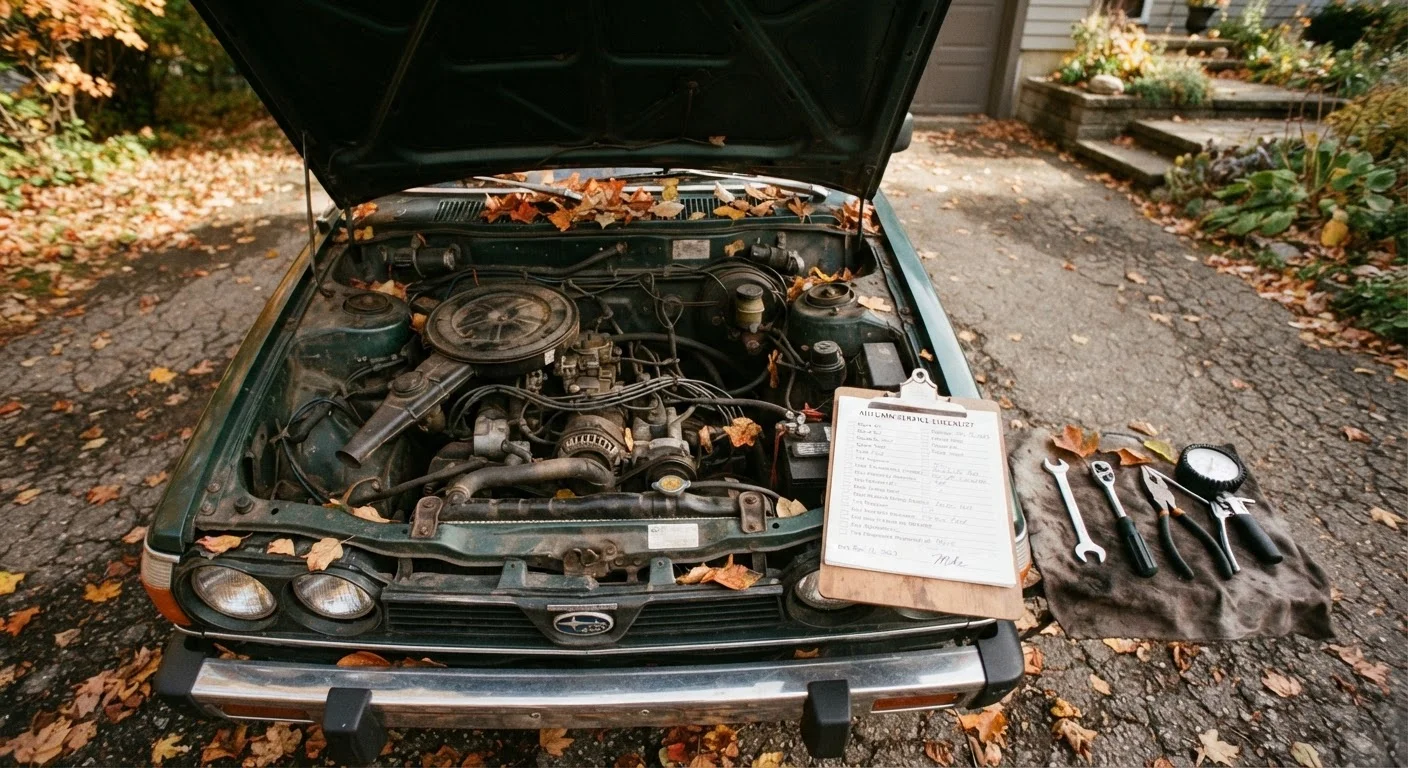
Print or save this checklist and work through it at the start of each season - roughly every three months. You'll need about 30 to 60 minutes, a flashlight, a tire pressure gauge, and access to your owner's manual for fluid specs. Some items you can assess yourself; others should be handed to a qualified mechanic if you're uncertain.
Check off each item as you inspect it. If you spot something that needs attention, note it along with the date and mileage - this is the foundation of a useful service history. Our article on keeping maintenance records explains why that paper trail matters more than most drivers realize.
Tire Pressure Gauge
Accurately measures PSI in all four tires before each seasonal check.
Flashlight or Headlamp
Illuminates the engine bay, underneath the vehicle, and tire sidewalls during inspection.
Owner's Manual
Provides manufacturer-specified fluid types, capacities, and service intervals for your specific vehicle.
Tread Depth Gauge or Quarter
Checks whether tire tread depth is still within a safe operating range.
Terminal Cleaning Brush
Removes corrosion buildup from battery terminals to maintain a solid electrical connection.
Maintenance Log or Notebook
Records inspection dates, mileage, and any issues found to build an ongoing service history.
The Seasonal Checklist
The items below are organized by functional category rather than season, because most apply year-round - with specific seasonal notes called out where timing matters most. Work through each group systematically.
Tires
Fluids
Battery & Electrical
Brakes & Suspension
Visibility & Wipers
Seasonal Readiness Items
Several items on this list - particularly fluid flushes, brake inspections, and battery load testing - touch on overlooked maintenance tasks that quietly shorten a car's life. Don't skip them just because no warning light prompted you.
A Note on DIY vs. Professional Inspection
Visual checks, fluid top-offs, and tire pressure adjustments are well within reach for most drivers. However, brake pad measurement, suspension inspection, and battery load testing require either specialized tools or trained eyes. When in doubt, describe what you've observed to a qualified mechanic rather than guessing.
If you're also applying a similar proactive mindset to your home, our seasonal home maintenance calendar covers the same season-by-season logic for property upkeep. The principle - small, regular checks preventing large, unexpected costs - applies equally in both contexts.
This article is for general informational purposes only. Always consult a qualified mechanic before performing repairs or modifications you are not confident completing safely. Follow your vehicle manufacturer's specifications at all times.
The content on this site is for informational purposes only and is not a substitute for professional advice. Always consult a qualified professional for guidance specific to your situation.