

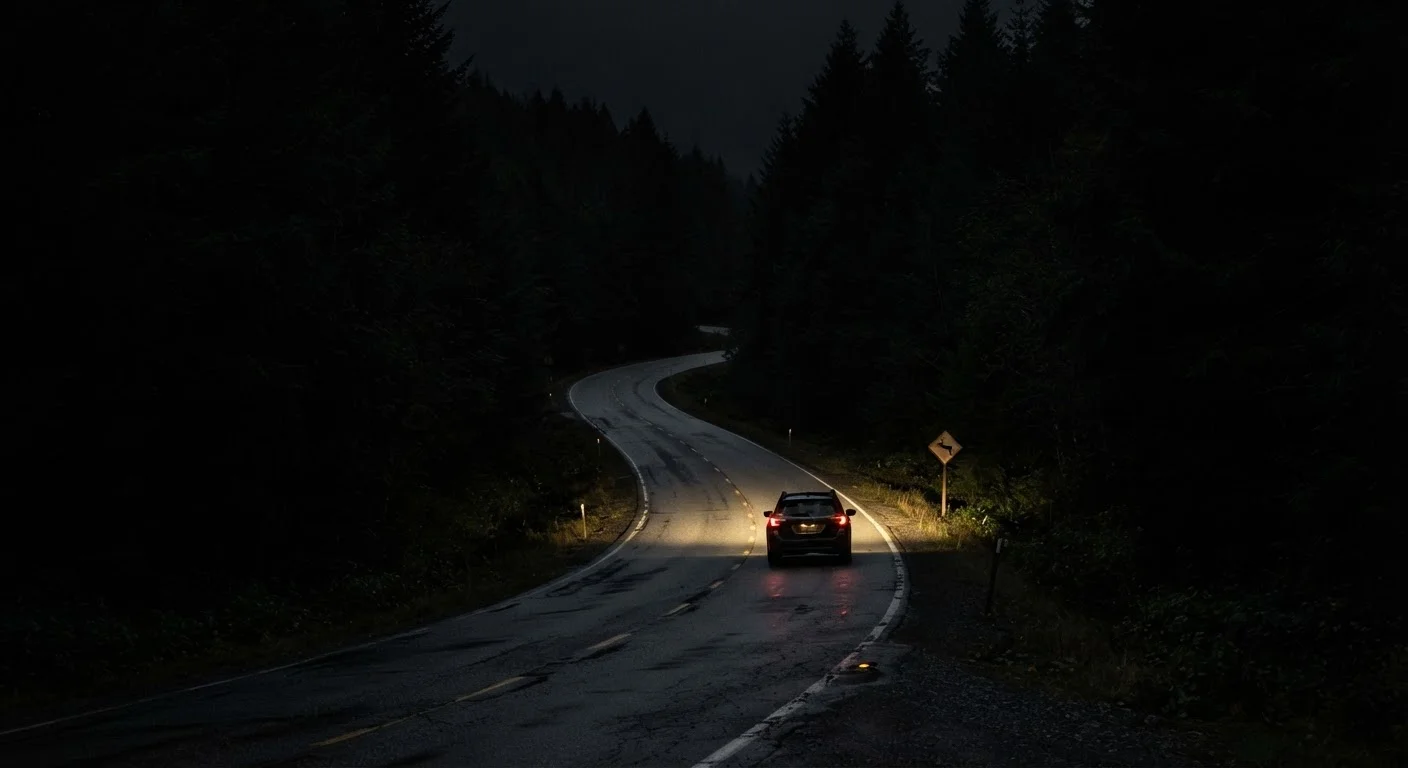
The Vision Problem: What Darkness Actually Does to Your Eyes
Human eyes are built for daylight. In low-light conditions, the eye shifts from relying on cone cells - which provide sharp color vision - to rod cells, which are more light-sensitive but less precise. The transition is slow, taking up to 30 minutes for full dark adaptation. Any sudden bright light, such as oncoming high beams, resets that process.
The practical consequences are significant. Peripheral vision narrows in darkness, reducing awareness of hazards at the edges of the road. Depth perception weakens, making it harder to judge the speed and distance of approaching vehicles. Contrast sensitivity drops, meaning a pedestrian in dark clothing against a dark road becomes extremely difficult to detect. These aren't perception quirks - they're physiological realities that affect every driver regardless of experience.
For teen drivers, whose visual processing and hazard recognition skills are still developing, and for older drivers experiencing age-related vision changes, these effects are amplified. See our guide to adverse-condition driving for context on how visibility challenges stack up across different scenarios.
Fatigue and Impairment: The Nighttime Driver Population
Visibility is only part of the equation. The mix of drivers on the road shifts meaningfully after dark. Late-night and early-morning hours coincide with peak alcohol impairment - the National Highway Traffic Safety Administration consistently finds that alcohol-involved fatalities are heavily concentrated between midnight and 3 a.m. on weekends.
Fatigue compounds the problem. The body's circadian rhythm creates natural sleepiness dips in the early afternoon and, more powerfully, between midnight and 6 a.m. Driving during those hours - even without sleep deprivation - increases the likelihood of microsleeps, slowed reaction time, and lapses in lane-keeping. Our article on what drowsiness does to reaction time explains the neurological mechanisms in more detail.
For context on how alcohol specifically affects driver performance, understanding BAC and its effects on driving is a useful companion read. The key point: impaired and fatigued drivers aren't just a risk to themselves - they're an added hazard every nighttime driver must account for.
Recognize Drowsiness Before It Becomes Dangerous
Warning signs of dangerous fatigue include repeated yawning, difficulty keeping eyes focused, drifting out of your lane, and missing turns or exits. If you notice any of these, find a safe place to stop - a rest area or well-lit parking lot - and rest before continuing. Caffeine can temporarily reduce sleepiness but does not restore full alertness or reaction time.
Overdriving Headlights and Other Common Mistakes
One of the most widespread - and underappreciated - nighttime driving errors is overdriving headlights. Standard low-beam headlights illuminate approximately 160-200 feet of road. At 60 mph, a vehicle covers that distance in about two seconds. If a hazard appears at the edge of that light - a stopped vehicle, a large animal, road debris - there may not be enough distance to stop safely. Slowing down so that stopping distance stays within the lit zone is a straightforward fix that many drivers overlook.
Other common mistakes include:
- Neglected headlight maintenance: Oxidized or dirty lenses can cut light output by more than half. Regular cleaning and timely bulb replacement matter more than most drivers realize.
- Improper high-beam use: High beams should be used on unlit roads with no oncoming traffic, then dimmed as vehicles approach. Forgetting to switch back after passing is a frequent lapse.
- Tailgating: Following distances that feel adequate in daylight are dangerously short at night when reaction time is slower and stopping distances are harder to judge.
- Interior light distraction: Dashboard glare and bright phone screens reduce night-adapted vision. Dim instrument lighting and keep phone brightness low.
For related safety law context, see traffic laws drivers often misunderstand, which covers headlight timing requirements by state.
Practical Adjustments That Reduce Night Driving Risk
The research on night driving risk points clearly toward a set of adjustments that reduce - though cannot eliminate - the added danger. None of them require special equipment or training:
- Slow down: Reduce speed enough that you can stop within the distance your headlights illuminate. This is particularly important on rural roads without streetlights.
- Increase following distance: Add at least one to two seconds to your usual following gap. More distance means more time to react to brake lights, debris, or animals entering the roadway.
- Keep windows and headlights clean: Grime on glass scatters light and increases glare. Clean exterior headlight lenses and the inside of the windshield regularly.
- Avoid driving during peak fatigue windows: If your schedule allows, avoid being on the road between midnight and 6 a.m. If you must drive, recognize early warning signs of fatigue - drifting lanes, heavy eyelids, missing exits - and stop to rest.
- Use high beams appropriately: On unlit rural roads, high beams extend your sight line considerably. Develop the habit of using them consistently when conditions allow and dimming promptly for oncoming traffic.
Aggressive driving patterns that might feel manageable during daylight become significantly more dangerous at night. Our article on road rage and aggressive driving myths explores how driver behavior escalates risk in ways many people underestimate.
Frequently Asked Questions
Reduced visibility limits how far and how clearly drivers can see hazards, while reaction times are slower under low-light conditions. Nighttime hours also concentrate impaired, fatigued, and speeding drivers on the road, multiplying the risk for everyone.
Low-beam headlights typically illuminate roughly 160-200 feet ahead. At 60 mph, a vehicle travels about 88 feet per second, meaning stopping distance can easily exceed what headlights reveal - a scenario called overdriving your headlights.
Yes. The aging eye requires more light to see clearly, and older adults experience greater sensitivity to glare from oncoming headlights. Depth perception and contrast sensitivity also decline with age, making nighttime conditions proportionally more challenging for older drivers.
A following distance of at least three to four seconds is a reasonable baseline at night, compared to the two-second rule often cited for daytime driving. Increase this further in poor weather or when driving in unfamiliar areas.
Oxidized or dirty headlight lenses can reduce output by more than 50% according to automotive safety researchers. Cleaning or restoring lenses is one of the simplest and least expensive steps a driver can take to improve nighttime visibility.
Rural roads account for a disproportionate share of nighttime fatalities because they typically have no streetlights, higher speeds, and longer emergency response times. Urban roads have more lighting but also more pedestrians and intersection conflicts at night.
The content on this site is for informational purposes only and is not a substitute for professional advice. Always consult a qualified professional for guidance specific to your situation.