

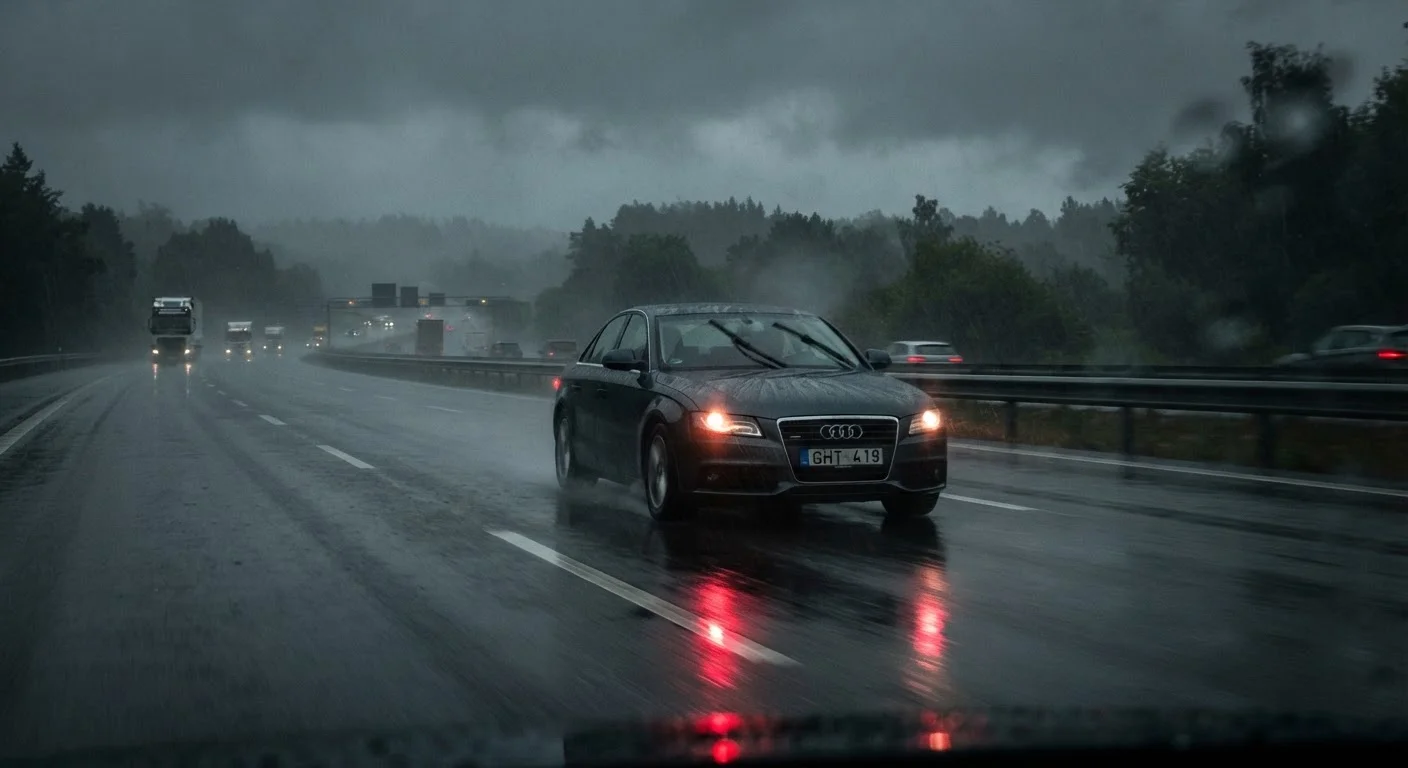
Why Posted Speed Limits Don't Apply the Same Way in Bad Weather
Speed limits in the US are set for ideal conditions - dry pavement, clear visibility, and normal traffic flow. Once those conditions change, drivers are legally required to adjust their speed to what is reasonable and safe, even if that means traveling well below the posted limit. This principle appears in traffic law across virtually every state and is sometimes called the "basic speed law."
Rain reduces tire grip and extends stopping distances. Fog compresses your effective sight lines to a fraction of normal. Snow and ice can increase stopping distance by up to ten times compared to dry asphalt, depending on conditions. None of these hazards are reflected in the number on a speed limit sign.
Understanding how following distance and stopping distance interact is foundational here - they are related but distinct concepts, and slippery conditions affect them differently. If you haven't reviewed that distinction, it's worth doing before driving in any adverse weather.
What to Change - and Why - in Each Condition
Each weather type creates a specific set of hazards. Adjusting for rain isn't the same as adjusting for fog, and snow introduces risks that neither of the others do. The steps below walk through the core changes for each.
Driving in Rain: Slow Down and Increase Your Gap
Reduce your speed by roughly 5-10 mph below the posted limit in light rain, and more in heavy rain. Wet pavement reduces tire friction, and hydroplaning (when your tires ride on a film of water rather than gripping the road) becomes a real risk above approximately 35 mph, particularly on worn tires.
Increase your following distance from the standard 3-second rule to at least 4-5 seconds. This gives your braking distance room to expand. Turn on headlights - in most states this is legally required when wipers are running, not just when it's dark.
Driving in Fog: Prioritize Visibility Over Speed
Fog is uniquely dangerous because it compresses your sight distance - sometimes to less than 100 feet. Adjust your speed so that you can stop completely within whatever distance you can see ahead. This often means traveling well below posted limits.
Switch to low beams immediately. High beams reflect off fog and reduce your visibility. Use roadway edge markings and the right shoulder as a reference point rather than centering on oncoming headlights. In extremely dense fog, consider whether the trip is necessary at all.
Driving in Snow and Ice: Fundamentally Different Rules Apply
Snow and ice require the most dramatic adjustments. Reduce speed substantially - on packed snow, driving at half the posted speed limit is often appropriate. On ice, even lower speeds may be necessary. Stopping distances can be 3-10 times longer than on dry pavement.
Increase following distance to a minimum of 8-10 seconds. Brake gently and early. If your vehicle has ABS (anti-lock braking system), apply steady firm pressure and let the system do its work - don't pump the pedal. Accelerate and turn gradually; abrupt inputs break traction easily.
After completing your adjustments, a few broader habits apply regardless of which condition you're driving in. Smooth steering, gentle braking, and gradual acceleration are universally safer on compromised surfaces. Avoid cruise control in rain or snow - it can misread traction loss and apply throttle at the wrong moment. And keep distractions to a minimum: your reaction window shrinks significantly when visibility and grip are reduced.
Before any trip into uncertain weather, see our pre-trip vehicle safety check to confirm your lights, tires, and wipers are in working order. If temperatures are dropping, a pre-winter vehicle inspection covers the cold-specific items that tend to fail at the worst moments.
Hazard Lights Are Not a Substitute for Slowing Down
Some drivers activate hazard lights while driving slowly through heavy rain or fog, but this practice is illegal while moving in several states. Hazard lights also mask your turn signals, making your intentions unreadable to other drivers. Check your state's specific rules - when in doubt, focus on speed reduction and proper headlight use instead.
Light Settings: Common Mistakes and the Rules Behind Them
Lighting choices in adverse weather are widely misunderstood - and in some cases, the wrong choice actively makes things more dangerous.
- Rain: Turn on headlights whenever visibility drops or wipers are in use. Many states mandate this by law. Running lights (DRLs) are not a substitute - they typically don't activate tail lights, making your vehicle harder to see from behind.
- Fog: Use low beams, not high beams. High beams reflect off fog particles and create glare that reduces your effective visibility. Front fog lights, if your vehicle has them, can supplement low beams. Rear fog lights (less common in the US) should be used when following distance visibility is seriously compromised.
- Snow: Same principle as rain - headlights on. In heavy snowfall, high beams create the same backscatter problem as fog. Stick to low beams.
For a broader reference on when headlight use is legally required - including the wipers-on rule many drivers miss - see traffic laws every driver should know.
After the Weather Passes: What to Watch For
Adverse conditions don't end the moment precipitation stops. Wet roads remain slippery for several minutes after rain ends, especially in the first moments when water mixes with accumulated oil residue on the surface. This is often when drivers relax their guard prematurely.
After snow or ice, shaded areas and bridges freeze faster than open road and may remain icy well after surrounding roads clear. "Black ice" - a thin, nearly invisible glaze of ice - is most common in these zones and after temperatures briefly rise above freezing and then drop again overnight.
Reaction time is another compounding factor drivers often overlook. If you've been driving for an extended period in stressful conditions, fatigue has likely built up. Drowsy driving impairs reaction time in ways that are relevant here - the combination of fatigue and lingering road hazards is worth taking seriously before continuing a long drive.
The content on this site is for informational purposes only and is not a substitute for professional advice. Always consult a qualified professional for guidance specific to your situation.