

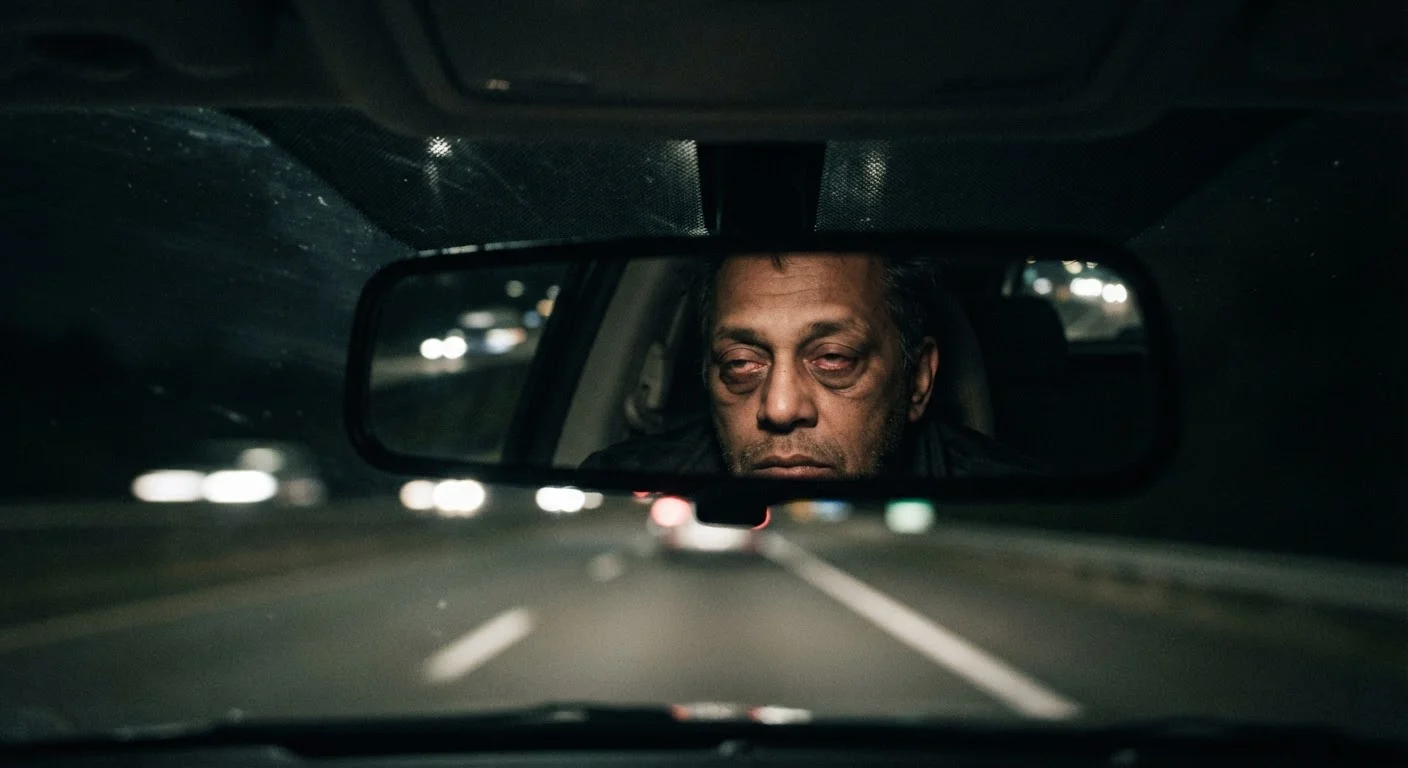
What Drowsiness Does to Your Brain Behind the Wheel
Driving feels automatic to experienced drivers - but it isn't. Every lane change, braking decision, and hazard response depends on continuous, high-speed processing by your brain. When you're drowsy, that processing degrades in ways that are both predictable and largely invisible to the driver experiencing them.
The prefrontal cortex - the part of the brain responsible for judgment, planning, and impulse control - is disproportionately sensitive to sleep deprivation. As fatigue sets in, a driver's ability to anticipate hazards, assess gaps in traffic, and choose appropriate responses slows before physical reflexes do. In other words, the mental work of safe driving erodes first.
Reaction time - the gap between perceiving a hazard and acting on it - increases measurably with fatigue. A driver who is well-rested might react to a brake light ahead in roughly 0.7 seconds. With significant sleep deprivation, that gap can stretch considerably, and at 60 mph, even an extra half-second translates to roughly 44 additional feet of travel before the brakes engage.
Fatigue Risk Is Highest at Specific Times
The human circadian rhythm creates predictable low-alertness windows: roughly 2-6 a.m. and again in the early-to-mid afternoon (approximately 1-3 p.m.). Drivers operating during these windows face elevated drowsiness risk even if they feel rested. Planning to drive outside these windows - or building in rest stops that coincide with them - is a practical mitigation strategy.
For a broader look at how cognitive performance under stress affects safety, see our article on defensive driving mental habits.
Micro-Sleeps: The Hidden Danger Most Drivers Dismiss
Perhaps the most alarming effect of drowsiness is the micro-sleep - an involuntary lapse in consciousness typically lasting between 1 and 10 seconds. The eyes may remain open. The driver may have no memory of the episode. The vehicle continues moving.
At 65 mph, a 5-second micro-sleep means the car travels roughly 475 feet - well over the length of a football field - with no driver input at all. There is no steering correction, no braking, and no awareness of what's happening on the road.
Micro-sleeps are not something drivers can consciously prevent once significant sleepiness has set in. They represent the brain's non-negotiable demand for rest overriding waking behavior. This is why drowsy driving is particularly dangerous on monotonous stretches of highway, where reduced stimulation accelerates the onset of fatigue. The risk overlaps with night driving hazards covered in our guide to night driving and crash risk.
~100,000
Police-reported drowsy driving crashes annually in the US
The National Highway Traffic Safety Administration (NHTSA) has estimated roughly 100,000 police-reported crashes per year involve drowsy driving, though researchers note the actual figure is likely higher due to underreporting.
4-5 sec
Typical duration of a micro-sleep episode
Research in sleep medicine literature identifies micro-sleeps as brief lapses lasting roughly 1-10 seconds, with 4-5 seconds being a commonly cited typical duration.
17-19 hrs
Hours awake linked to alcohol-comparable impairment in some studies
Peer-reviewed sleep research has found that 17-19 hours of continuous wakefulness can produce performance decrements broadly comparable to a blood alcohol concentration of around 0.05%-0.10% on some measures.
How Drowsy Driving Compares to Alcohol Impairment
Research has drawn direct comparisons between sleep deprivation and alcohol impairment, and the parallels are striking. Studies in peer-reviewed journals have found that approximately 17-19 continuous hours without sleep can produce performance decrements similar in some measures to blood alcohol concentrations in the range that begins to impair driving ability.
Both conditions slow reaction time, reduce peripheral awareness, impair lane-keeping, and degrade judgment. Both make drivers more prone to risk-taking and less able to accurately assess their own impairment - a particularly dangerous combination. Unlike alcohol, however, drowsiness carries no legal per se standard in most jurisdictions, making enforcement and deterrence much harder.
For a direct comparison of what alcohol does to driving performance, see our explainer on how blood alcohol content affects driving ability.
Warning Signs That Are Easy to Rationalize Away
Drowsy drivers often talk themselves out of stopping. Common warning signs include:
- Frequent yawning or difficulty keeping eyes open
- Drifting out of the lane or hitting rumble strips
- Missing an exit or turn you know well
- Difficulty remembering the last few miles driven
- Tailgating or misjudging following distance
- Feeling irritable or having trouble focusing
Each of these, in isolation, can be rationalized: "I'm almost there," "I just need some air," "The coffee will kick in." That impulse to continue is itself a symptom - impaired judgment makes it harder to recognize impaired judgment.
These same attentional failures increase exposure to the hazards covered in our guide to driving in rain, fog, and snow, where conditions demand faster, more accurate responses.
This article is for general educational and informational purposes only. It does not constitute safety certification or legal advice. Always follow applicable traffic laws and consult qualified professionals where appropriate.
Frequently Asked Questions
Research suggests that going 17-19 hours without sleep can slow reaction time to a degree comparable to some measures of mild alcohol impairment. Even moderate fatigue - such as getting only 6 hours of sleep - has been shown to meaningfully increase reaction time compared to a fully rested state. The precise amount varies by individual, but the impairment is real and measurable.
Often, no. One of the most dangerous aspects of drowsiness is impaired self-awareness - fatigued drivers consistently underestimate how impaired they are. If you're questioning whether you're too tired to drive, that uncertainty itself is a warning sign worth taking seriously.
Caffeine can temporarily reduce feelings of sleepiness and provide a modest, short-term improvement in alertness. However, it does not fully restore reaction time or cognitive performance to a rested baseline, and its effects wear off. It is not a substitute for sleep before a long drive.
Risk is highest between roughly 2-6 a.m. and again in the mid-afternoon, around 1-3 p.m. These windows align with natural dips in the human circadian rhythm, when the body's drive for sleep is strongest regardless of how much rest you've had.
There is no single federal drowsy driving law, but several states have enacted specific legislation. Drowsy driving that causes injury or death can result in criminal charges - including vehicular homicide - in multiple states. Regulation and enforcement vary significantly by jurisdiction.
Pull off the road safely and rest. A short nap of 15-20 minutes combined with a caffeinated drink can provide temporary relief, but the only durable solution is adequate sleep. Do not rely on willpower, cold air, or music to keep you alert on long drives.
The content on this site is for informational purposes only and is not a substitute for professional advice. Always consult a qualified professional for guidance specific to your situation.