

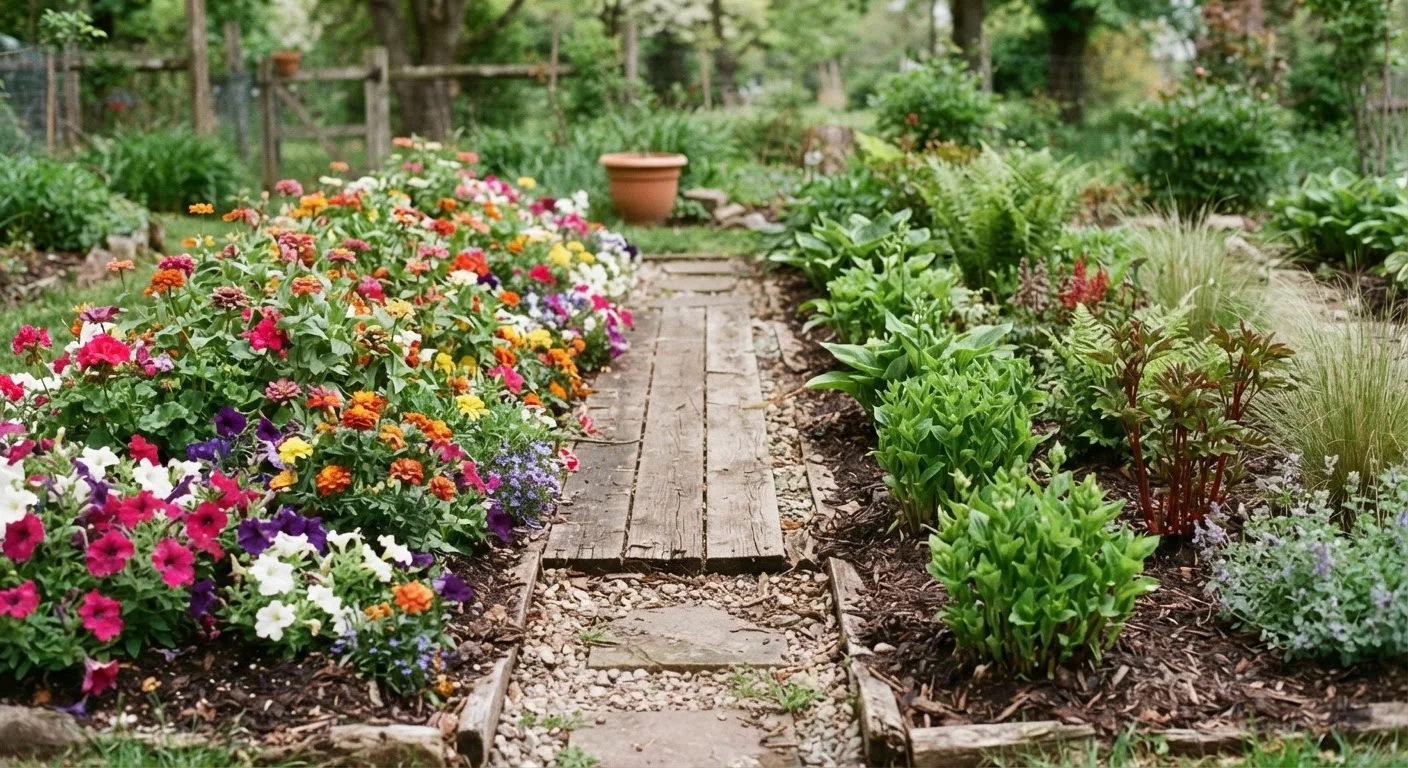
Option A
Annual Plants
The fast-colour, high-impact seasonal performer.
Best for: Gardeners who want maximum bloom impact each season and don't mind replanting yearly.
Option B
Perennial Plants
The low-effort, long-term garden investment.
Best for: Homeowners building a lasting garden framework that returns and expands with minimal replanting.
What Makes a Plant Annual or Perennial?
The distinction comes down to life cycle. An annual germinates, grows, flowers, sets seed, and dies - all within a single growing season. Common examples include marigolds, zinnias, and petunias. You plant them in spring or early summer and they're done by the first frost.
A perennial, by contrast, completes its above-ground growth each season but survives underground through its roots, bulbs, or rhizomes. The following spring, it regrows from that same root system. Coneflowers, hostas, black-eyed Susans, and daylilies are classic examples. Most perennials are dependable for at least three years; many live for a decade or more.
There's a third category worth noting: biennials, which take two seasons to complete their life cycle - growing foliage the first year and flowering the second before dying. Foxglove and hollyhock are common biennials. For most planning purposes, treat them similarly to annuals.
If you're new to plant terminology, our gardening glossary covers terms like deadheading, hardiness zones, and tilth that come up frequently when researching plant types.
How They Compare Across Key Gardening Factors
Understanding the practical trade-offs helps you decide how many of each type to include in your garden plan.
| Criterion | Annual Plants | Perennial Plants |
|---|---|---|
| Life span | One growing season | 3+ years from same roots |
| Upfront cost | Lower per plant | Higher per plant |
| Long-term cost | Ongoing - replant yearly | Lower after establishment |
| Bloom duration | Season-long (months) | Weeks per season |
| Establishment effort | Quick to establish | Slower first 1-2 years |
| Design flexibility | Change design each year | Fixed placement long-term |
| Maintenance style | Deadhead; remove at frost | Divide every few years |
| Zone sensitivity | Less critical - replanted anyway | Critical - verify hardiness zone |
One factor the table doesn't fully capture is bloom duration. Most annuals flower continuously from planting to frost - that's 4-6 months of colour. Most perennials have a bloom window of 2-6 weeks per season, though some, like coreopsis, rebloom if deadheaded regularly. This is the single biggest reason many gardeners use annuals to fill gaps between perennial bloom times.
Planning a Garden That Uses Both Effectively
The most resilient and visually satisfying home gardens combine both plant types strategically. Here's how to think through that balance:
- Start with perennials as your foundation. Map out plants that will define height, texture, and structure across different areas of the bed. Group them by bloom time so something is always in flower across spring, summer, and fall.
- Fill gaps with annuals in the first year or two. Newly planted perennials often look sparse initially - annuals fill that space beautifully while the perennials establish their root systems.
- Account for hardiness zones. A plant labelled as a perennial in Georgia may behave as an annual in Minnesota. Always verify a plant's hardiness range against your USDA zone before treating it as a returning investment.
- Consider maintenance appetite honestly. Annuals need deadheading and eventual removal; perennials need dividing every few years to stay vigorous. Neither is maintenance-free - just differently demanding.
When deciding where to site your beds, it's also worth reading about raised beds versus in-ground planting, since soil drainage and root depth affect how well perennials establish.
Tender Perennials: A Middle Ground
Some plants sold as annuals in cold climates are actually perennials in warmer regions - impatiens, geraniums, and dahlias fall into this group. In USDA zones 9-11, these may survive outdoors year-round. In colder zones, gardeners sometimes overwinter them indoors as potted plants to reuse the following season. Check your zone before assuming a plant must be discarded at season's end.
Once you've settled on a plant mix, use a garden planning checklist at the start of each season to assess soil, spacing, and planting timing before you buy.
Common Mistakes Beginners Make with Each Type
Knowing what to avoid saves you money and frustration in the first few seasons:
- Planting annuals too early. Most warm-season annuals are frost-sensitive. Planting before your last frost date - which varies significantly by region - can kill transplants overnight.
- Expecting perennials to perform immediately. Gardeners often describe the first year as "sleep," the second as "creep," and the third as "leap." A perennial that looks underwhelming in year one may be spectacular by year three.
- Ignoring water needs during establishment. Both types are vulnerable in their first weeks. Consistent watering is critical; our guide on watering frequency and depth explains how to read your garden's moisture needs without overwatering.
- Over-relying on annuals alone. A garden planted entirely with annuals requires full replanting every spring - labour and cost that adds up quickly. Even a handful of reliable perennials reduces that burden significantly.
Planning a thoughtful mix from the start - rather than reacting season by season - is the approach that pays off most visibly over time.
The content on this site is for informational purposes only and is not a substitute for professional advice. Always consult a qualified professional for guidance specific to your situation.