

Why Watering Technique Matters More Than Quantity
Most new gardeners assume that plants die from too little water. In reality, overwatering is just as common - and just as damaging. Roots need both moisture and oxygen to function. When soil stays saturated, air pockets collapse and roots suffocate, leading to yellowing leaves, wilting, and root rot that looks almost identical to drought stress.
The goal of good watering practice isn't to keep soil wet - it's to keep it consistently moist at the root zone. Understanding what that means in your specific garden depends on your plants, your soil, and your climate. Our guide to soil types and what they mean for your garden is a great starting point, because drainage behavior varies dramatically between sandy, clay, and loam soils.
Test Your Soil Before You Assume
Wilting, yellowing, and drooping are symptoms shared by both overwatering and underwatering - so visual cues alone can mislead you. Get in the habit of using a simple soil moisture check (finger test or a basic moisture meter) rather than reacting to leaf appearance. This one habit prevents most watering mistakes beginners make.
How Deeply and How Often to Water
A common rule of thumb is that most vegetable gardens and ornamental beds need about one inch of water per week - from rain, irrigation, or a combination. But the depth that water reaches matters more than the volume applied.
Shallow, frequent watering keeps moisture near the surface, which is where most evaporation happens. It also trains roots to stay near the top of the soil, making plants more vulnerable to heat and drought. By contrast, watering deeply - slowly enough for water to penetrate 6 to 8 inches into the soil - encourages roots to follow moisture downward, building stronger, more resilient plants.
To check whether you're watering deeply enough, wait about an hour after irrigating, then push a finger or narrow trowel into the soil. If moisture only extends 2 to 3 inches down, you need to water longer or more slowly. The finger test is also your best diagnostic for underwatering: before assuming a wilting plant needs water, check the soil 3 to 4 inches down. If it's still moist there, the problem may be heat stress, pests, or disease - not drought.
~50%
Outdoor water use lost to inefficient irrigation
According to the U.S. Environmental Protection Agency, roughly half of outdoor residential water use is wasted due to evaporation, wind, or runoff from overwatering.
6-8 inches
Target soil depth for effective watering
Cooperative extension guidelines commonly recommend that water penetrate 6 to 8 inches into the soil for most vegetable crops and established ornamentals.
When to Water: Timing for Less Waste and Healthier Plants
Early morning - roughly between 6 a.m. and 10 a.m. - is the most effective and plant-friendly time to water. Temperatures are cooler, so less water is lost to evaporation before it reaches the roots. Foliage that gets wet during morning watering has the rest of the day to dry, which significantly reduces the risk of fungal diseases like powdery mildew and leaf blight.
Evening watering is sometimes necessary, but it leaves foliage and the soil surface damp overnight - a favorable condition for mold, mildew, and slugs. If you water in the evening, aim at the base of the plant rather than overhead to keep leaves dry.
Midday watering during summer heat isn't harmful to plants (the myth that water droplets scorch leaves has been debunked - see common garden myths for more), but it is wasteful because evaporation rates peak in the heat of the day.
Practical Watering Methods and Habits That Work
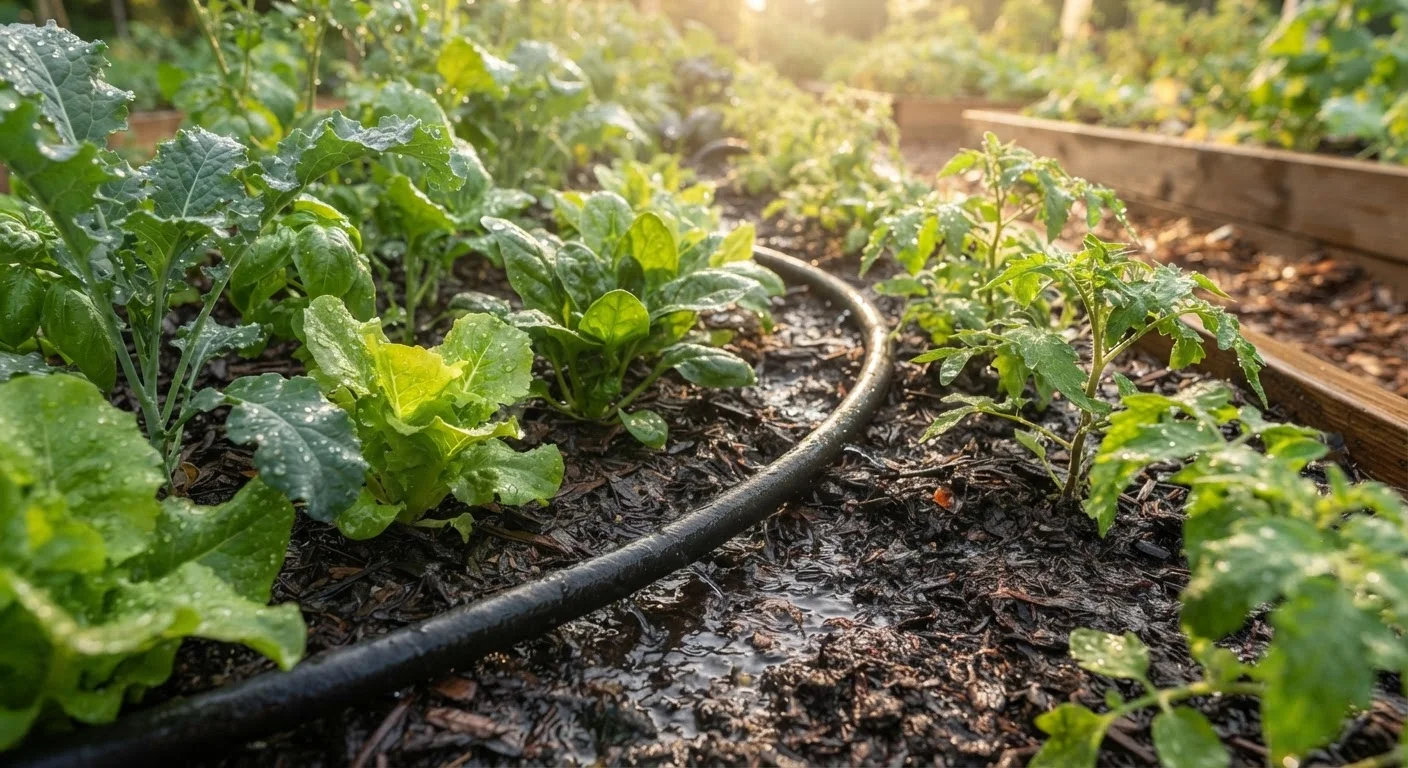
The method you use to deliver water shapes how effective it is. Overhead sprinklers are convenient but lose significant water to evaporation and wet plant foliage unnecessarily. Drip irrigation and soaker hoses deliver water slowly, directly to the root zone, and are far more efficient - especially in raised beds. If you're weighing raised beds versus in-ground planting, note that raised beds typically dry out faster and may need more frequent attention.
Mulching is one of the highest-impact habits you can build. A 2- to 3-inch layer of organic mulch - straw, wood chips, or shredded leaves - over your soil surface slows evaporation, moderates soil temperature, and can meaningfully reduce how often you need to water.
Water deeply and less frequently rather than a little every day.
Deep watering pushes moisture down to the lower root zone, encouraging roots to grow downward. Shallow daily watering keeps roots near the surface where they're vulnerable to drying out quickly.
Always check soil moisture at depth before deciding to water.
Surface soil can look and feel dry while adequate moisture remains several inches down. Watering before it's needed contributes to root oxygen deprivation and can promote fungal issues.
Apply mulch around plants to slow soil moisture loss.
Bare soil loses moisture rapidly through evaporation, especially in warm and windy conditions. Mulch creates an insulating barrier that keeps the root zone cooler and retains moisture longer.
Direct water at the base of plants, not the leaves.
Wet foliage for extended periods creates conditions favorable to fungal diseases such as powdery mildew and blight. Roots - not leaves - absorb the water plants actually use.
Account for rainfall before adding supplemental irrigation.
A rigid watering schedule ignores what nature is already providing. Overwatering from combined rain and irrigation is a leading cause of root disease in home gardens.
Adjusting Your Approach as Conditions Change
Watering needs shift throughout the season. Seedlings need more consistent surface moisture to germinate and establish; mature plants need deeper but less frequent watering. Heat waves, windy days, and drought all increase demand. Rainy spells may eliminate the need to water for a week or more - always account for recent rainfall rather than following a rigid calendar schedule.
New transplants are especially vulnerable in their first few weeks. Even if the weather seems mild, roots haven't yet spread far enough to draw on moisture from a wide area of soil. Check transplants daily and water when the top inch of soil dries out, gradually extending the interval as they establish. For a fuller picture of what shapes plant performance, understanding your climate zone can help you calibrate expectations for your specific region.
The content on this site is for informational purposes only and is not a substitute for professional advice. Always consult a qualified professional for guidance specific to your situation.