

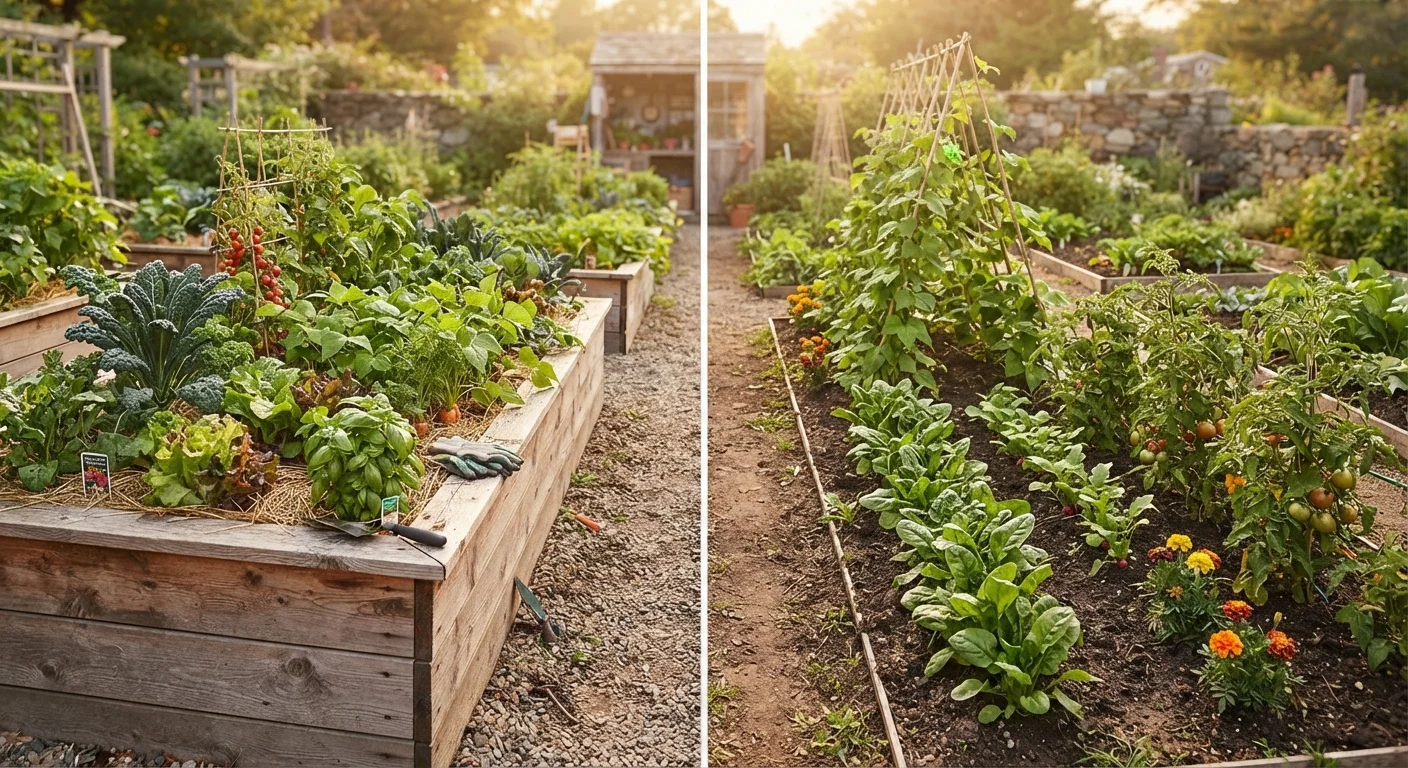
Option A
Raised Garden Beds
The controlled, accessible growing environment.
Best for: Gardeners dealing with poor native soil, limited mobility, or compact yards who want faster results and precise soil management.
Option B
In-Ground Planting
The traditional, scalable approach to growing.
Best for: Gardeners with ample yard space and reasonably healthy soil who want low upfront cost and room to grow a wide variety of plants.
Understanding the Core Difference
Raised beds are enclosed growing areas - typically framed in wood, metal, or composite material - filled with a custom soil mix and positioned above the surrounding ground level. In-ground planting means working directly with the native soil in your yard, amended and prepared as needed.
Both methods grow the same vegetables, herbs, and flowers. What differs is how much control you have over the growing environment, how much effort and cost you invest upfront, and how well each approach fits your specific yard conditions. If you're just beginning to think about a garden layout, the Garden Planning Checklist for a New Growing Season is a useful starting point before committing to either method.
Neither approach is universally superior - the right choice depends on your soil, your budget, your physical comfort, and what you plan to grow.
| Criterion | Raised Garden Beds | In-Ground Planting |
|---|---|---|
| Upfront cost | Moderate to high | Low |
| Soil control | Full - custom mix | Limited - amend native soil |
| Drainage | Excellent; may need more watering | Varies by native soil type |
| Season length | Longer - warms up faster | Standard for your region |
| Weed pressure | Generally lower | Typically higher |
| Deep-rooted crops | Limited by bed depth | Unrestricted root depth |
| Accessibility | High - adjustable working height | Requires bending and kneeling |
| Scalability | Each bed is a separate investment | Easily expanded at low cost |
| Best for perennials | Generally not recommended | Well suited |
Soil Quality and Drainage
Soil is where this decision often becomes clear-cut. Raised beds allow you to fill with a blended mix - typically a combination of topsoil, compost, and an aerating material like perlite - giving roots an ideal, loose, nutrient-rich environment regardless of what's underneath. If your yard has dense clay, sandy soil that drains too quickly, or contaminated ground, a raised bed sidesteps those problems entirely.
In-ground planting works with what you have. If your native soil is reasonably healthy - loamy, well-draining, and not compacted - in-ground growing can be excellent. Adding compost regularly builds organic matter over time, and the natural soil ecosystem, including beneficial microbes and earthworms, supports plant health in ways a newly filled bed hasn't yet developed. Our guide on compost, mulch, and fertiliser explains how each amendment improves your soil over time.
Raised beds also drain more freely than in-ground plots, which helps prevent root rot in areas with heavy rainfall - but it also means they can dry out faster and may need more frequent watering during hot spells.
Cost, Setup, and Long-Term Maintenance
Upfront costs differ significantly. A basic in-ground plot requires little more than a spade, some compost, and time. Raised beds require framing materials, fill soil - which can be expensive when purchased in volume - and hardware. A single 4×8-foot bed can cost anywhere from a modest amount for basic lumber to considerably more for metal or composite frames with premium soil mixes.
Over time, the gap narrows. Raised beds tend to have fewer weeds (especially if lined with landscape fabric or cardboard at the base), better pest management in some cases, and soil that doesn't get compacted by foot traffic. In-ground beds may need more regular weeding and soil amendment, but they don't require replacement framing or periodic soil topping.
For anyone considering a broader garden setup, the Starting a Vegetable Garden from Scratch walks through both approaches from the very beginning.
What You Can Grow - and Where Space Matters
Most vegetables, herbs, and annual flowers grow well in either system. Raised beds with at least 12 inches of depth handle tomatoes, peppers, lettuce, carrots, and herbs without issue. However, deeply rooted crops like parsnips or large squash varieties that sprawl widely are better suited to in-ground space where roots aren't restricted and plants can spread naturally.
Perennials and fruiting shrubs - plants you intend to leave in place year after year - are almost always better started in the ground. A raised bed confines root systems and may not offer the soil volume or stability that established perennials need. The Annual vs. Perennial Plants guide explains this distinction in more depth.
Space planning also matters. Raised beds require pathways between them, which can reduce total growing area compared to a contiguous in-ground plot of the same footprint. If you're working with a compact yard, compare your options - including container gardening - before deciding. You might also find that companion planting strategies help you maximize productivity whichever method you choose.
The content on this site is for informational purposes only and is not a substitute for professional advice. Always consult a qualified professional for guidance specific to your situation.