

Why Start Without Chemicals?
Reaching for a spray bottle at the first sign of chewed leaves is a reflex many new gardeners share - and an understandable one. But most chemical pesticides are broad-spectrum, meaning they harm beneficial insects, pollinators, and soil organisms alongside the target pest. Once those helpful populations are disrupted, pest outbreaks can actually worsen over time as natural predators disappear.
Integrated Pest Management (IPM) - a framework developed by agricultural researchers and extension services - puts chemical controls at the end of a tiered response, not the beginning. The goal isn't to eliminate every pest but to keep populations below a threshold that causes meaningful plant damage. That shift in thinking is what separates reactive gardeners from confident, resilient ones.
Before you plan your pest strategy, it helps to clear up common misconceptions. Our guide to garden myths that keep new gardeners stuck covers several persistent beliefs about pest deterrents that don't hold up to scrutiny.
Best Practices for Chemical-Free Pest Control
The following practices form a practical, layered defense. Apply them in order - prevention first, physical controls second, biological last - before considering any chemical option.
Install physical barriers before pests arrive, not after.
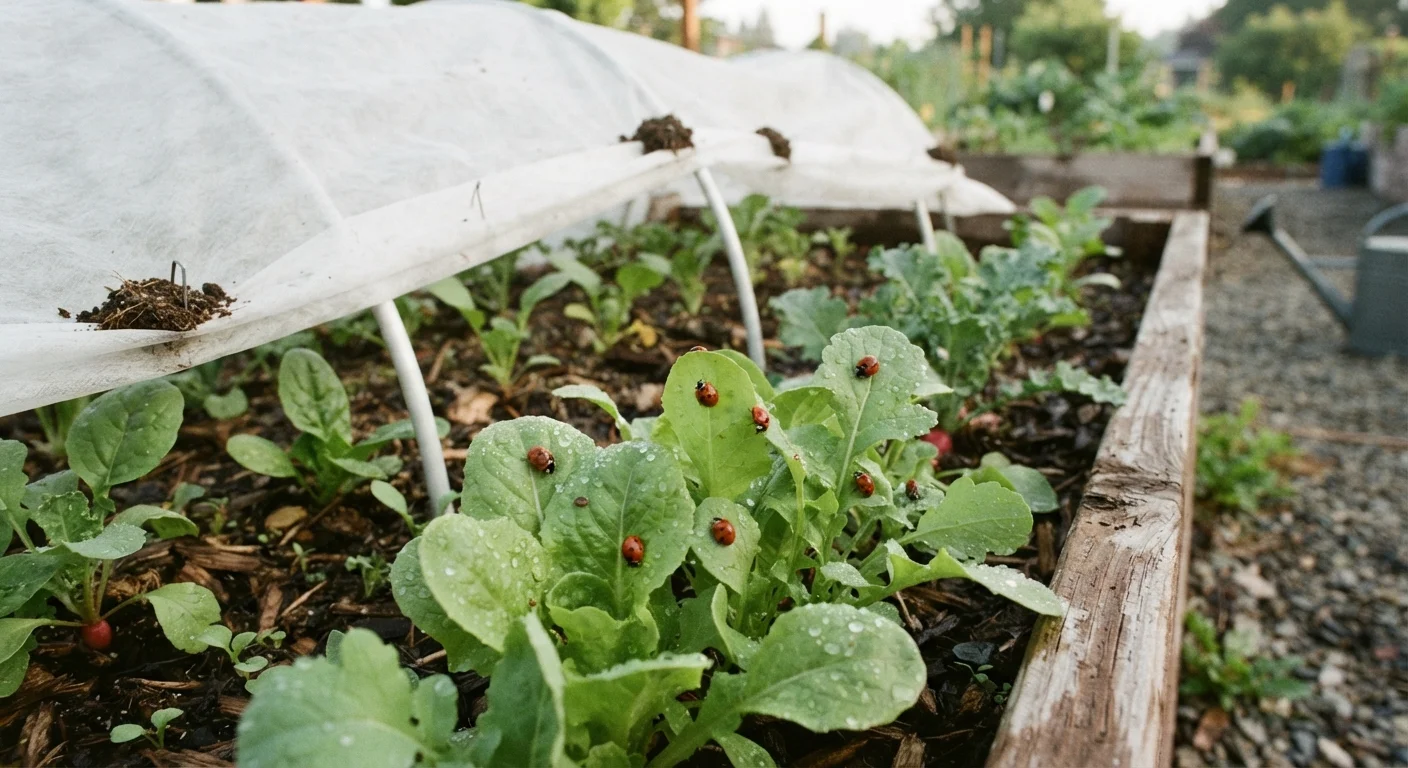
Row covers, netting, and copper tape prevent pests from reaching plants entirely. Reactive barrier use is far less effective because pest populations are already established by the time damage is visible.
Rotate crop families each season across different bed areas.
Many soil-dwelling pests and pathogens are host-specific, meaning they build up in soil where the same plant family grows year after year. Moving crops breaks this cycle without any products at all.
Attract and support beneficial insects by planting habitat plants.
Ladybugs, lacewings, ground beetles, and parasitic wasps prey on or parasitize aphids, whiteflies, caterpillars, and mites. Without habitat and pollen sources, these predators won't stay in your garden.
Inspect plants early and often, and remove pests by hand when populations are small.
Most pest problems are far easier to address at 10 insects than at 1,000. Regular scouting - checking leaf undersides, stems, and soil around roots - lets you intervene before populations explode.
Improve soil health to grow plants that tolerate pest pressure better.
Stressed plants are measurably more attractive to pest insects and more vulnerable to the damage they cause. Soil rich in organic matter supports stronger root systems and more resilient growth.
Practice correct plant spacing to reduce humidity and pest spread.
Overcrowded plants create humid microclimates that favor fungal diseases and make it easier for soft-bodied pests like aphids and mites to spread by contact between leaves.
Putting It All Together in Your Garden
These practices work best in combination. A well-planned garden that uses crop rotation, hosts beneficial insect habitat, and deploys physical barriers when needed rarely reaches the point where chemical intervention seems necessary. Think of pest management as part of garden design, not an emergency response.
Companion planting adds another layer of protection - certain plant pairings genuinely disrupt pest behavior or attract predators. See our guide on which plant combinations actually help each other for evidence-based pairings worth trying. And if you're building fertility alongside pest resilience, setting up a composting system is a natural next step - healthy soil grows plants that simply handle stress better.
For those starting from scratch or scaling up to a new season, our garden planning checklist helps you build pest prevention in from the start rather than retrofitting it later.
The content on this site is for informational purposes only and is not a substitute for professional advice. Always consult a qualified professional for guidance specific to your situation.