

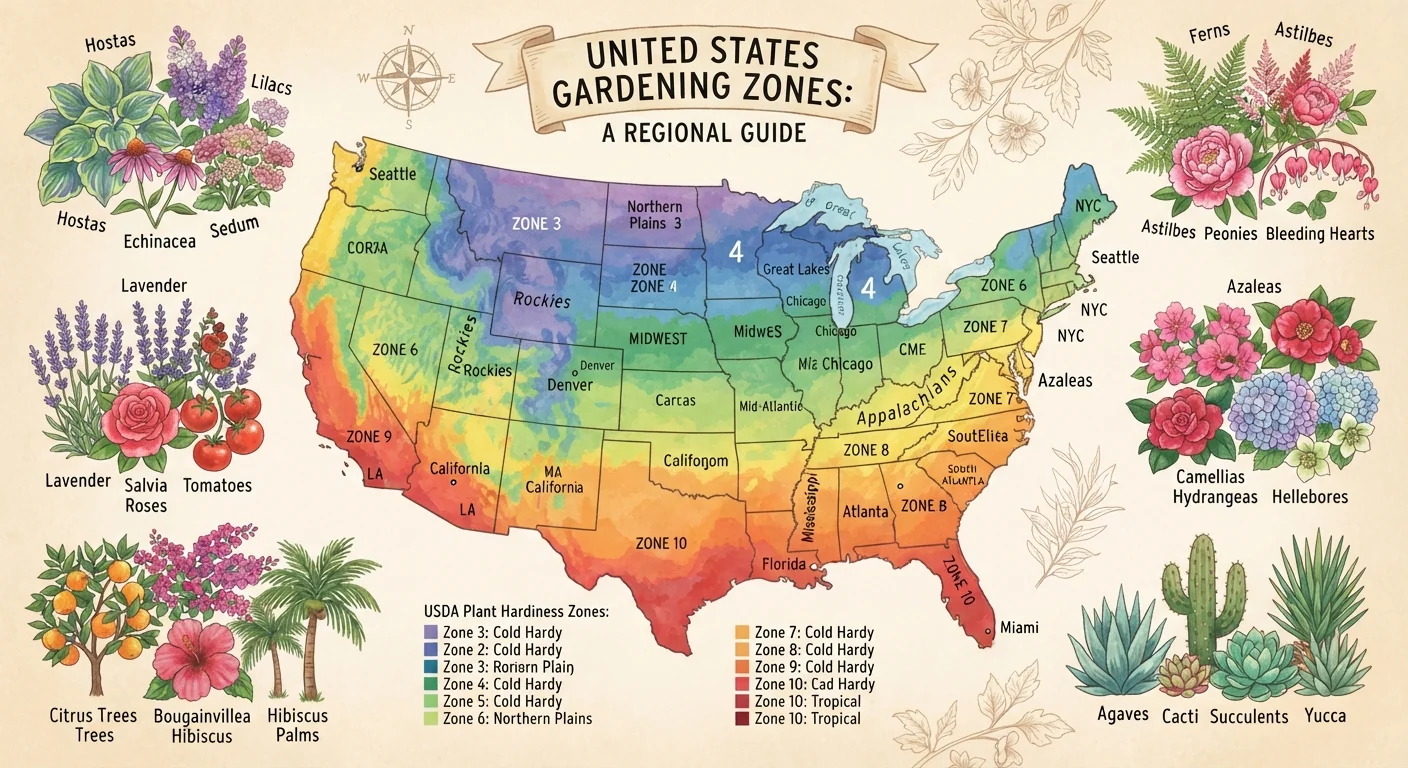
What the Zone Number Actually Tells You
When you browse a plant tag or seed catalog, you will often see a phrase like "Hardy to Zone 5" or "Zones 7-10." That number refers directly to the USDA Plant Hardiness Zone Map, which classifies every part of the country based on the average annual extreme minimum temperature - in plain terms, how cold it typically gets at the very worst point of winter.
The continental United States runs from Zone 3 in northern Minnesota and Maine up to Zone 11 in the warmest corners of Hawaii and South Florida. Each zone spans 10°F, so a plant rated for Zone 6 (minimum temperatures between -10°F and 0°F) is not expected to tolerate the -20°F lows typical of Zone 5.
This single number answers one targeted question: will this plant's roots and crown survive my winter? It does not predict summer performance, drought tolerance, or how much sun a plant needs. Think of it as a baseline survival filter, not a complete growing guide. For a fuller picture of what shapes plant success, see our guide to soil types, which covers another foundational factor beginners often overlook.
How to Look Up and Use Your Zone
Finding your zone takes about thirty seconds. The USDA hosts an interactive map at planthardiness.ars.usda.gov where you can enter your zip code and get your zone and sub-zone instantly. Write this number down - you will reference it every time you shop for perennials, shrubs, or trees.
Once you know your zone, use it as a starting filter when evaluating plants:
- Within your zone range: The plant is a reliable candidate for your winters.
- One zone warmer than yours: The plant may survive mild winters but is a risk in harsh years. Consider it a gamble worth hedging with protective mulching.
- Two or more zones warmer: Treat the plant as an annual - plan to replace it each season - or skip it entirely.
- Colder-rated than your zone: The plant will almost certainly survive winter cold, though it may struggle with summer heat if it's adapted to a northern climate.
Write Down Your Zone Before You Shop
Save your USDA zone number in your phone before visiting a nursery or browsing online plant retailers. Most plant tags and catalog listings include a zone range, and having your number handy takes the guesswork out of whether a plant is a safe pick for your winters. Zone 6a and Zone 6b are not the same thing - the sub-zone matters when you are on the edge of a plant's cold tolerance.
Once you have your zone sorted, a seasonal garden planning checklist can help you put that knowledge into action before your next growing season begins.
Microclimates: Why Your Yard May Bend the Rules
Your official zone is an average across a geographic area, but your actual yard is not perfectly uniform. Microclimates - small pockets where temperature, wind exposure, or moisture differ from the surrounding area - can shift effective growing conditions by a full zone or more.
Common warmer microclimates include:
- South- or west-facing walls that absorb and radiate heat
- Spots sheltered from prevailing north winds by fences or structures
- Raised beds, which drain cold air and warm up faster in spring
Common colder microclimates include:
- Low-lying areas where cold air pools on still nights
- Open, exposed hillsides with no wind protection
- Ground beneath overhanging eaves that stays dry and freezes hard
Observing your yard over a full winter - noting where frost lingers longest in the morning, where snow melts first, where ice forms - teaches you more than any map can. This site-specific knowledge lets you place marginally tender plants in your warmest spots and reserve reliably cold areas for species rated for your zone or colder.
What Hardiness Zones Don't Cover
Hardiness zones are a starting point, not the whole story. Several factors that determine whether a plant thrives are completely outside the zone system:
- Summer heat: The American Horticultural Society publishes a separate Heat Zone Map that measures the number of days per year above 86°F. A plant that survives your winter may still struggle if your summers are exceptionally hot.
- Humidity and rainfall: A moisture-loving fern rated for Zone 6 may fail in a dry Zone 6 climate with hot summers. Watering practices matter enormously once you have zone-appropriate plants in the ground.
- Soil drainage: Many cold-hardy plants rot in wet soils over winter even when temperatures are within their rated range.
- Day length and sunlight: Some plants need long summer days to flower or fruit, regardless of winter temperatures.
When you encounter unfamiliar gardening terms while reading plant labels or zone descriptions, our gardener's glossary covers forty terms worth knowing - including hardiness, tilth, and more.
Using hardiness zones intelligently means treating them as one lens among several. A plant chosen for your zone, suited to your soil, and watered appropriately stands far better odds than one selected on zone alone.
Frequently Asked Questions
Visit the USDA Plant Hardiness Zone Map website and enter your zip code. The map will display your specific zone and sub-zone based on 30-year average minimum temperature data collected from weather stations across the country.
Higher zone numbers indicate warmer minimum temperatures. Zone 11, for example, experiences minimum temperatures above 40°F, while Zone 3 dips as low as -40°F. Think of zone numbers as a scale from coldest (low numbers) to warmest (high numbers).
Sometimes, yes. Protective measures like mulching, frost cloth, or planting in sheltered spots can help marginally tender plants survive in a zone or two colder than their rating. However, success is never guaranteed, and these plants may struggle in severe winters.
No. Zones only address minimum winter cold. Heat tolerance, humidity, soil drainage, rainfall patterns, and sunlight hours are equally important. Some plants rated for your zone may still fail if your summers are too hot or your soil stays too wet.
Yes. The USDA updates the map periodically as new temperature data is collected. The most recent major update used data from 1991-2020 and shifted some areas into warmer sub-zones compared to previous versions.
A microclimate is a small area where conditions differ meaningfully from the surrounding region - such as a south-facing wall that traps warmth or a low-lying spot where cold air settles. Your yard may contain microclimates that allow you to grow plants outside your official zone rating.
The content on this site is for informational purposes only and is not a substitute for professional advice. Always consult a qualified professional for guidance specific to your situation.