

Why Soil Type Matters More Than You Might Think
Before you plant a single seed, your soil is already shaping the outcome. Soil texture determines how quickly water drains away, how well roots can push through the ground, and how effectively nutrients reach your plants. Two gardens side by side can produce dramatically different results simply because of what lies beneath the surface.
Understanding your soil type isn't just a technical exercise - it's one of the most practical things you can do to set your garden up for success. It helps you choose plants that are likely to thrive, decide whether amendments are worth the effort, and water more intelligently. Our garden planning checklist includes soil assessment as one of the first steps before each growing season for exactly this reason.
The Four Main Soil Types Explained
Sandy Soil
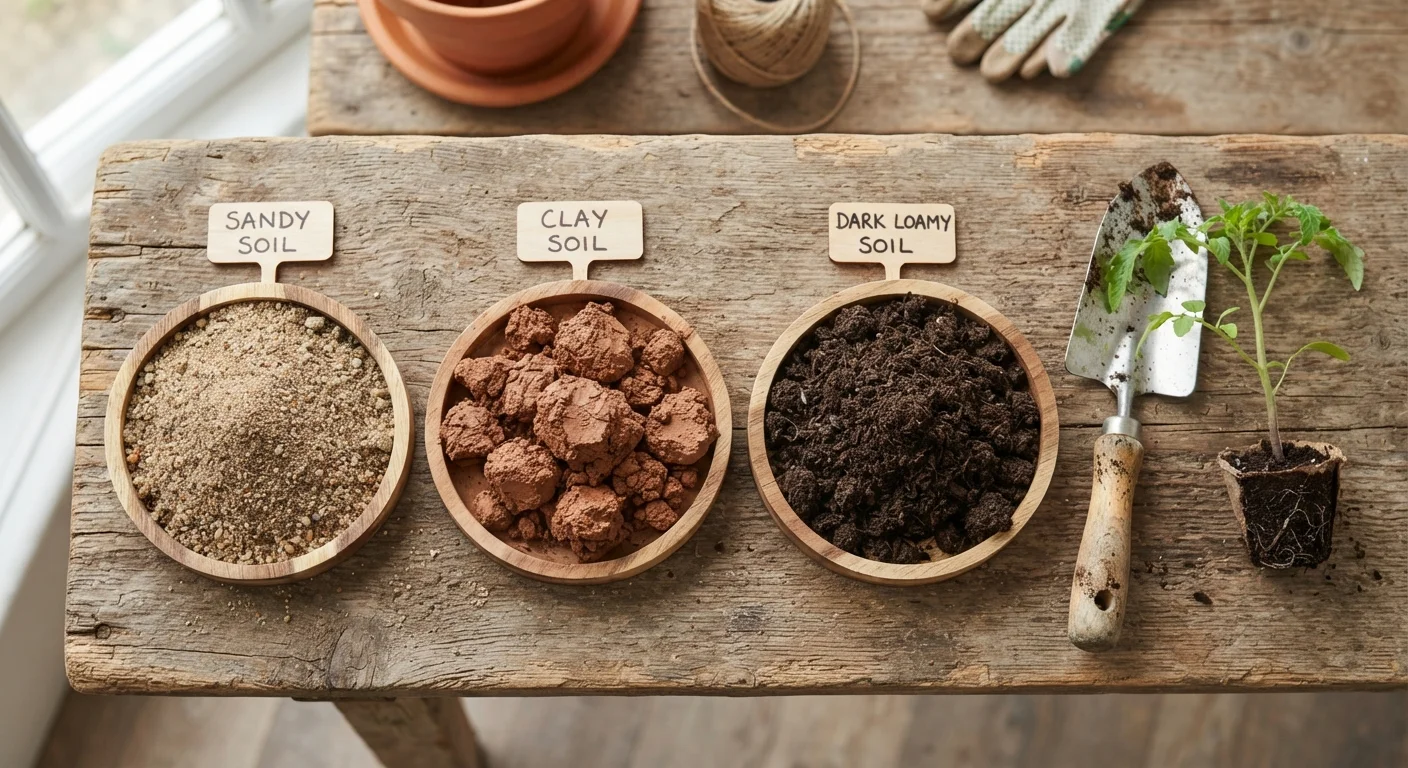
Sandy soil is made up of large, coarse particles with plenty of space between them. Water moves through it quickly - sometimes too quickly. The upside is that sandy soil warms up fast in spring and rarely becomes waterlogged. The downside is that nutrients drain away almost as fast as water, leaving plants hungry. Plants like lavender, rosemary, and many succulents actually prefer these dry, lean conditions.
Clay Soil
Clay particles are extremely fine, which means they pack together tightly and hold water for a long time. Clay soil is typically nutrient-rich, which sounds ideal - but poor drainage and compaction make it difficult for roots to breathe or spread. In wet weather, clay turns sticky and heavy; in dry spells, it can crack and become cement-like. With patience and regular additions of organic matter, clay can become one of the most productive soils in the garden.
Silty Soil
Silt particles fall between sand and clay in size. Silty soil holds moisture reasonably well, drains better than clay, and is generally quite fertile. Its main weakness is a tendency to compact under foot traffic or heavy rain, and it can form a hard surface crust that resists water penetration. Silty soils are common in areas near rivers and floodplains.
Loam
Loam is the blend most gardeners aspire to - roughly equal parts sand, silt, and clay, with good amounts of organic matter mixed in. It drains well without drying out too fast, stays loose enough for easy root growth, and holds nutrients effectively. If you're fortunate enough to have loamy soil, nurturing it with compost and careful watering will keep it performing well for years.
Match Your Plants to Your Soil First
Before spending time and money amending your soil, consider whether any of your preferred plants actually thrive in your existing conditions. Native plants and many drought-tolerant species are well adapted to sandy or rocky soils, while bog plants love the moisture retention of clay. Working with your soil rather than against it is often the faster path to a flourishing garden.
How to Identify Your Soil Type at Home
You don't need laboratory equipment to get a good read on your soil. The ribbon test is one of the quickest methods: take a moist handful of soil and squeeze it, then try rolling it between your thumb and fingers. Sandy soil won't hold together at all. Clay will form a smooth, pliable ribbon of 2 inches or more. Loam forms a shorter, more crumbly ribbon that breaks apart easily.
For a more visual result, try the jar test: fill a clear jar about one-third with soil, top it up with water, shake vigorously, then let it sit undisturbed for 24-48 hours. Sand sinks to the bottom first, silt settles in the middle layer, and clay (if present) remains cloudy near the top longest. The relative thickness of each layer gives you a rough estimate of your soil's composition.
For a more precise picture - including pH and nutrient levels - a basic soil test kit or a test through your local cooperative extension service can provide detailed results worth having before investing in major amendments.
Improving Your Soil Over Time
The encouraging news is that most soil types respond well to consistent improvement. Organic matter - compost, aged manure, leaf mold - is the single most broadly useful amendment across all soil types. It loosens clay, binds sandy particles together, feeds soil organisms, and improves drainage and moisture retention simultaneously.
If your soil presents real challenges, it's worth learning about compost, mulch, and fertiliser and the different roles each one plays. Adding organic matter is a long game - expect meaningful change after two or three seasons of consistent effort rather than after a single application.
Gardeners dealing with difficult native soil often find raised beds to be a practical workaround, since they allow you to fill with a known soil mix from the start. Your soil type also directly influences how you should water - understanding this connection is covered in detail in our guide to watering your garden well.
Soil Improvement Takes Seasons, Not Days
It's tempting to want quick fixes, but soil structure changes gradually. Adding large quantities of sand to clay soil, for example, can actually worsen compaction if not done with sufficient organic matter - a common beginner mistake. A steady, patient approach of adding compost each season is more reliable and less likely to cause unintended problems.
Frequently Asked Questions
Two simple at-home tests can help. The jar test involves putting a soil sample in water, shaking it, and letting it settle - each layer (sand, silt, clay) settles at different rates. The ribbon test involves rolling moist soil between your fingers: sandy soil crumbles, clay forms a ribbon, and loam does something in between.
Yes, but clay soil needs improvement first. Adding compost over several seasons loosens clay, improves drainage, and makes it easier for roots to penetrate. Raised beds are another popular option for vegetable growers dealing with heavy clay.
Loam is widely regarded as the most versatile soil for gardening. It balances drainage, moisture retention, and fertility in a way that suits a broad range of vegetables, flowers, and shrubs. However, many plants thrive in other soil types with appropriate care and amendments.
Incorporate generous amounts of organic matter such as compost or well-rotted manure. Organic matter helps sandy soil retain moisture and nutrients longer. Mulching the surface also slows moisture evaporation significantly.
Absolutely. Sandy soil dries out quickly and may need more frequent watering, while clay soil retains moisture longer and is more prone to waterlogging if overwatered. Understanding your soil type is a key step in developing a smart watering routine.
No single soil type is universally bad - many plants have evolved to thrive in sandy, clay, or silty conditions. The challenge arises when the soil type doesn't match the plants you're trying to grow. Matching plant choice to your soil, or amending your soil gradually, is more effective than fighting your garden's natural conditions.
The content on this site is for informational purposes only and is not a substitute for professional advice. Always consult a qualified professional for guidance specific to your situation.