

Start here
Why DIY Is Worth Learning
Next
The Essential Starter Toolkit
Then
Safety Before You Swing a Hammer
When you're ready
Planning Your First Project
Important boundary
Knowing When to Call a Professional
Why DIY Is Worth Learning
Taking on home improvement tasks yourself builds a working knowledge of how your house functions - knowledge that pays dividends every time something needs fixing or upgrading. Beyond the practical skill, many homeowners find that completing even a small project delivers a real sense of accomplishment.
That said, DIY is not about doing everything yourself regardless of complexity. It is about knowing which tasks are within your capability, understanding your limits clearly, and making informed decisions about when professional help is the right call. The honest trade-offs of DIY home maintenance are worth understanding before you pick up a tool.
If you are also thinking about your outdoor space, the same philosophy applies - see our guide to starting a vegetable garden from scratch for a parallel beginner's approach to a different kind of hands-on project.
The Essential Starter Toolkit
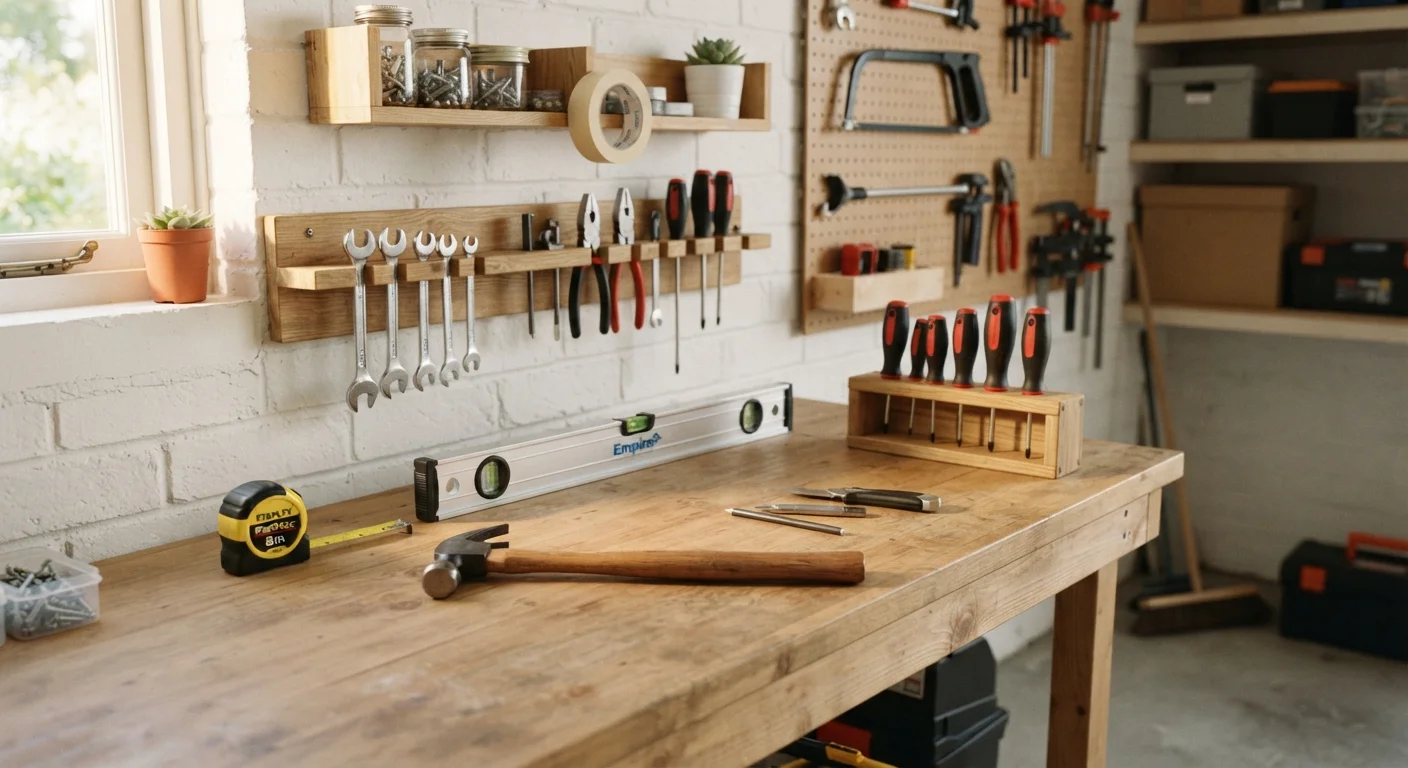
You do not need a fully stocked workshop to handle the majority of household tasks. A focused set of well-made hand tools will serve you far better than a large collection of low-quality items.
- Tape measure - 25-foot length handles most interior measuring needs.
- Hammer - A 16-oz. claw hammer balances driving power with comfortable weight.
- Screwdrivers - Both flathead and Phillips in a few sizes, or a multi-bit driver.
- Level - A 24-inch torpedo or spirit level keeps shelves and fixtures straight.
- Utility knife - Useful for scoring, cutting drywall tape, and trimming materials.
- Adjustable wrench and pliers - Cover a wide range of fastening and plumbing tasks.
- Cordless drill-driver - The single power tool that pays off fastest for beginners.
For broader context on what tools belong in a homeowner's kit, the home maintenance beginner's guide covers additional essentials and how to prioritize them.
Load-bearing wall
A wall that supports the structural weight of the house above it. Removing or modifying one without engineering guidance can cause serious structural damage.
Permit
Official approval from your local government required before certain types of construction or renovation work begins. It ensures the work is inspected and meets safety codes.
PPE
Personal Protective Equipment - safety gear such as goggles, gloves, and dust masks worn to reduce the risk of injury during physical work.
Stud finder
A handheld device that locates the wooden framing studs (and sometimes wires) hidden behind drywall, so you can anchor items securely and avoid cutting into hazards.
Caulk
A flexible sealant applied along joints and gaps - around tubs, windows, or baseboards - to block air, water, and pests from entering.
Safety Before You Swing a Hammer
Personal protective equipment (PPE) is not optional, even on tasks that seem minor. Eye protection, work gloves, and sturdy closed-toe shoes should be on before work begins. Dust masks or respirators are important when sanding, cutting masonry, or working in areas with older paint.
Before any project involving walls, floors, or ceilings, identify the location of electrical wires, plumbing pipes, and gas lines. An inexpensive stud finder with AC detection capability can locate hidden wires. If you are in any doubt about what is inside a wall, do not cut into it without professional guidance.
Never Assume a Wall Is Safe to Cut Into
Electrical wires, plumbing pipes, and even gas lines can run through any wall in your home. Before drilling, cutting, or nailing into a wall surface, use a stud finder with live-wire detection and check for plumbing access panels nearby. If you cannot confirm what is inside, consult a professional before proceeding.
Keep your workspace clear of trip hazards, ensure adequate lighting, and never rush. Most DIY injuries happen during the final 10% of a task when attention drifts. Working steadily and methodically is more protective than any single piece of gear.
Planning Your First Project
A project planned on paper is half finished before you touch a tool. Write down what you want to accomplish, sketch dimensions if needed, and list every material and fastener required. Underestimating materials is one of the most common beginner frustrations - add a 10% buffer when calculating quantities.
Good beginner projects share a few qualities: they are reversible if something goes wrong, they do not involve permits or licensed trades, and they teach transferable skills. Painting a room, replacing cabinet hardware, patching a small drywall hole, or re-caulking a bathtub are all reasonable starting points.
Walk through the entire task mentally before starting. Identify any steps where you are unsure of the process and look them up in advance. Discovering a knowledge gap mid-project - with a wall already opened - creates unnecessary pressure. The Home Maintenance hub is a useful reference as your project list grows.
Knowing When to Call a Professional
Recognizing the boundary of safe DIY work is as important as any technical skill. Certain categories of work carry risks - to your safety, your home's structural integrity, or its systems - that make professional involvement the responsible choice.
As a general rule, work in these areas should involve a licensed contractor:
- Electrical - Anything beyond replacing a fixture or outlet cover, especially work involving the main panel, new circuits, or wiring runs.
- Gas - Any connection, disconnection, or modification of gas lines or appliances.
- Structural - Removing or altering walls, beams, joists, or load-bearing elements.
- Plumbing into mains - Connections to main supply or drain lines, water heater installations.
- Roofing - Full replacement or any work requiring significant access to the roof structure.
Permits exist to protect homeowners as much as to regulate contractors. Unpermitted work can affect your home insurance and complicate a future sale. When in doubt, a brief call to your local building department costs nothing and clarifies requirements quickly.
Starting small, staying within your skill level, and building experience project by project is the most reliable path to confident, capable DIY work over time.
Frequently Asked Questions
A hammer, tape measure, level, utility knife, set of screwdrivers, and an adjustable wrench cover a wide range of beginner tasks. A cordless drill-driver is a worthwhile early addition. Focus on quality over quantity - a few reliable tools outperform a large collection of flimsy ones.
Most electrical work beyond swapping a light fixture carries real shock and fire risk and typically requires a permit and a licensed electrician. General guidance is to leave anything involving your home's panel, new wiring, or outlet installation to a qualified professional. Always verify local code requirements before starting any electrical task.
Permits are commonly required for structural changes, electrical work, plumbing that connects to the main supply, roofing replacement, and HVAC modifications. Requirements vary by municipality, so check with your local building department before starting. Unpermitted work can create problems when you sell or insure your home.
Patching small drywall holes, caulking around windows and tubs, installing a new faucet, painting interior walls, and replacing hardware like cabinet handles are all forgiving projects that build core skills. They involve low cost, low risk, and are easy to redo if something goes wrong.
Measure twice before cutting or buying materials, read instructions fully before starting, and never rush. Look up common pitfalls for your specific task before you begin. Starting with a small pilot section - rather than committing everything at once - lets you catch errors early.
The content on this site is for informational purposes only and is not a substitute for professional advice. Always consult a qualified professional for guidance specific to your situation.