

Start here
Choosing the Right Spot
Next
Understanding Your Soil
Then
Deciding What to Grow
Almost there
Planting and Early Care
Ongoing
Keeping the Garden Going
Choosing the Right Spot
Location is the decision that sets every other choice in motion. Vegetables are sun-hungry plants - most require at least six hours of direct sunlight per day, with eight being ideal for fruiting crops like tomatoes and peppers. Walk your yard at different times of day and note where shadows fall from trees, fences, or the house itself.
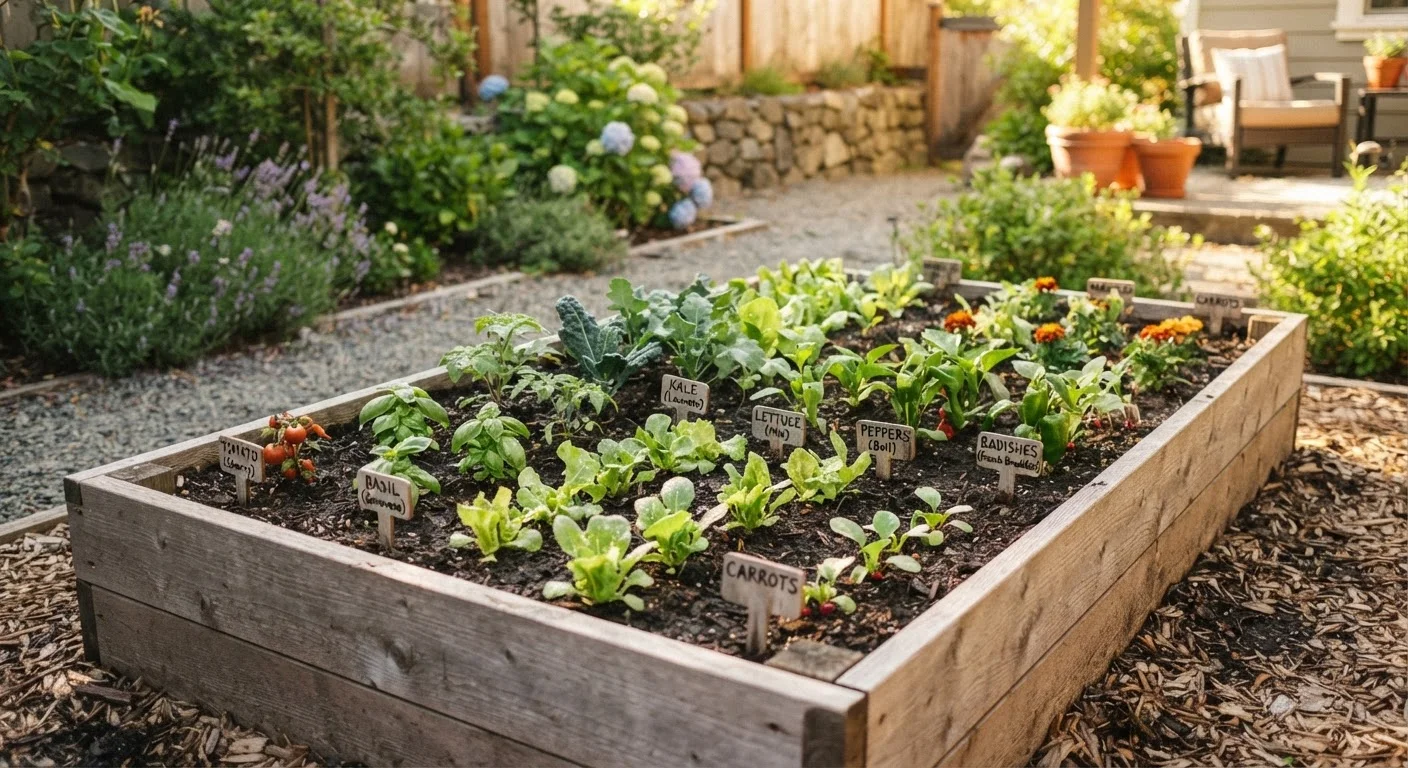
Beyond sunlight, look for a spot that is reasonably level and drains well after heavy rain. Soil that stays waterlogged for more than a few hours is hostile to roots. If your only viable area has poor drainage, a raised bed filled with quality growing mix solves that problem entirely. Proximity to a water source matters too - lugging a heavy hose across the yard becomes a deterrent to consistent watering.
If outdoor space is limited, don't write off containers on a patio or balcony. Our guide on growing food in small spaces covers exactly how to make compact areas productive.
Start Smaller Than You Think
A common beginner mistake is breaking ground on too large an area in the first season. A 4×8 foot bed is genuinely enough to grow a diverse range of vegetables and develop good habits. You can always expand next year - but you can't easily shrink a plot that has become overwhelming.
Understanding Your Soil
Soil is the engine of your garden, and most first-time growers underestimate how much it matters. Good vegetable garden soil is loose enough for roots to penetrate easily, holds moisture without becoming waterlogged, and contains the organic matter that feeds plants over time.
A basic soil test - available as an inexpensive kit at garden centers or through your local cooperative extension service - tells you your soil's pH and nutrient levels. Most vegetables prefer a slightly acidic pH between 6.0 and 7.0. If your soil is outside that range, lime raises pH and sulfur lowers it.
The fastest way to improve almost any native soil is to work in compost. A 2-3 inch layer dug into the top 12 inches of soil adds organic matter, improves drainage in clay soils, and helps sandy soils retain moisture. If you'd like to produce your own compost, our guide to setting up a composting system walks you through the process step by step.
USDA Hardiness Zone
A map-based system that divides the US into zones based on average minimum winter temperatures, helping gardeners identify which plants are likely to survive and thrive in their region.
Frost date
The average calendar date of the last spring frost or first fall frost in your area. Planting warm-season crops too early (before the last frost date) risks killing them with cold.
pH
A scale measuring how acidic or alkaline your soil is, running from 0 to 14. Most vegetables grow best in slightly acidic soil, roughly between 6.0 and 7.0 on this scale.
Days to maturity
The number of days a plant typically needs from transplanting (or germination) to produce a harvestable crop. This number appears on seed packets and helps you plan around your frost dates.
Compost
Decomposed organic material - such as kitchen scraps and yard waste - that improves soil structure, adds nutrients, and supports beneficial soil life when mixed into garden beds.
Direct sowing
Planting seeds directly into the garden bed rather than starting them indoors first. Crops that dislike having their roots disturbed, like carrots and beans, are usually direct-sown.
Deciding What to Grow
Matching your plant choices to your conditions - rather than simply growing what sounds appealing - is what separates a productive first garden from a frustrating one. Start by asking two questions: What do my household actually eat? and What grows reliably in my climate?
For beginners, prioritize crops with short growing seasons and high tolerance for minor mistakes. Lettuce, radishes, green beans, zucchini, cherry tomatoes, and fresh herbs check both boxes. Avoid starting with notoriously fussy plants like celery, artichokes, or melons until you have a season or two of experience.
Pay attention to the days-to-maturity figure on seed packets or plant tags. If your frost-free growing window is 90 days, a variety that needs 110 days won't ripen before cold arrives. Use your USDA Hardiness Zone and last-frost date - published by the National Gardening Association and your local extension office - as your planning anchors. Our garden planning checklist is a useful companion as you map out what to plant and when.
Planting and Early Care
Seeds and transplants each have advantages. Direct-sown seeds are economical and work well for crops that don't like root disturbance - carrots, beans, and radishes prefer to be seeded in place. Transplants (seedlings started indoors or purchased from a garden center) give warm-season crops a head start and are more forgiving for beginners who want quicker results.
Follow seed packet spacing instructions - crowded plants compete for water and nutrients and are more prone to disease. Label rows or plants at planting time; many seedlings look identical in the early weeks.
Water thoroughly after planting, then check soil moisture every day or two rather than following a rigid schedule. The top inch of soil drying out is your cue to water; consistent moisture - not a boom-and-bust cycle - is what vegetables need. A 2-3 inch layer of mulch (straw, shredded leaves, or wood chips) spread around plants conserves moisture, moderates soil temperature, and suppresses weeds significantly.
Keeping the Garden Going
Regular brief visits to your garden do more good than occasional long sessions. A ten-minute walk-through every couple of days lets you spot problems - wilting, yellowing leaves, pest damage, or disease spots - before they escalate.
Common pests like aphids, cabbage worms, and cucumber beetles are far easier to manage when caught early. Hand-picking larger insects and using a strong stream of water to dislodge aphids are effective first responses that avoid introducing any inputs unnecessarily.
Weeding is much easier when weeds are small. Pull them before they set seed, and your workload decreases steadily over the season as the weed seed bank in your soil is depleted. As plants mature and harvests begin, pick crops promptly - leaving overripe produce on the plant signals the plant to stop producing.
Gardening shares the same learn-by-doing spirit as home improvement work. If you enjoy hands-on projects around the property, our introduction to first DIY projects offers grounded guidance for approaching new skills with confidence. Each season you garden, you'll find the decisions feel less uncertain and the results more predictable.
Frequently Asked Questions
A 4×4 foot raised bed or a few large containers is enough to grow a meaningful amount of food. Bigger isn't better when you're starting out - a small, well-tended plot consistently outperforms a large neglected one. If space is very tight, see our guide on <a href="/home-garden/gardening-basics/growing-food-in-a-small-space-balconies-patios-and-tiny-plots">growing food in small spaces</a>.
Timing depends on your USDA Hardiness Zone and the crops you choose. Cool-season vegetables like lettuce and peas can go in 4-6 weeks before your last frost date, while warm-season crops like tomatoes and squash go in after frost risk has passed. Your local cooperative extension office publishes planting calendars specific to your region.
Both approaches work well. In-ground planting is lower cost and fine if your native soil is decent. Raised beds give you control over soil quality, drain better, and warm up faster in spring - making them a popular choice for beginners dealing with poor or compacted soil.
Most vegetables need about one inch of water per week, from rain or irrigation combined. Rather than watering on a rigid schedule, check the top inch of soil - if it's dry, water deeply. Morning watering is generally preferred because it reduces moisture on leaves overnight.
Lettuce, radishes, green beans, zucchini, cherry tomatoes, and herbs like basil and chives are reliable for beginners. They germinate quickly, tolerate minor mistakes, and produce a harvest that reinforces the habit of tending the garden.
If your soil is amended with compost before planting, many vegetables will grow well without additional fertilizer. Heavy feeders like tomatoes and corn typically benefit from supplemental feeding mid-season. A simple soil test (available at garden centers or through extension offices) tells you exactly what your soil needs.
The content on this site is for informational purposes only and is not a substitute for professional advice. Always consult a qualified professional for guidance specific to your situation.