

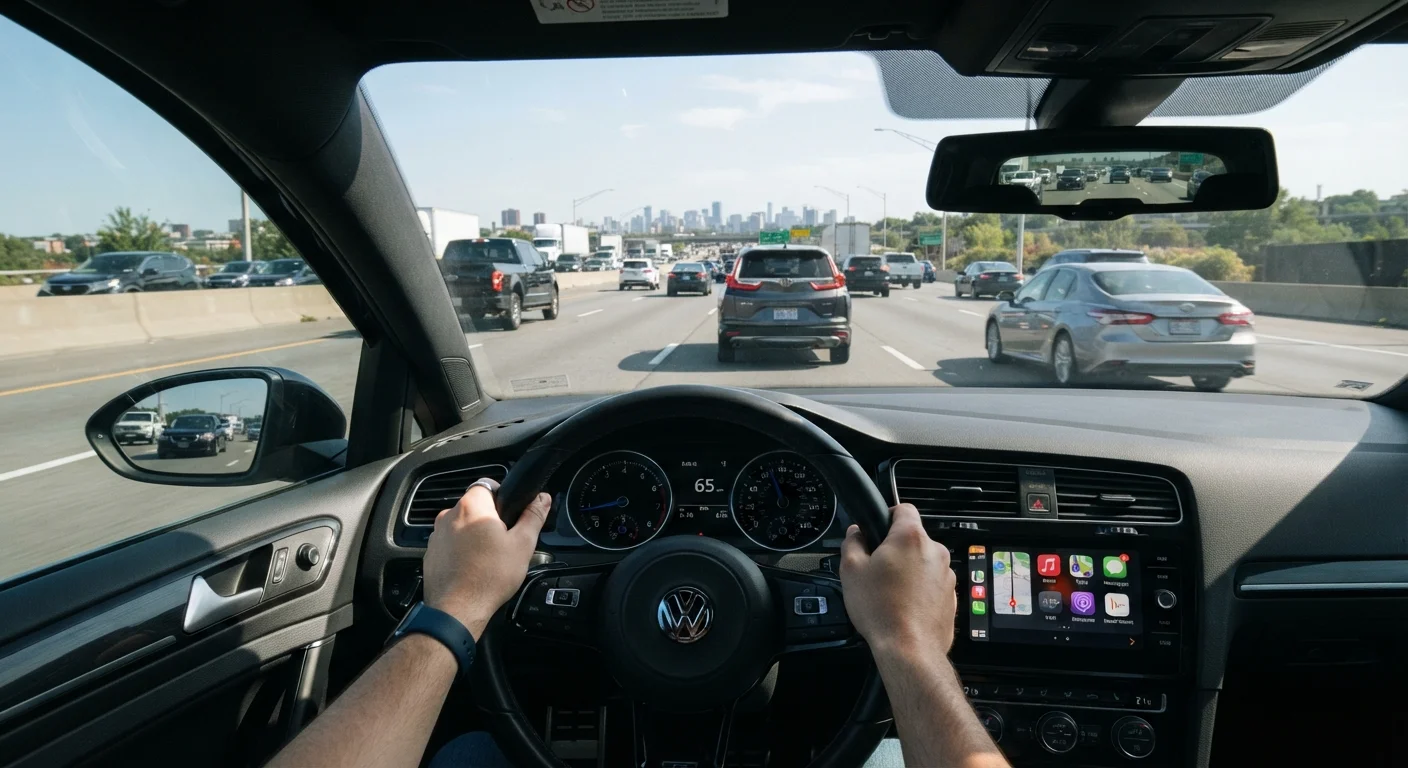
What Defensive Driving Actually Means
Defensive driving is often described as expecting the unexpected - but that phrase undersells the discipline involved. At its core, defensive driving means operating your vehicle with the assumption that other road users may make errors, and positioning yourself to handle those errors before they become collisions.
It's distinct from simply following traffic laws. A driver can obey every posted sign and still be unprepared for a car drifting into their lane or a pedestrian stepping off a curb mid-block. Defensive driving closes that gap by adding deliberate awareness and anticipation to routine rule-following.
The National Safety Council, which administers widely recognized defensive driving courses in the US, frames the approach around reducing risk by anticipating situations and making safe, well-informed decisions. That definition points to something important: this is primarily a mental discipline, not a mechanical skill.
The Core Mental Habits
Experienced safe drivers tend to share a cluster of cognitive habits that go beyond basic vehicle control. Understanding these habits makes them easier to deliberately practice.
Scan the road 12-15 seconds ahead, not just the vehicle in front of you
Looking further ahead gives you more time to identify hazards - merging vehicles, slowing traffic, road debris - before you're forced into a reactive response. Drivers who focus only on the car immediately ahead are effectively making decisions with minimal lead time.
Maintain a following distance you can genuinely stop within
Tailgating removes your reaction time and braking room simultaneously. Even at moderate speeds, closing the gap to one car length means you're depending on the other driver to not brake suddenly - a gamble that doesn't pay off consistently.
Assume other drivers may not see you and adjust your position accordingly
Other drivers have blind spots, distractions, and limited mirrors. Assuming visibility leads to positioning errors - lingering in a truck's blind spot, sitting alongside another vehicle at an intersection, or passing on the right where a driver is less likely to check.
Have a plan for what you'll do if something goes wrong before it happens
Mental pre-planning - sometimes called commentary driving in professional training - means actively asking 'what would I do if that car pulled out?' or 'where would I go if I needed to stop fast?' It converts slow reactive thinking into a prepared response.
Adjust your speed and following distance for conditions, not just posted limits
Speed limits reflect conditions on a clear, dry day with good visibility. Rain, fog, heavy traffic, and road construction all reduce the margin for error in ways that speed signs don't reflect. Driving at the limit in poor conditions can leave you legally compliant but operationally overextended.
For situations where following distance plays a direct role - such as understanding exactly how much room you need to stop - see our article on following distance vs. stopping distance.
Managing the Emotional Side of Driving
A driver's emotional state directly affects their decision-making. Frustration, impatience, and stress narrow attention and increase the likelihood of aggressive or impulsive choices behind the wheel. Defensive driving treats emotional self-regulation as a genuine safety skill, not a soft topic.
This doesn't require eliminating every negative feeling - it means recognizing when those feelings are affecting your driving and having a deliberate response. Taking a breath, increasing following distance when frustrated, or simply acknowledging that the other driver's behavior isn't worth a reaction are all practical techniques.
It's worth noting that aggressive driving tendencies are more common than most people assume. Our coverage of road rage myths explores how ordinary drivers often underestimate their own risk of contributing to conflict on the road.
Give Yourself Permission to Disengage
If you find yourself genuinely angry at another driver, the most effective defensive move is to create space - slow down, change lanes, or take a different route if practical. Staying near a driver who's frustrating you prolongs the risk. Defensive driving includes knowing when to simply remove yourself from a developing situation.
Quick Wins You Can Apply Today
Building defensive driving habits doesn't require enrolling in a course immediately. Several high-impact behaviors can be adopted on your very next drive.
These habits also apply in specific high-risk scenarios. Night driving raises crash risk significantly due to reduced visibility and fatigue - our guide on night driving safety covers what helps most. Similarly, if highway merging creates anxiety, the principles of scanning and smooth lane positioning apply directly - see highway merging done right.
Technology Assists - But Doesn't Replace - Defensive Habits
Modern vehicles include systems like automatic emergency braking, blind-spot monitoring, and electronic stability control. These tools genuinely reduce crash frequency and severity when used correctly. The key phrase is used correctly: over-reliance on driver assistance technology can erode the attentiveness that makes defensive driving work.
Understanding what each system actually does - and what it cannot do - matters. Our explainer on car safety systems walks through how these features function and where their limits lie. Vehicle condition also plays a role: well-maintained tires, brakes, and lights are prerequisites for both technology and driver skill to work effectively. The car maintenance hub covers the upkeep basics that support safe driving.
Think of safety technology as a backup layer - valuable, but most useful when the driver's own habits are already sound.
The content on this site is for informational purposes only and is not a substitute for professional advice. Always consult a qualified professional for guidance specific to your situation.