

Our Verdict
Container gardening is a genuinely effective growing method - not just a compromise. It opens up growing options for renters, paved-yard owners, and anyone who wants tight control over soil conditions. The trade-off is that containers demand consistent attention: watering, feeding, and pot sizing are ongoing responsibilities that in-ground gardeners can partially delegate to nature.
Ideal for renters, urban gardeners, those with poor native soil, or anyone wanting to start small and build experience before committing to a larger plot.
What Container Gardening Actually Means
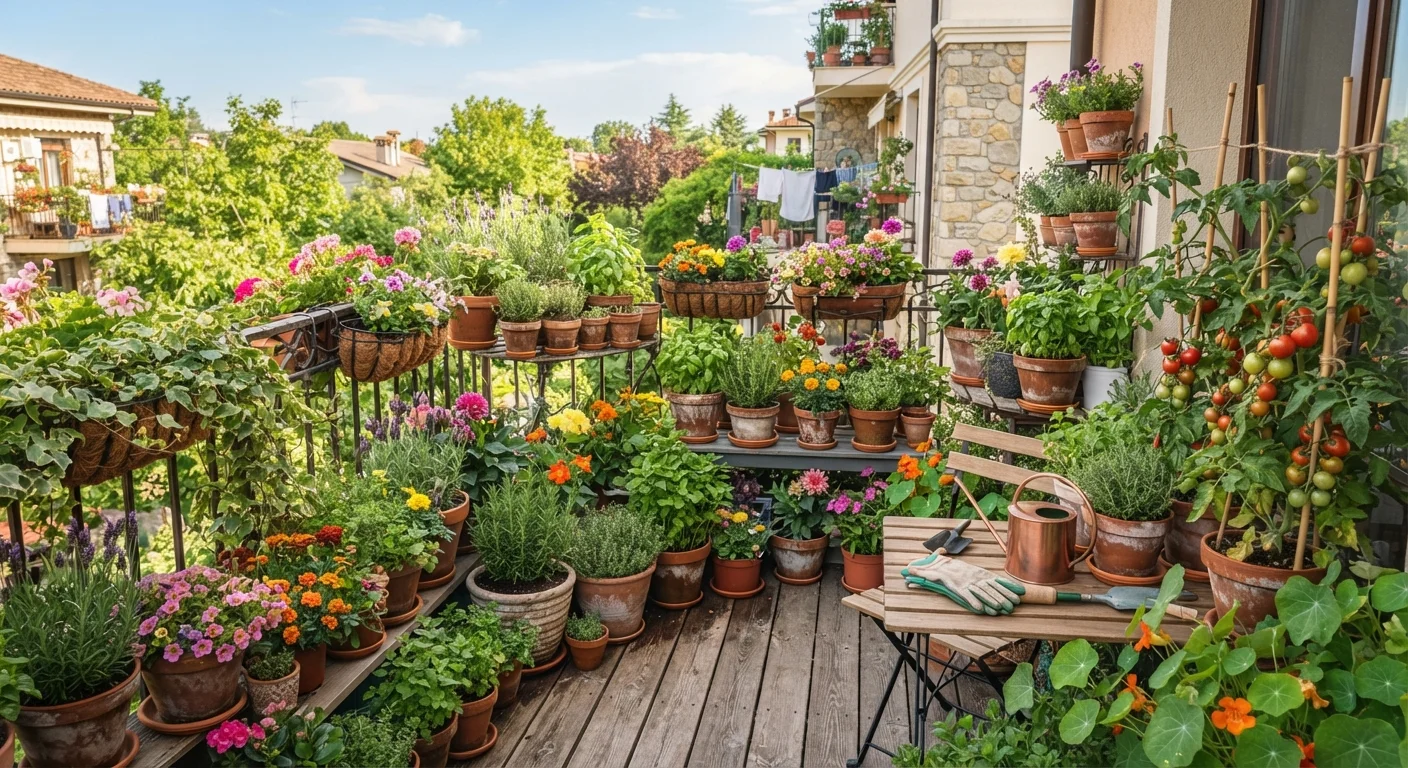
Container gardening is simply growing plants in pots, planters, grow bags, window boxes, or any other portable vessel rather than directly in the ground. It can range from a single herb pot on a windowsill to a fully productive patio garden with dozens of containers.
Unlike in-ground or raised-bed growing - see our comparison of raised beds vs. in-ground planting for a fuller breakdown - containers give you complete control over your growing medium and placement. That control is both the system's greatest strength and the source of its main demands.
The basics apply everywhere: containers need drainage holes, an appropriate growing mix (typically a potting mix rather than garden soil, which compacts in pots), and placement that matches each plant's light requirements. Beyond those foundations, your specific plants, climate, and space will shape everything else.
The Real Advantages of Growing in Pots
Container gardening removes several barriers that stop people from growing anything at all. For renters, those with concrete yards, or anyone dealing with compacted or contaminated native soil, pots may be the only practical option.
Grow anywhere, including paved or compacted spaces
Containers make growing viable on balconies, patios, rooftops, and driveways where in-ground planting is impossible. This removes one of the biggest barriers for urban and suburban gardeners.
Full control over soil quality
You choose exactly what goes into each pot, bypassing poor native soil, contamination, or heavy clay. This is particularly valuable for food growing, where soil quality directly affects plant health.
Portable - move plants to follow sun or avoid frost
Unlike fixed beds, containers can be repositioned as light conditions change seasonally or moved indoors ahead of cold weather, extending your growing season in cooler climates.
Easier pest and weed management
Elevated containers and fresh potting mix reduce contact with ground-dwelling pests and weed seeds. While not elimination, it can meaningfully reduce the pest pressure beginners encounter.
Low commitment to try new plants or methods
Adding or removing a single container is far less labor-intensive than digging a new bed. This makes it easy to experiment with varieties or techniques without disrupting an established garden.
Portability is a frequently underestimated advantage. You can move tender plants indoors ahead of a frost, shift sun-lovers to track the light as seasons change, or rearrange your space entirely without disturbing root systems. This flexibility also makes container growing a lower-stakes way to build experience - if a placement doesn't work, you can adjust it. If you're new to growing food outdoors, our guide to growing food in small spaces covers complementary approaches worth pairing with containers.
The Limitations You Should Plan For
Container gardening is not a workaround for all gardening challenges - it trades some problems for others. Understanding these constraints upfront prevents disappointment.
Dries out rapidly - frequent watering required
Pots lose moisture much faster than garden soil, especially in summer heat or windy conditions. During peak season, some containers may need watering daily, which demands consistent attention.
Nutrients deplete quickly and need replenishment
Repeated watering leaches nutrients from potting mix faster than from garden soil. Without regular fertilizing, container plants become nutrient-deficient and production declines noticeably.
Root-bound plants lose vigor without repotting
As plants grow, roots fill the container and eventually circle and compress, restricting water and nutrient uptake. Plants need repotting or dividing periodically to remain productive.
Limited volume restricts large or deep-rooted crops
Large vining vegetables, tap-rooted crops, and full-sized fruit trees struggle in containers because the root volume simply isn't sufficient to support their natural growth habits.
Ongoing cost of containers, mix, and fertilizer
Quality pots, fresh potting mix each season, and regular fertilizer represent ongoing costs that in-ground gardeners largely avoid after initial soil preparation.
Temperature extremes affect roots more than in-ground plants
Pot walls conduct heat and cold more readily than garden soil. In summer, dark-colored containers can overheat roots, while in winter, exposed pots offer little insulation against freezing.
Watering frequency is the most common surprise for beginners. A pot sitting in summer sun can dry out completely within 24 hours. This isn't a dealbreaker, but it does require commitment - or a simple drip irrigation setup for larger collections. Nutrient depletion follows a similar pattern: unlike garden soil, potting mix has a limited reservoir, so regular fertilizing (typically every two to four weeks during active growth) is necessary rather than optional.
Potting Mix vs. Garden Soil: Don't Swap Them
Garden soil is not suitable for containers - it compacts under repeated watering, restricts drainage, and often introduces weed seeds or pathogens. Always use a mix formulated specifically for container growing. Some gardeners add perlite or coarse sand to improve aeration further, particularly for herbs that prefer drier conditions. Refresh or replace potting mix each season for best results, as it breaks down and loses structure over time.
What Grows Well - and What Struggles
Not every plant is equally suited to container life. The good news is that a wide range of edibles, herbs, and ornamentals do genuinely thrive in pots when given appropriately sized containers.
Strong performers in containers
- Herbs: Basil, parsley, chives, cilantro, mint (best kept contained - it spreads aggressively in the ground), and thyme all adapt well to pot life.
- Leafy greens: Lettuce, spinach, arugula, and kale can be harvested repeatedly from relatively shallow containers (8-12 inches deep).
- Peppers: Both sweet and hot peppers are among the most reliably productive container vegetables.
- Compact tomato varieties: Dwarf and patio-bred varieties are bred specifically for container growing. Standard indeterminate varieties can work in large containers (15+ gallons) but require more support and feeding.
- Radishes and green onions: Fast-maturing crops that fit easily in smaller pots.
Plants that tend to struggle
- Large vining crops like pumpkins, watermelons, and full-sized winter squash need root space and soil volume that containers rarely provide economically.
- Fruit trees are technically possible in large containers but require considerable ongoing management and typically produce less than in-ground specimens.
- Deep-rooted vegetables like parsnips and large carrots need containers at least 12-16 inches deep - doable, but worth planning for.
Companion planting principles can also apply in containers - pairing basil with tomatoes, for example, remains a popular approach, though evidence for specific benefits varies.
5-15 gal
Minimum pot size for tomato varieties
University extension guidelines generally recommend at least 5 gallons for compact patio tomatoes and 15 or more gallons for standard indeterminate varieties.
~30%
Faster moisture loss vs. garden soil
Container growing media can lose moisture significantly faster than in-ground soil, particularly in warm, windy conditions, according to horticultural guidance from cooperative extension services.
Setting Up for Success
A few consistent practices separate thriving container gardens from struggling ones.
Choose the right pot size first. Undersized containers are the leading cause of poor container plant performance. As a general starting point: herbs and lettuce in 6-12 inch pots, peppers in 3-5 gallon containers, and tomatoes in at least 5-15 gallons depending on the variety.
Use a quality potting mix, not garden soil. Garden soil compacts in pots, restricts drainage, and can introduce pests. A potting mix formulated for containers provides the aeration and drainage structure roots need.
Feed regularly. Once you've watered a pot a few times, you've flushed much of the nutrient reserve from the mix. A balanced, slow-release granular fertilizer applied at planting, supplemented by a liquid feed every two to four weeks, is a practical maintenance rhythm for most edibles.
If you're planning a new growing season across multiple methods, a garden planning checklist can help you coordinate containers alongside any in-ground or raised-bed areas.
The content on this site is for informational purposes only and is not a substitute for professional advice. Always consult a qualified professional for guidance specific to your situation.