

Why Small Spaces Are More Productive Than You Think
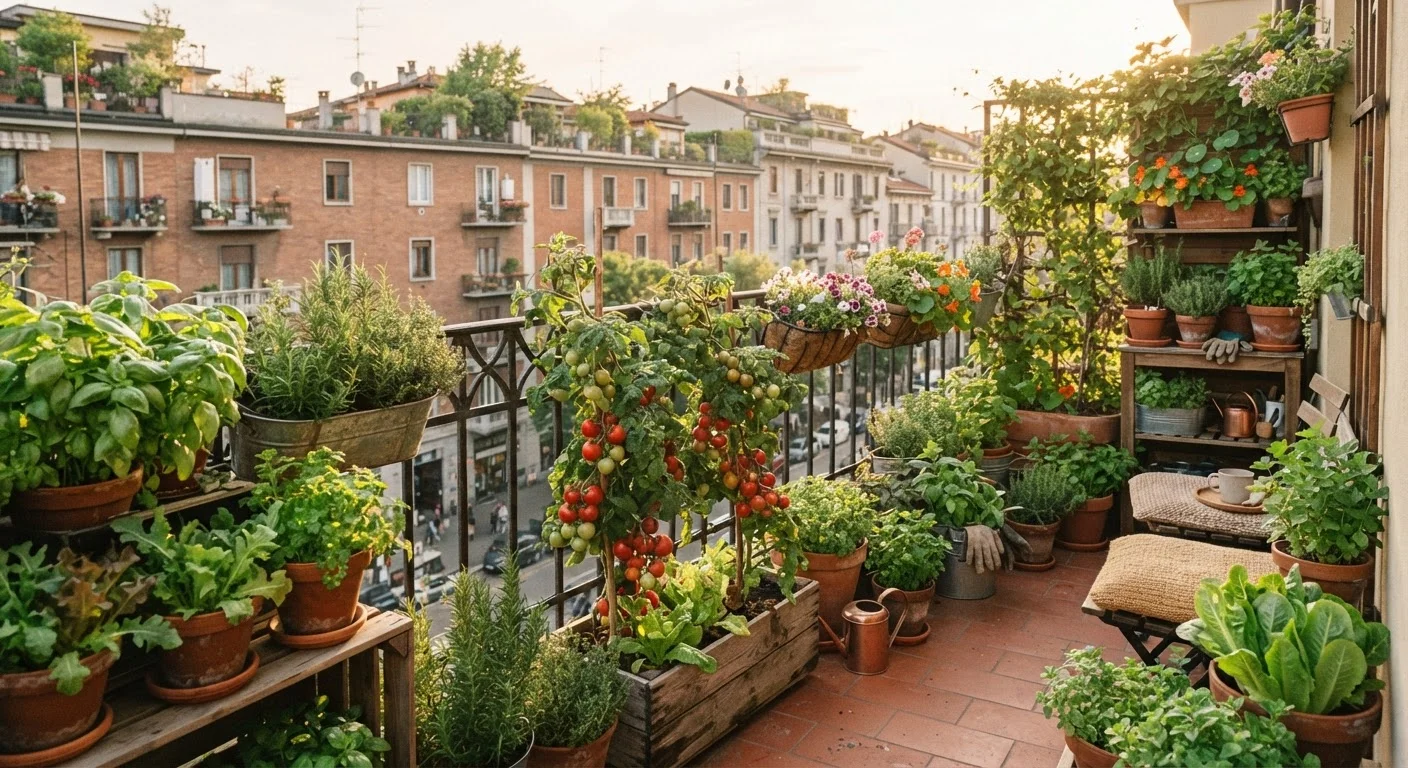
Many beginners dismiss balconies, patios, and narrow side plots as too small to bother with. In practice, a thoughtfully arranged 10-square-foot space can supply a household with fresh herbs year-round and meaningful quantities of salad greens, cherry tomatoes, or chili peppers through the growing season. The key shift is moving from area-based thinking to yield-per-plant thinking.
Small-space growing also rewards attention. Because your garden fits in your line of sight, you notice pest damage early, you catch drought stress before plants wilt badly, and you tend to harvest at peak ripeness. Those advantages often mean small-space gardens outperform neglected larger plots in actual edible output. See our beginner's guide to starting a vegetable garden if you're building from zero knowledge.
Assessing Your Space: Light, Weight, and Microclimate
Before buying a single pot, spend a week observing your space. Track how many hours of direct sunlight each area receives - morning light, midday light, and afternoon light behave differently, and most vegetables need a minimum of 6 hours of direct sun to produce well. Leafy greens and herbs are more forgiving, performing adequately in 4-5 hours.
For balconies, check your building's load-bearing limits before filling large containers with wet soil, which can be surprisingly heavy. A standard 15-gallon planter filled with moist potting mix and a mature tomato plant can weigh 50-80 lbs. When in doubt, contact your building manager or consult a structural engineer - this is one step you should not skip.
Also note your microclimate: balconies surrounded by glass and concrete can run significantly hotter than open ground, which accelerates soil drying and can stress heat-sensitive crops. A patio against a south-facing brick wall, conversely, stores warmth that benefits warm-season crops like peppers and basil.
When assessing sun exposure, use your phone's compass to identify which direction your balcony or patio faces - south-facing gets the most light, north-facing the least. This single factor predicts which crops will and won't succeed before you spend a penny.
Orientation determines the quality and duration of sunlight, which is the primary limiting factor for food crop productivity in any small outdoor space.
Fill the bottom quarter of deep containers with lightweight material like empty plastic bottles or a layer of coarse bark rather than extra potting mix - this reduces total weight significantly without compromising root space for most food crops.
Weight management is a genuine concern on balconies and upper-floor patios, and most vegetable roots don't need the full depth of a very large container to thrive.
Container Choices and Soil Fundamentals
Containers are the foundation of small-space food growing. Match the container size to the crop: deep-rooted plants like tomatoes and eggplant need at least 5-gallon containers, while lettuce and herbs thrive in shallower 6-8 inch pots. Drainage holes are non-negotiable - standing water is the fastest way to kill container plants.
Never fill containers with garden soil from the ground. It compacts in pots, drains poorly, and may carry pathogens. Instead, use a quality potting mix formulated for containers, ideally one that includes perlite or vermiculite for drainage and moisture retention. For a deeper look at growing in pots, our article on container gardening possibilities and limits covers what works and what doesn't in detail.
If you have a tiny in-ground plot, amending the native soil with compost before planting makes a significant difference in plant health and yield. Our guide to setting up a home composting system explains how to produce your own soil amendment from kitchen scraps.
What to Grow: Best Crops for Tight Quarters
Crop selection drives your success more than any other variable. Prioritize plants with a high harvest-to-footprint ratio - crops that deliver repeated harvests from a small area over many weeks.
- Cut-and-come-again greens: Loose-leaf lettuce, arugula, spinach, and kale can be harvested by removing outer leaves, leaving the plant to keep producing for weeks.
- Herbs: Basil, parsley, chives, cilantro, and mint are among the most space-efficient edibles you can grow. Even a 6-inch pot of basil on a windowsill edge has genuine culinary value.
- Cherry tomatoes: Compact or patio-bred varieties produce heavily in a 5-gallon container with adequate sun and support.
- Chili and sweet peppers: Naturally compact and very productive relative to their pot size in warm conditions.
- Radishes and green onions: Fast-maturing crops that fill gaps between slower plants and are ready in 3-5 weeks.
Avoid sprawling vines like winter squash or melons unless you have a very generous trellis system and strong structural support - their yield rarely justifies the space claim in a small garden.
Vertical Growing and Space-Saving Techniques
Vertical growing is the most effective way to multiply productive area without expanding your footprint. A simple trellis, tension wire system, or freestanding cage converts flat floor space into a three-dimensional growing zone.
Climbing crops well-suited to vertical structures include pole beans, cucumbers, and indeterminate tomatoes. Secure structures firmly - a full-season cucumber plant loaded with fruit in a windswept location can topple an inadequately anchored support.
Wall-mounted pocket planters and tiered shelf systems work well for herbs and strawberries. Hanging baskets are popular for trailing tomatoes and nasturtiums (which are edible). Stacking planters - where multiple tiers of angled pots share a single vertical footprint - are particularly effective for strawberries and herbs.
Companion planting principles apply in small spaces too: pairing plants that use different vertical layers or root depths helps you extract more from the same container. Our guide on companion planting combinations that work identifies which pairings are genuinely useful.
Watering, Feeding, and Keeping Plants Healthy
Containers dry out far faster than in-ground beds because they have limited soil volume and often sit in sun-exposed locations. In warm weather, small pots may need daily watering - check soil moisture at least an inch below the surface rather than judging by the surface alone.
Self-watering containers with built-in reservoirs reduce the frequency of watering and help maintain consistent moisture, which is especially valuable for tomatoes and peppers prone to blossom-end rot when moisture fluctuates significantly.
Because container plants are watered so frequently, soluble nutrients leach out of the soil quickly. A balanced, slow-release fertilizer worked into the potting mix at planting, supplemented with a diluted liquid fertilizer every 2-3 weeks during the growing season, is a practical baseline. Always follow the product's labeled application rates.
Avoid Overfeeding Container Plants
More fertilizer is not always better. Applying concentrated liquid fertilizers too frequently or at higher-than-labeled rates can burn roots and lead to lush foliage with poor fruit set. Stick to the recommended rate on your fertilizer label, and when in doubt, dilute slightly. Signs of over-fertilization include yellowing leaf edges and excessively dark green but unproductive growth.
Planning Your First Small-Space Growing Season
A little planning before the season prevents the most common beginner frustrations: overcrowding, running out of room for mature plants, and a glut of one thing with nothing else to harvest. Use our garden planning checklist to work through site assessment, crop selection, and timing in an organized way.
Practice succession planting - sowing small amounts of fast-maturing crops like lettuce or radishes every 2-3 weeks rather than all at once. This staggers your harvests and keeps the productive cycle running longer. As one crop finishes, replace it immediately to avoid wasted growing time.
For those with a small in-ground plot alongside containers, reviewing raised beds versus in-ground planting can help you decide whether a simple raised bed frame would improve your results. Small raised beds - even a 2×4 foot frame - deliver noticeably better drainage and soil control than raw ground in many urban and suburban yards.
Start with just 3-5 crops your household actually eats, grow them well, and expand in future seasons once you understand the rhythms of your specific space.
The content on this site is for informational purposes only and is not a substitute for professional advice. Always consult a qualified professional for guidance specific to your situation.