

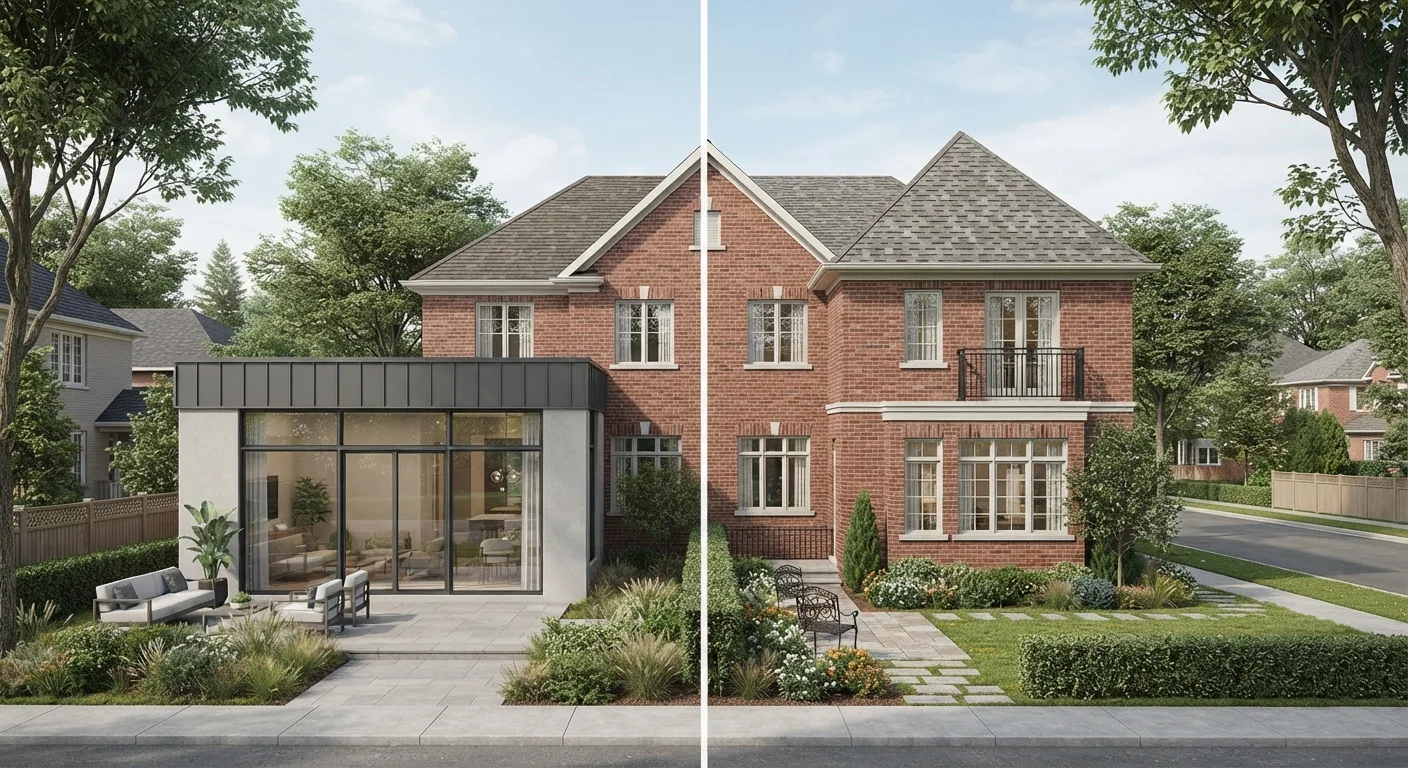
Option A
Flat Roof
The lower-upfront-cost, contemporary choice.
Best for: Homeowners on a tighter budget who want a clean, modern aesthetic and can commit to periodic maintenance.
Option B
Pitched Roof
The durable, lower-maintenance long-term investment.
Best for: Homeowners prioritising longevity, weather resilience, and a roof profile that blends with most traditional properties.
The Core Difference: Structure, Cost, and Complexity
When planning a home extension, the roof choice is one of the most consequential decisions you will make - affecting build cost, planning outcomes, long-term maintenance, and how the addition looks alongside your existing home. Both flat and pitched roofs are widely used, and neither is universally superior.
A flat roof is not truly flat - it carries a slight fall (typically 1:40 or greater) to direct rainwater toward drainage outlets. This simpler structure requires less timber framing, fewer tiles, and shorter build time, which is why it tends to cost less per square metre to construct. For a single-storey rear extension, a flat roof is often the default starting point for cost-conscious projects.
A pitched roof involves angled surfaces - either a simple lean-to (mono-pitch), a full gable, or a hip arrangement - that shed water by gravity across a larger surface area. The additional structural work, roofing materials (tiles or slates), and ridge detailing push the build cost higher, but the drainage geometry is inherently more forgiving.
If you are simultaneously weighing layout decisions for your extension, the structural and layout considerations guide can help you think through the full scope of the project together.
| Criterion | Flat Roof | Pitched Roof |
|---|---|---|
| Typical build cost | Lower - simpler structure | Higher - more materials and labour |
| Expected lifespan | 25-30 years (modern membranes) | 40-60 years (quality tiles/slates) |
| Maintenance frequency | Higher - regular inspection needed | Lower - passive water shedding |
| Water drainage | Relies on fall and outlets | Gravity-driven across slope |
| Planning height impact | Lower profile - often easier | May exceed thresholds in some cases |
| Rooflight or green roof potential | Excellent - flat surface suits both | Limited - pitch complicates fitting |
| Aesthetic fit - traditional homes | Can appear mismatched | Blends naturally |
| Aesthetic fit - contemporary homes | Clean, modern look | May feel heavy or dated |
Lifespan, Maintenance, and Weathering
This is where the two roof types diverge most significantly. Older flat roofs - typically clad in felt - had a reputation for short lifespans and leak-proneness. Contemporary systems have changed that picture substantially. EPDM (rubber) membranes, GRP (fibreglass) roofing, and hot-melt bitumen systems are now common, with properly installed membranes offering 25-30 year lifespans and manufacturer-backed warranties on many products. Even so, flat roofs require periodic inspection - particularly around upstands, outlets, and any penetrations - because pooled water can expose weaknesses that a sloped surface would simply drain away.
Pitched roofs, by contrast, rely on gravity and overlapping tile or slate courses to manage rainwater. When properly installed and ventilated, a pitched roof with quality tiles can last 40-60 years with relatively modest maintenance. Ridges, flashings, and mortar pointing will need attention over time, but the fundamental weathering mechanism is passive and robust.
Regardless of which type you choose, minor defects left uninspected can escalate rapidly. Our article on how roof issues escalate faster than expected explains how a small crack in flashing or a slipped tile can lead to structural water damage if ignored.
25-30 yrs
Typical lifespan of modern EPDM flat roof membranes
Industry guidance from roofing trade bodies indicates properly installed single-ply membranes can achieve this range when maintained.
40-60 yrs
Expected lifespan of a quality pitched tile or slate roof
This range reflects general construction guidance; actual lifespan depends on tile specification, installation quality, and exposure conditions.
1:40
Minimum recommended fall for a flat roof membrane
Most roofing manufacturers specify a minimum fall of 1:40 to prevent ponding and ensure effective drainage across the membrane surface.
Planning, Aesthetics, and Practical Considerations
In many jurisdictions, single-storey rear extensions fall under permitted development - but roof height and pitch can affect whether your project needs formal planning permission. A flat roof typically sits lower, which can help keep the extension within permitted development height thresholds. A pitched roof that rises close to or above the eaves of the main dwelling may require a planning application, particularly in conservation areas or on listed buildings. Always verify requirements with your local planning authority before committing to a design.
Aesthetically, the choice often comes down to the character of your existing home. Flat roofs suit contemporary or mid-century properties well and lend a crisp, uncluttered look. They also accommodate larger rooflights more readily - a consideration if bringing natural light into a rear room is a priority. Pitched roofs tend to read as more sympathetic additions to traditional brick or stone properties, and planners in some areas actively prefer them.
For a deeper look at how roof type interacts with the full planning and construction process, the single-storey extension decision guide walks through every major stage from permitted development to handover. And when you are ready to appoint a contractor, the questions to ask before hiring a builder can help you protect your investment from the outset.
This article provides general educational information for homeowners. Costs, planning rules, and material performance vary by location and project. Always consult a qualified structural engineer, architect, or roofing professional before making decisions specific to your property.
The content on this site is for informational purposes only and is not a substitute for professional advice. Always consult a qualified professional for guidance specific to your situation.