

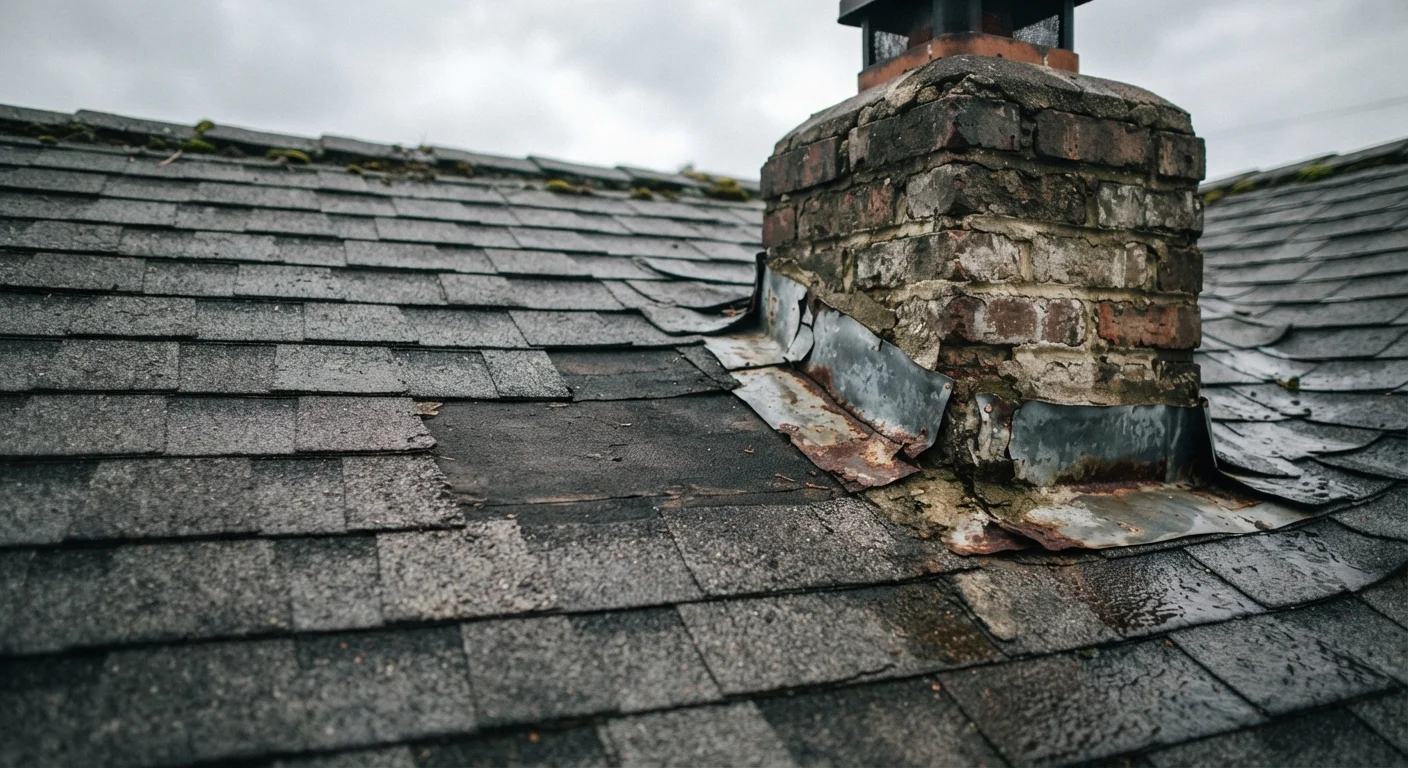
The Chain Reaction Hidden Above Your Ceiling
Most homeowners think of roof damage the way they think of a flat tire - obvious, immediate, and hard to ignore. In reality, a roof breach behaves more like a slow leak in a pipe inside a wall: the damage accumulates quietly, in places you rarely look, long before any symptom reaches your living space.
A single displaced shingle creates a gap in what building professionals call the roof assembly - the layered system of shingles, underlayment, decking, and structural framing that together shed water. Each layer assumes the ones above it are intact. When one fails, the load passes down. Underlayment not designed for direct rainfall begins to saturate. Decking softens. Fasteners corrode. Insulation below loses its thermal value as it absorbs moisture. Eventually, water finds a ceiling.
By that point, the repair scope has expanded from one damaged shingle to potentially replacement of decking panels, new insulation, mold remediation, and drywall work. Understanding this chain reaction is the foundation of effective preventive maintenance - a theme explored further in our look at common home maintenance myths that lead to expensive mistakes.
Why Flashing Is the Most Overlooked Vulnerability
If shingles are the most visible part of a roof, flashing is the most structurally critical part that homeowners rarely think about. Flashing seals the transitions that shingles cannot - around chimneys, skylights, vent pipes, and in the angled valleys where two roof planes meet. These are inherently high-risk zones because water naturally concentrates there.
Flashing fails gradually. The sealant around it dries, cracks, and shrinks over years of thermal cycling - expanding in summer heat and contracting in winter cold. A gap of a few millimeters is enough to admit water during a driving rainstorm. Because flashing sits beneath the surface shingles and often behind caulk, a failing seal is essentially invisible from the ground.
Check Your Gutters for Granule Buildup
After cleaning your gutters, look for a sand-like accumulation of asphalt granules at the bottom. Small amounts are normal on aging roofs, but a sudden increase - especially after a storm - signals accelerated shingle wear. Addressing granule loss early, before shingles crack or lift, is one of the simplest ways to extend roof life.
Gutters play a connected role: when they back up, water can pool against the roof edge and push under the first course of shingles - a phenomenon called ice damming in cold climates. See our guide on how gutters work and why they fail for detail on keeping this system functional.
Moisture Migration and the Attic Connection
One of the most disorienting aspects of roof leaks is that water rarely travels straight down. Once past the underlayment, it follows the path of least resistance - running along rafters, dripping onto the top plate of a wall, or pooling in attic insulation far from the original entry point. A stain on a bedroom ceiling may indicate a leak that entered near the ridge vent, ten feet away.
This is why the attic is such a critical diagnostic space. If you inspect it after a heavy rain, you can often spot active drips, water stains on framing, or darkened wood - all before any sign reaches the interior. Our article on neglected areas like attics and crawl spaces explains what to look for and how often these spaces deserve attention.
Moisture in the attic also creates ideal conditions for mold growth, which degrades wood framing and creates air quality concerns. Once mold is established, remediation adds significant complexity and cost to what began as a minor repair.
40%
Of homeowner insurance claims related to water damage
According to industry analyses, a significant share of residential water damage claims trace back to roof and flashing failures rather than plumbing, underscoring the financial stakes of deferred roof maintenance.
24-48 hrs
Time for mold to begin colonizing wet organic material
Building science research consistently finds that mold spores can begin germinating in saturated wood or insulation within one to two days, meaning a weekend's delay in addressing a known leak matters.
3-5x
Cost multiplier when repairs are significantly delayed
Roofing contractors generally report that what starts as a localized shingle or flashing repair can grow three to five times in cost once decking, insulation, or interior finishes are also damaged.
Building a Simple Inspection Habit
The good news is that most escalation scenarios are intercepted easily - if the homeowner looks. A twice-yearly inspection habit, timed to early spring and late fall, catches the majority of issues while they are still minor. After any significant windstorm or hail event, add an additional check.
From the ground, use binoculars to scan for lifted, curled, or missing shingles; visible granule accumulation in gutters (a sign of shingle wear); sagging sections; and any dark streaking that may indicate algae or moss growth. Indoors, a flashlight tour of the attic - looking for daylight, soft wood, staining, or odor - rounds out the picture without requiring you to climb onto the roof.
When something looks off, contacting a licensed roofing contractor for an assessment is the appropriate next step. Repairs addressed early tend to be straightforward and contained. First-time homeowners in particular often skip this inspection cadence, assuming new construction means no immediate concerns - a common and costly assumption.
Roof maintenance doesn't exist in isolation. Moisture that enters through a roof breach can present indoors as dampness that mimics other causes. Understanding how to identify types of damp before spending on treatment helps you address the true source rather than the symptom.
Frequently Asked Questions
Under the right conditions - heavy rainfall, saturated insulation, poor attic ventilation - structural damage to roof decking can begin within a few weeks of an unaddressed breach. Mold can establish itself in as little as 24 to 48 hours in damp organic material. The pace depends on climate, roof slope, and how much water is entering.
Check your attic after heavy rain using a flashlight. Look for water stains, soft or discolored wood, and any daylight visible through the decking. Indoors, dark spots on ceiling drywall, peeling paint near exterior walls, and musty odors are common early signals. An infrared thermal scan by a roofing professional can locate moisture that isn't yet visible.
Not always an immediate emergency, but it should be treated as time-sensitive. A missing shingle exposes the underlayment, which is not designed for prolonged weathering. Rain, UV radiation, and foot traffic can degrade it quickly, and a subsequent storm can drive water through to the decking. Prioritize repair within days, not weeks.
Flashing is thin sheet metal - typically galvanized steel or aluminum - installed at roof joints, valleys, chimneys, skylights, and vent pipes to seal transitions that shingles alone cannot cover. It fails due to sealant drying out, fastener corrosion, thermal expansion cycles, and improper original installation. Because flashing is often overlooked during inspections, failures can go unnoticed until significant water damage has occurred.
A ground-level visual inspection using binoculars is a practical and safe starting point for most homeowners. Look for lifted, curled, or absent shingles, visible granule loss in gutters, and sagging sections. Climbing onto a roof carries real fall risk and should be left to a trained professional, particularly on steep or wet surfaces.
Most roofing professionals recommend a formal inspection every one to three years for roofs under 15 years old, and annually for older roofs or after any significant storm. Additionally, a visual check from the ground each spring and fall catches seasonal damage from ice, wind, and debris before it compounds.
The content on this site is for informational purposes only and is not a substitute for professional advice. Always consult a qualified professional for guidance specific to your situation.