

Why Your Home's Exterior Is Worth Reading Like a Map
Your siding and exterior paint aren't just cosmetic - they're your home's first line of defense against rain, wind, UV radiation, and temperature swings. When they start to fail, they leave that message right on the surface, visible to anyone who knows what to look for.
The challenge is that most homeowners glance at their exterior without really reading it. A patch of peeling paint gets dismissed as "needing a repaint." Bubbling near a window goes unnoticed. By the time the damage becomes impossible to ignore, it has often progressed from a surface problem to something deeper - potentially reaching the sheathing, insulation, or framing inside the wall.
This guide walks through the most common exterior warning signs, what each one actually means, and what typically needs to happen next. Understanding the cause behind the symptom is what separates a quick fix from an expensive mistake. For a broader look at how moisture issues connect to interior spaces, see our article on identifying damp types before choosing a fix.
Peeling Paint: Moisture Is Usually the Culprit
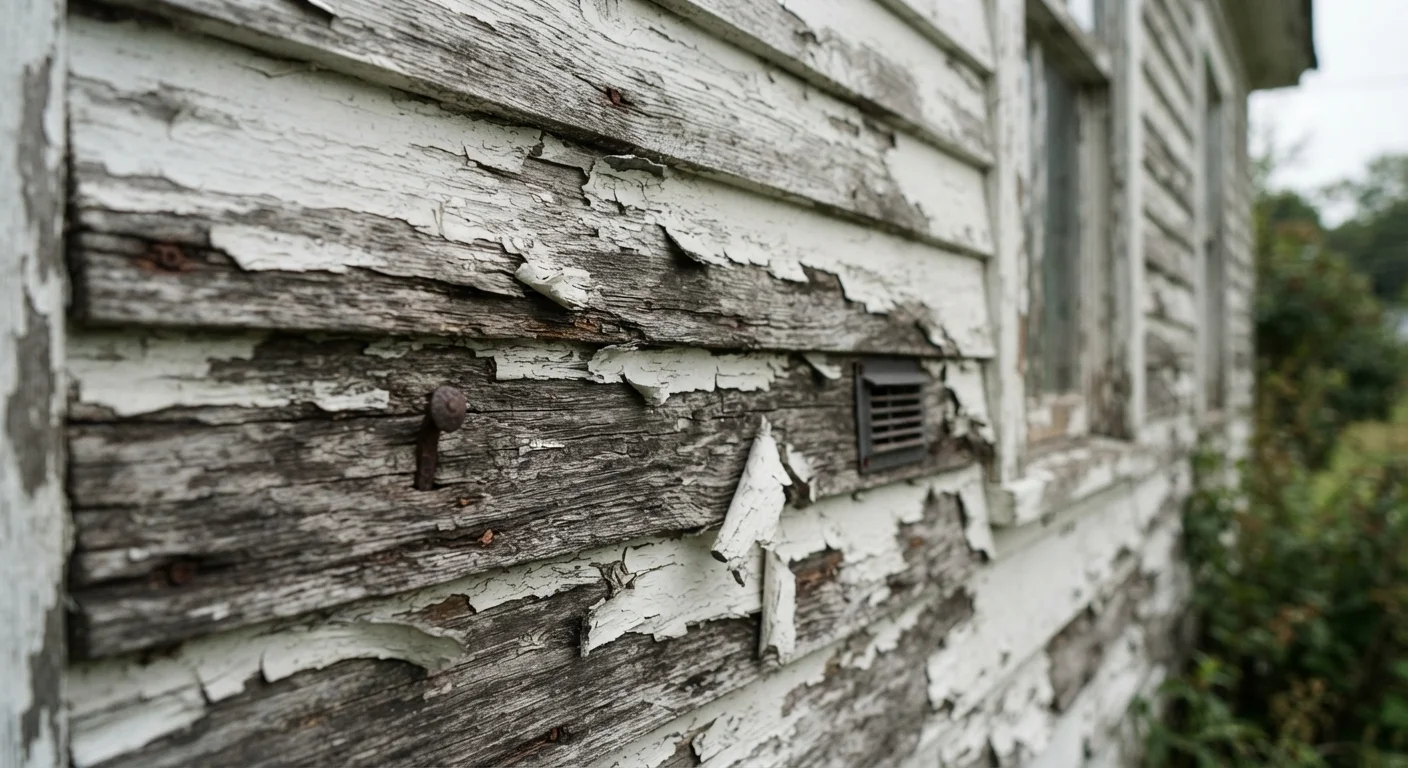
Peeling paint is one of the most misread warning signs. It's tempting to treat it as a simple adhesion failure - scrape, prime, repaint. But peeling, particularly when it happens in sheets or exposes wood that looks wet or gray, almost always points to moisture movement.
There are two directions moisture can come from. Exterior moisture - from rain, sprinklers, or ground splash - can infiltrate through cracks, failed caulk around windows and trim, or gaps where siding panels meet. Interior moisture - from cooking, bathing, or a humid crawl space - can push vapor outward through the wall, lifting paint from behind.
When you find peeling paint, note where it's located. Peeling near the roofline or under eaves often points to roof or gutter issues. Peeling close to the foundation may suggest ground-level moisture infiltration. Peeling around window frames frequently indicates failed caulking or flashing. Each location tells a slightly different story.
Check Your Caulking at the Same Time
When inspecting for peeling paint, run a close eye along all caulked joints - around window and door frames, where trim meets siding, and at corners. Caulk that has cracked, shrunk, or pulled away from one surface is a primary entry point for water. Replacing failed caulk is one of the lowest-cost, highest-impact preventive steps a homeowner can take.
Bubbling, Blistering, and Chalking: What the Surface Is Telling You
Blistering or bubbling paint forms when gas or liquid gets trapped between the paint film and the substrate. Heat blistering happens when paint is applied in direct sunlight or high temperatures, trapping solvent vapors that expand. Moisture blistering occurs when water vapor migrates through the wall and has nowhere to escape.
Pop a blister and look inside. If the wood beneath is dry, heat was likely the cause - a paint application issue. If the wood looks dark, wet, or begins to feel soft, moisture is involved and needs to be traced to its source before any repainting.
Chalking is different in nature. That powdery white film that rubs off on your fingers is actually a designed feature of many exterior paints - pigment particles gradually release as UV breaks down the binder, creating a self-cleaning effect. Light chalking is normal and manageable. Heavy chalking that comes off in thick layers means the paint binder has broken down significantly, adhesion for a new coat will be poor, and repainting is overdue. Always wash and prime chalked surfaces thoroughly before applying fresh paint.
5-10 years
Typical lifespan of quality exterior paint
General industry guidance suggests most quality exterior paints last between 5 and 10 years depending on climate, surface preparation, and paint type - with wood siding often requiring attention at the lower end of that range.
Up to 10x
Cost multiplier when moisture damage reaches the wall assembly
Home repair professionals generally note that moisture damage addressed at the paint or siding surface is a fraction of the cost compared to repairs that involve replacing sheathing, insulation, or framing.
30%
Of homeowners inspect their exterior annually
Home maintenance surveys have found that fewer than one-third of homeowners conduct a systematic exterior inspection each year, leaving many issues to progress undetected.
Cracked, Warped, or Loose Siding: When the Problem Goes Deeper
Siding itself - whether wood, fiber cement, vinyl, or engineered wood - gives its own set of signals. Small hairline cracks in paint or caulk are surface-level and manageable. Larger cracks in the siding panels themselves are more serious, because they create pathways for water to reach the wall assembly behind.
Warping or buckling in vinyl siding often results from improper installation (panels nailed too tightly without room for thermal expansion), but can also indicate heat buildup from a nearby reflective surface. Wood siding that warps or cups is frequently absorbing moisture - either from rain exposure or from interior vapor pressure.
Soft spots are the most urgent finding. If pressing on a siding panel produces any give or sponginess, there's a strong likelihood that the wood sheathing or framing behind it has been compromised by moisture and possibly rot. This moves the problem beyond a painting or siding replacement job into territory that typically requires a licensed contractor to evaluate. Don't delay this kind of assessment - as detailed in our look at how small exterior issues escalate, moisture damage compounds faster than most homeowners expect.
When to Involve a Licensed Contractor
Any siding repair that involves soft or rotted wood, structural sheathing, or damage close to the wall framing should be assessed by a licensed contractor before work begins. Permits may be required for certain siding replacement projects depending on your local jurisdiction - check with your local building department before starting significant exterior work.
How to Approach an Exterior Inspection
A methodical walkround takes less than an hour and can surface issues while they're still straightforward to fix. Walk the entire perimeter of your home, looking at each wall section from a consistent distance and noting anything that stands out. Bring a flashlight for shaded areas under eaves, and don't skip the side of the house that faces away from the street - it often gets the least attention and the most weather exposure.
Pay particular attention to:
- Transition points - where siding meets trim, windows, doors, and the foundation. These joints are where caulk fails first.
- North-facing walls - they stay damp longer and are prone to mold growth and paint failure.
- Areas near downspouts - splash-back and overflow from clogged gutters frequently damage siding at the base.
- Any area where two materials meet - metal flashing, wood trim, and siding all expand and contract at different rates, creating gaps over time.
Many homeowners build this into their annual spring maintenance checklist, which makes it easier to catch year-over-year changes. Keep a simple photo log of any areas that look borderline - it helps you track whether something is progressing or stable.
For issues that extend beyond the exterior surface - particularly if you're finding signs of moisture damage in areas like the crawl space, basement, or attic - those spaces often tell the other side of the same story. Our guide on inspecting crawl spaces, attics, and basements covers what to look for in those hidden areas.
Frequently Asked Questions
Peeling usually results from moisture pushing through the wall from inside or outside. Poor ventilation, a missing vapor barrier, or water infiltrating through cracks can all drive this. It can also happen when paint is applied over a dirty or wet surface.
Chalking - the powdery residue that rubs off on your hand - is a normal sign of paint aging from UV exposure. It becomes a concern when it's heavy enough to compromise adhesion for a new coat or when it's obscuring other damage underneath. A good cleaning and fresh coat typically resolve it.
Press gently on siding panels that look soft, discolored, or warped. Sponginess or movement under light pressure suggests moisture has reached the substrate or sheathing behind it. At that point, surface patching won't be enough - a contractor should assess the extent of the damage.
No - painting over blistering paint without addressing the cause will result in the same problem recurring quickly. The blisters need to be scraped away, the surface sanded smooth, and the moisture source identified and corrected before any new paint is applied.
A thorough exterior walkthrough at least once a year is a reasonable baseline. Spring is a practical time because it follows winter stress on your home's envelope. Many homeowners include it as part of a broader seasonal check - see our <a href="/home-garden/home-maintenance/spring-home-maintenance-checklist">spring home maintenance checklist</a> for a structured approach.
If you find soft wood, rot, mold, or panels that have pulled away from the wall framing, those repairs go beyond cosmetic work. Structural sheathing damage, widespread rot, or issues that may involve moisture inside the wall cavity warrant a licensed contractor's assessment.
The content on this site is for informational purposes only and is not a substitute for professional advice. Always consult a qualified professional for guidance specific to your situation.