

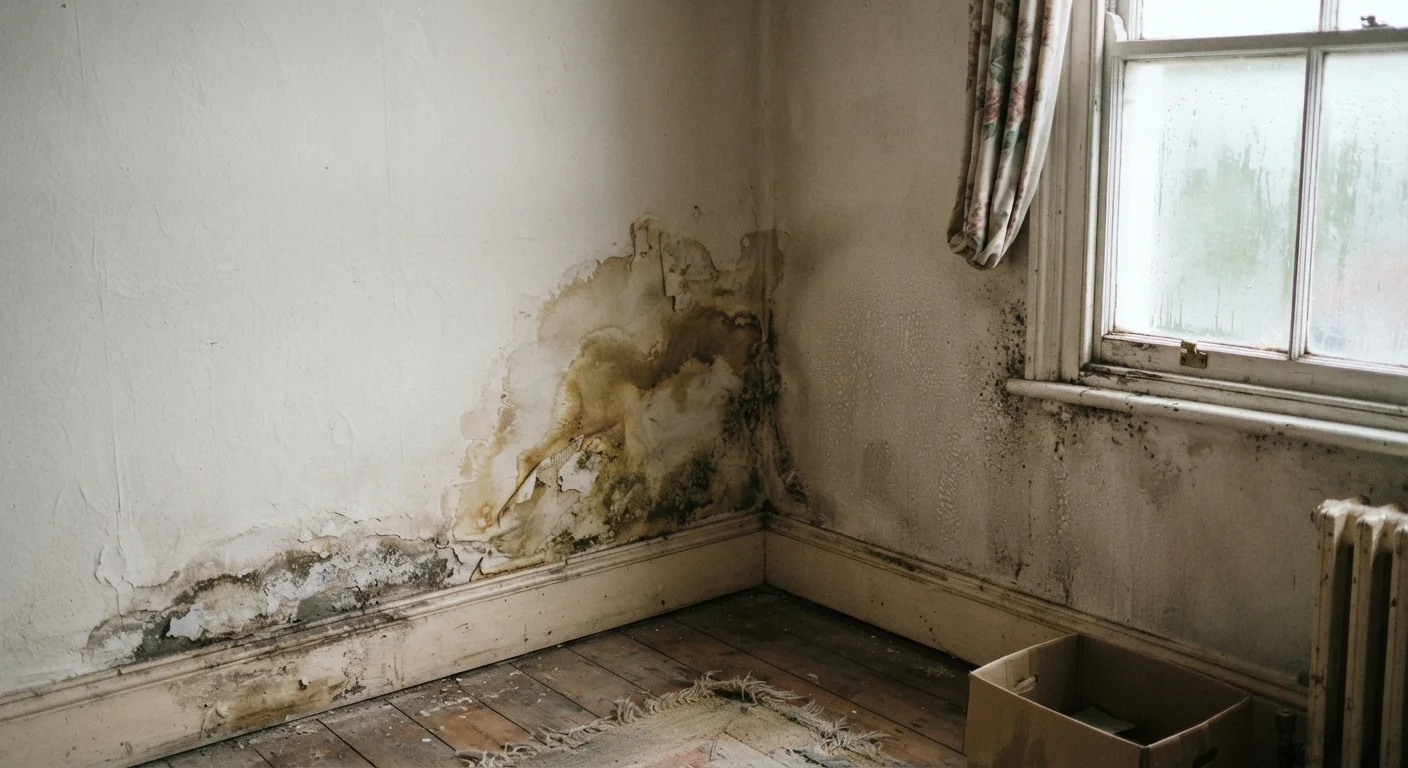
Why Correct Diagnosis Matters
Damp is one of the most mishandled home problems precisely because the three main types - rising damp, penetrating damp, and condensation - can look deceptively similar on a wall. Treat the wrong type and you'll spend money on a fix that achieves nothing, or worse, obscure the real cause long enough for structural damage to take hold.
Before calling a contractor or reaching for a product, spend time reading what the damp is actually telling you. The location, pattern, smell, and seasonal behavior of moisture are your diagnostic tools. This reference guide walks you through each type so you can narrow down the likely cause before deciding on next steps.
For a broader view of how unaddressed moisture problems in overlooked areas of the home can quietly escalate, see our guide on crawl spaces, attics, and basements.
| Most common damp type in homes | Condensation (Widely cited in UK and US building science literature) |
| Maximum height of rising damp | Typically 3-4 feet above floor level (Building Research Establishment guidance) |
| Key indicator of rising damp | Horizontal tide mark + efflorescence (salt deposits) |
| Key indicator of penetrating damp | Weather-correlated, localized patch near an external defect |
| Key indicator of condensation | Black surface mold on cold walls, windows, and corners |
| Primary fix for condensation | Improved ventilation and consistent heating |
The Three Types: How to Tell Them Apart
Rising Damp
Rising damp occurs when groundwater travels upward through porous masonry via capillary action - the same way a sponge draws up liquid. It is confined to ground-floor walls and almost never appears higher than about 3-4 feet from the floor. Key identifiers include:
- A distinct horizontal tide mark or staining band at a consistent height
- White crystalline deposits (efflorescence) on the wall surface
- Damp that persists year-round regardless of weather
- Peeling skirting boards and plaster damage near floor level
Penetrating Damp
Penetrating damp enters horizontally through defects in the external envelope - cracked pointing, damaged render, faulty flashings, or deteriorating window seals. It can appear at any height and is strongly weather-related: patches typically worsen after rain and improve during dry spells. Watch for:
- Damp patches that correspond to specific external features (a gutter joint above, a cracked lintel, missing mortar)
- Staining that spreads outward from a localized point rather than rising uniformly
- Seasonal or storm-correlated appearance
Roof-related entry points are a common culprit. Our article on how small roof issues escalate explains why even minor defects can drive significant interior moisture.
Condensation
Condensation is by far the most common type and is caused by warm, moist air meeting cold surfaces. It is not a structural defect - it is a ventilation and insulation problem. Signs that point to condensation rather than ingress include:
- Black mold (typically Cladosporium or Aspergillus species) growing on walls, grout, or window frames in patches
- Moisture appearing on windows, external walls, and cold corners - especially in bathrooms, kitchens, and bedrooms
- Damp that worsens in cold weather and after cooking, bathing, or drying laundry indoors
- No tide mark; no efflorescence; no obvious external entry point
Quick Reference: Distinguishing Features
| Feature | Rising Damp | Penetrating Damp | Condensation |
|---|---|---|---|
| Location | Ground floor only, low on wall | Any height, near a defect | Cold surfaces, corners, windows |
| Pattern | Horizontal band with tide mark | Spreading patch from point source | Diffuse; black mold patches |
| Seasonal? | Year-round | Worsens with rain | Worsens in cold, humid weather |
| Efflorescence? | Often present | Sometimes | Absent |
| Mold? | Uncommon | Sometimes at patch edges | Common; black surface mold |
If you are unsure after reviewing these indicators, a damp surveyor can perform a professional assessment - including a moisture meter reading and, where appropriate, a hygrometer check - before any remediation work begins. Misdiagnosis is common and can lead to unnecessary expense, as noted in our article on home maintenance myths.
Matching the Fix to the Type
Once you have a working diagnosis, the remediation path becomes much clearer:
- Rising damp: The traditional solution is installing or repairing a physical or chemical damp-proof course (DPC) at the base of the wall. Damaged plaster containing salt contamination typically needs to be replaced with specialist renovation plaster. This is work that generally requires a qualified professional.
- Penetrating damp: Fix the specific external defect first - repoint cracked mortar, reseal flashings, repair gutters, or restore damaged render. Interior treatments alone will not resolve the problem if the entry point remains open. For exterior wall and coating issues, our guide on exterior paint and siding warning signs covers what to look for on the outside of the home.
- Condensation: Improve ventilation (extractor fans, trickle vents, positive pressure ventilation systems), increase heating consistency in affected rooms, and where walls are cold due to poor insulation, address the thermal bridge. Our insulation materials comparison can help you evaluate your options.
In all cases, document the damp's location and behavior with photos over several weeks before committing to a solution. A pattern that changes with the weather or season is itself diagnostic information.
This article is for general informational purposes only. For significant damp problems, structural concerns, or before undertaking any work requiring permits or licensed trades, consult a qualified surveyor or contractor familiar with local building codes and regulations.
The content on this site is for informational purposes only and is not a substitute for professional advice. Always consult a qualified professional for guidance specific to your situation.