

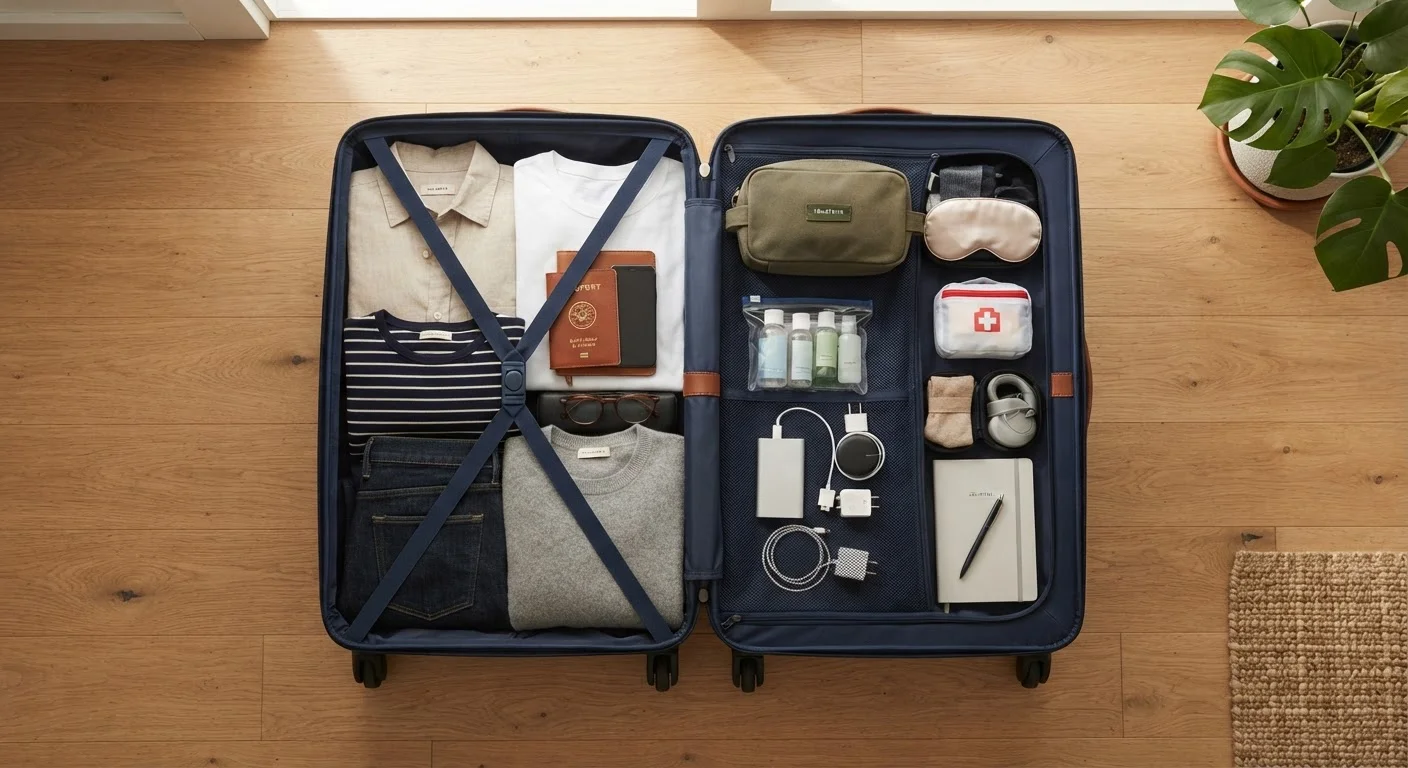
Why Light Packing Is a Planning Skill, Not a Minimalism Mindset
Most travelers who struggle to pack light aren't undisciplined — they're underprepared. Without a clear picture of what the trip actually demands day by day, it's rational to pack for every possibility. That uncertainty is the real problem.
The fix starts before you touch your bag. Mapping out your itinerary — including activity types, dress expectations, and climate — gives you a concrete inventory of what you'll genuinely use. As the why overpacking is a planning problem article explains, most excess weight comes from unresolved trip decisions, not a failure of willpower.
Packing light also intersects directly with cost. Fewer bags mean lower fees, faster airport transit, and more flexibility. These savings connect naturally to building a travel budget that actually holds up — every checked-bag fee avoided is budget redirected toward the trip itself.
Core Practices for a Smarter, Lighter Bag
Effective packing follows a short set of repeatable principles. Apply these before deciding what goes in and what stays out.
Build your packing list from your itinerary, not your imagination.
Packing from a vague mental image of the trip invites worst-case thinking and duplicate items. When you know you have two casual dinners, one hiking day, and four city days, your list becomes specific and capped. This single step eliminates more excess than any packing cube or compression bag.
Choose clothing that works across at least three outfit combinations.
Packing individual outfits for individual occasions multiplies items fast. Selecting pieces that layer and combine — neutral colors, simple silhouettes, multi-use fabrics — means more coverage from fewer items. This approach also leaves room for spontaneous purchases or laundry-day flexibility.
Set a firm bag constraint before you start packing, not after.
Deciding upfront that everything must fit in a carry-on forces early trade-offs and prevents gradual accumulation. Without a physical constraint, packing tends to expand to fill available space. The bag size acts as a budget: when it's full, the list is done.
Consolidate toiletries ruthlessly and buy locally where practical.
Toiletries are heavy, subject to airline liquid rules, and largely available at destinations. Packing only what is genuinely unavailable or medically necessary — and planning to purchase basics like shampoo or sunscreen on arrival — reduces both weight and security-line friction significantly.
Audit your 'just in case' items explicitly before finalizing the bag.
Every bag contains items packed for hypothetical scenarios that rarely or never materialize. A deliberate audit — asking "When specifically will I use this?" — separates genuine contingency planning from anxiety-driven packing. Items without a concrete answer typically belong at home.
Where Most Bags Get Heavy: Toiletries and Tech
Clothing often gets blamed for overpacking, but toiletries and electronics are frequent culprits. Full-size product bottles, redundant chargers, and "just in case" gadgets quietly add pounds without adding value.
For longer or more complex trips — especially those crossing multiple regions — the packing for multiple climates guide offers a deeper look at layering and fabric strategy. And if you're weighing whether to carry on or check a bag at all, carry-on vs. checked luggage trade-offs walks through the practical decision logic beyond airline rules.
The content on this site is for informational purposes only and is not a substitute for professional advice. Always consult a qualified professional for guidance specific to your situation.