

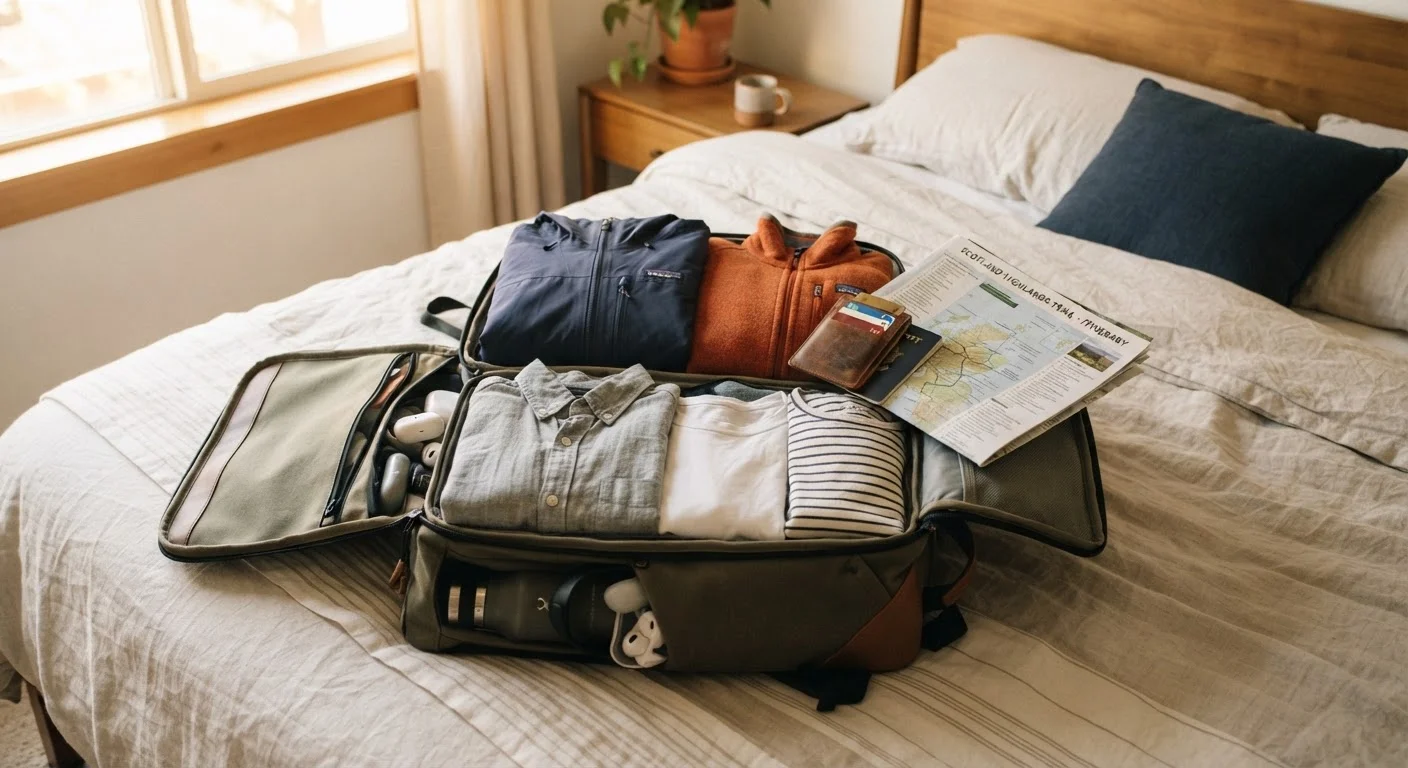
Why Multi-Climate Packing Demands a Different Approach
Packing for a single destination is straightforward — you research typical weather, identify the activities on your schedule, and build a list. Packing for multiple climates in one trip requires an entirely different planning logic. The temptation is to treat each leg as its own packing problem, layering outfit sets on top of each other until the bag won't close. That approach collapses quickly.
The real goal is to find a clothing system that adapts across conditions rather than one that accounts for every condition separately. Before touching your suitcase, you need a clear picture of what conditions you're actually preparing for. Reviewing your itinerary in detail — not just city names, but average highs and lows, likely precipitation, and planned activities for each leg — is the essential first step. A well-structured itinerary makes this much easier; see our guide to building a useful itinerary for a framework that supports this kind of planning.
Keep in mind that overpacking is nearly always a planning problem, not a luggage problem. Getting your itinerary right before you pack is the most effective way to keep your bag manageable.
Tools and Materials You'll Need
Before working through the steps below, gather the inputs and gear that make the process work.
What you will need
Layering base pieces (merino wool or moisture-wicking synthetic)
Regulate body temperature across a wide range of conditions without adding bulk.
Packable mid-layer (fleece or lightweight down)
Add insulation in cold conditions and compress into minimal space when not needed.
Packable waterproof outer layer
Protect against rain and wind without the weight of a heavy coat.
Packing cubes
Segment clothing by type or climate zone so you can access the right items without unpacking everything.
Lightweight, quick-dry travel towel
Useful in varying accommodation types and eliminates the need to pack multiple heavy towels.
Small laundry kit (travel detergent, sink stopper)
Enables hand-washing on long trips, reducing the volume of clothing needed.
Step-by-Step: Building Your Multi-Climate Packing System
Follow these steps in order — each one narrows your decisions and reduces the risk of arriving at a destination unprepared or over-encumbered.
Map the climate range across every destination
List each destination and research its expected temperature range, precipitation likelihood, and humidity level during your travel window. Note the daily high and low — not just the average — because a city that averages 65°F can swing from 48°F at night to 80°F at midday. Identify the most extreme conditions you'll face at either end of your route. These two extremes define the outer boundaries of your clothing system.
Identify activity requirements for each leg
Temperature is only one variable. A hiking day in moderate weather requires different gear than a business dinner in the same city. For each leg, note the primary activities and whether they call for anything specialized — waterproofing, formal attire, sun protection, closed-toe shoes. Where possible, choose activities that share gear requirements. If one leg demands highly specialized clothing that doesn't transfer elsewhere, ask whether that item can be rented or purchased locally instead of packed.
Build your layering system around three tiers
Structure your clothing around a base layer, a mid-layer, and an outer layer. The base layer should be moisture-wicking and temperature-regulating — merino wool performs well across both warm and cool conditions. The mid-layer adds warmth; a packable fleece or lightweight insulated jacket compresses well and covers most cool-weather needs. The outer layer handles wind and rain. Together, these three pieces cover a temperature range that a large volume of destination-specific clothing cannot match.
- Base layer: 2–3 pieces that can be hand-washed and dry overnight
- Mid-layer: 1 piece that packs small and can be worn under or over other garments
- Outer layer: 1 packable waterproof shell that fits over your mid-layer
Select bottoms and shoes for cross-climate versatility
Bottoms and footwear are where multi-climate packing tends to break down. Avoid packing separate trousers for each climate type. Instead, choose one or two pairs of trousers in a neutral, wrinkle-resistant fabric that work across temperature ranges. Convertible trousers (zip-off legs) are genuinely useful on trips that include both hiking and warm urban legs. For footwear, prioritize one pair of walking shoes that can handle varied terrain, supplemented by one additional pair only if a specific formal or aquatic activity makes it necessary.
Plan your accessories to fill climate gaps
Small accessories handle the remaining gaps in your system efficiently. A lightweight scarf converts to a blanket on cold flights, a sun hat addresses UV exposure in warm destinations, and a pair of liner gloves extends your mid-layer's warmth into cold nights. These items are compact but meaningfully expand the temperature range your core clothing system can handle. Pack them last, as fill items, not as primary clothing volume.
Audit the list against your luggage constraints
Before finalizing, count every item and compare against your luggage capacity and transport restrictions. If you're managing a carry-on only across multiple legs with varying airline restrictions, the math has to work on the tightest constraint, not the most generous one. Remove any item that duplicates the function of another, and identify anything that could be washed mid-trip rather than packed in multiple copies. A realistic laundry plan is often what makes the difference between a manageable bag and an overpacked one.
Managing Luggage Across a Complex Route
Multi-climate trips often involve multiple transport legs — domestic flights, trains, or road segments — where luggage handling requirements shift. A bag that works for a checked international flight may become a burden on a regional puddle-jumper with tight cabin restrictions. Think through your transport mix early and decide on your bag configuration accordingly. Our carry-on vs. checked luggage guide walks through the practical trade-offs beyond airline size rules.
For longer multi-climate trips, building laundry access into your itinerary is one of the most effective volume-reduction strategies available. Even one mid-trip laundry session can cut your clothing volume by a third without any sacrifice in readiness. If you're weighing the difference between a two-week multi-zone journey and a shorter break, the planning logic differs significantly and is worth reviewing before finalizing your packing list.
For further reading on the full scope of trip planning — including packing as one layer of a larger system — see The Full Picture of Trip Planning. And if your goal is to travel as light as possible while still covering your bases, packing light without leaving gaps explores the deliberate choices behind minimalist packing.
The content on this site is for informational purposes only and is not a substitute for professional advice. Always consult a qualified professional for guidance specific to your situation.