

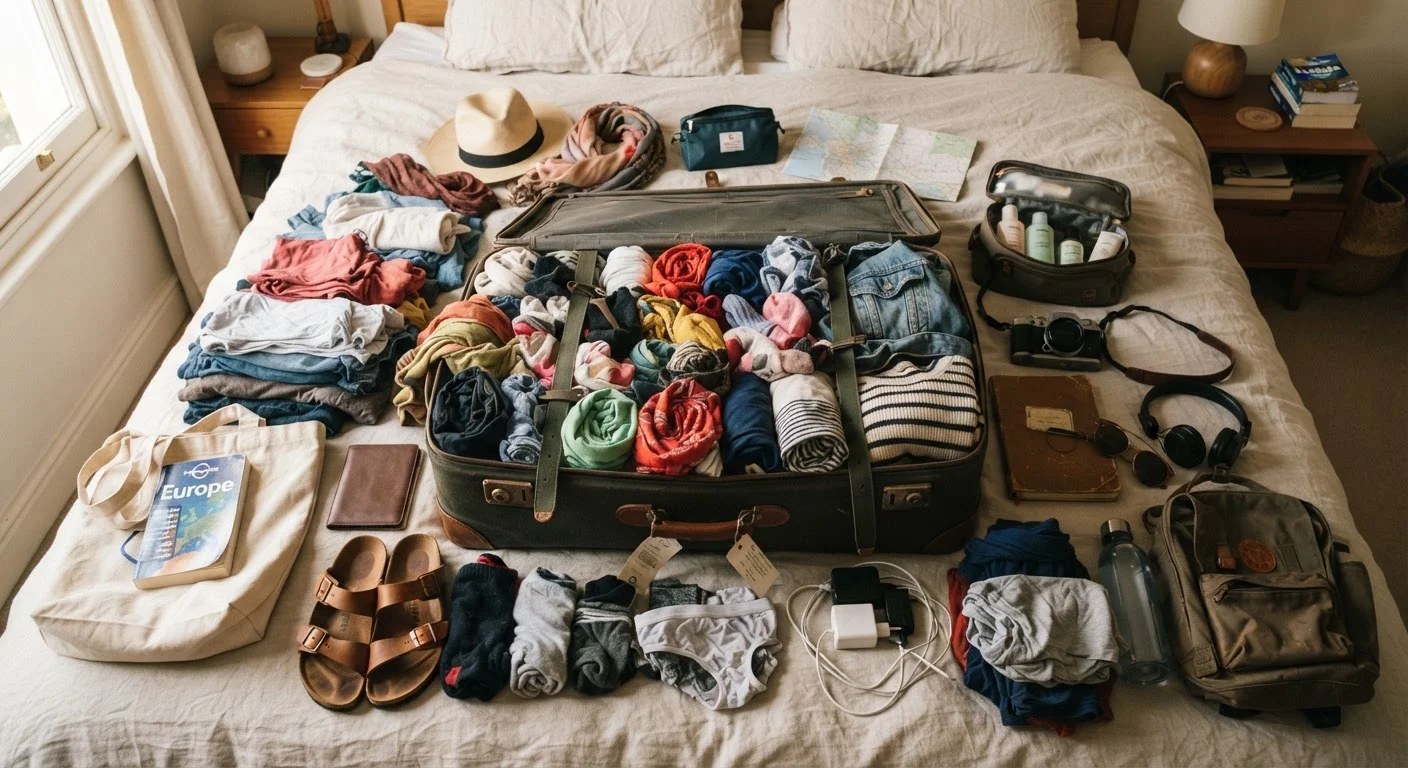
The Real Root of an Overstuffed Bag
Most travelers blame their suitcase when they can't zip it shut. They buy a bigger bag, add a personal item, and repeat the cycle next trip. But luggage capacity is rarely the constraint — planning clarity is.
Overpacking happens when you don't yet know exactly what you'll be doing, where you'll be going, or what conditions you'll face. In that uncertainty, everything feels potentially necessary. The more ambiguous your itinerary, the more you hedge with items you'll almost certainly never use.
A well-structured itinerary doesn't just organize your days — it makes your packing list obvious. When you know you have two beach mornings, three city walking days, and one nicer dinner, you can count outfits rather than guess at them. See how a well-organized itinerary directly shapes smarter packing decisions.
The planning work you skip before your trip shows up as extra pounds in your bag.
Common Overpacking Mistakes — and How to Avoid Them
These are the most frequent planning errors that lead travelers to overpack, along with concrete ways to address each one before you even open your suitcase.
Packing without a finalized itinerary.
Why it happens: Travelers often start packing before their plans solidify, so they prepare for every possible scenario rather than actual confirmed activities.
Bringing items 'just in case' without assigning them a realistic use case.
Why it happens: Fear of being underprepared is a powerful motivator, and it's easy to rationalize almost any item as potentially useful in some imagined scenario.
Ignoring laundry options and packing for the full trip length instead.
Why it happens: Researching laundry access feels like a minor detail, so most people skip it and default to packing one outfit per day for the entire trip.
Failing to research destination-specific dress codes or climate norms.
Why it happens: Without clear destination research, travelers bring clothes for a generalized version of a place rather than its actual conditions and cultural expectations.
Not checking airline baggage policies until after packing.
Why it happens: Bag rules feel like an airport problem, not a planning problem, so they get reviewed at the last minute — after choices have already been made.
Using Your Itinerary as a Packing Filter
Once you treat your itinerary as a packing tool, the process becomes systematic rather than anxious. Go day by day through your planned activities and assign an outfit or gear need to each. If an item doesn't attach to a specific day or scenario, it has no confirmed role — and items without a role are candidates to leave behind.
This approach also clarifies where versatility matters most. A lightweight layer that works for a breezy coastal morning and a cool restaurant dinner earns its place. A formal blazer for a dinner that may or may not happen does not. For trips that cross regions or seasons, that calculation becomes even more important — packing for multiple climates in a single trip requires deliberate layering logic, not just more bags.
Research laundry access early, too. Many accommodations offer in-room laundry or are near self-service facilities. Knowing this turns a seven-day trip into a four-day packing problem. Packing light without leaving essentials behind is less about minimalism and more about making every item earn its weight.
For a complete framework connecting planning to logistics to packing, the full picture of trip planning covers each layer in depth.
The content on this site is for informational purposes only and is not a substitute for professional advice. Always consult a qualified professional for guidance specific to your situation.