

Our Verdict
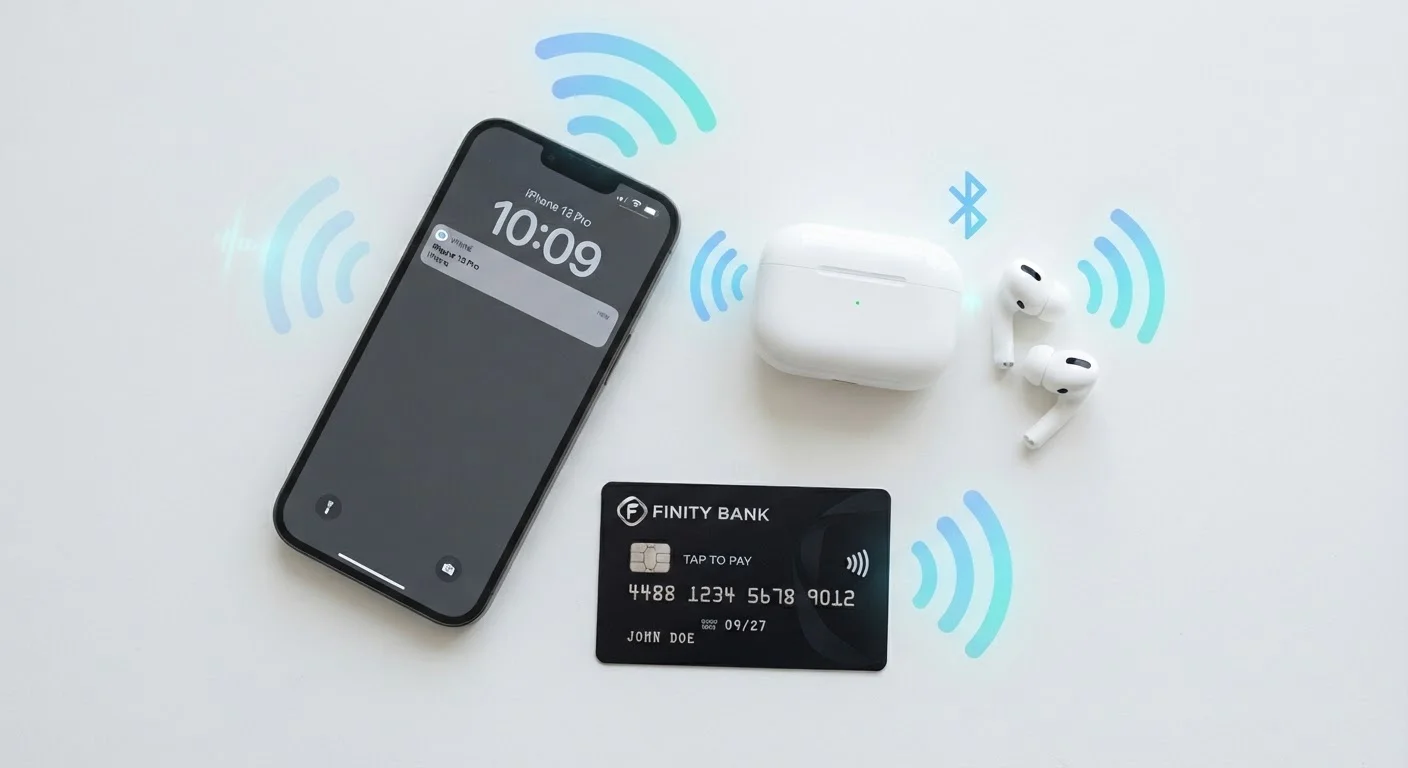
Bluetooth, Wi-Fi, and NFC are not competing technologies-they are complementary ones, each engineered for a distinct set of tasks. Bluetooth excels at persistent, low-power pairing between personal devices. Wi-Fi is the workhorse for data-heavy internet connectivity. NFC is a precision tool for instant, secure, touch-to-transfer interactions. Understanding what each does helps you recognize which spec actually matters for a given gadget.
| Best for | Recommended |
|---|---|
| Audio, wearables, and peripheral devices | Bluetooth |
| Streaming, browsing, and home networking | Wi-Fi |
| Contactless payments, transit cards, and device pairing taps | NFC |
| Smart home sensors needing low power and mesh networking | Bluetooth (Mesh) or dedicated protocols |
Why Three Radios Instead of One
Your smartphone almost certainly contains at least three separate radio systems operating simultaneously. This isn't redundancy-it's specialization. Each short-range wireless standard was designed around a specific tradeoff between range, data throughput, power consumption, and connection model. No single radio excels at all four simultaneously, which is why consumer electronics bundle several together.
Think of it like tools in a kitchen: a chef's knife, a paring knife, and a bread knife all cut, but each is optimized for a different task. Using the wrong one wastes effort. The same logic applies to wireless standards. Understanding each one's design priorities helps decode spec sheets and marketing claims before you buy.
For a broader look at how wired connections compare to these wireless options, see our wired vs. wireless comparison.
Bluetooth: Persistent Pairing at Low Power
Bluetooth operates in the 2.4 GHz ISM band and uses a technique called frequency-hopping spread spectrum-rapidly jumping between 79 channels to reduce interference. Its core design goal is maintaining a stable, ongoing connection between two devices while consuming as little battery as possible.
Classic Bluetooth (used for audio streaming) supports data rates up to roughly 3 Mbps, sufficient for high-quality audio codecs. Bluetooth Low Energy (BLE), introduced with Bluetooth 4.0, trades raw throughput for dramatically reduced power draw, making it ideal for fitness trackers, heart rate monitors, and other sensors that need to run for weeks on a small battery.
Practical range is typically 10 meters indoors, though Bluetooth 5.0 and later versions extend this significantly under ideal conditions. The connection model is point-to-point or, with BLE Mesh, a distributed network-which is why Bluetooth is appearing in smart lighting and sensor arrays. For more on how smart home devices communicate, our smart home protocols explainer covers the broader ecosystem.
Wi-Fi: High Bandwidth, Network-Centric Design
Wi-Fi (standardized under IEEE 802.11) is built for a fundamentally different job: connecting devices to a local area network (LAN) that itself connects to the internet. Rather than linking two devices directly, Wi-Fi routes traffic through an access point-typically your router-which manages multiple simultaneous connections.
This architecture allows Wi-Fi to support much higher throughput than Bluetooth. Wi-Fi 6 (802.11ax), for example, can deliver theoretical speeds exceeding 9 Gbps across a network, though real-world figures are considerably lower. Range extends to 30-50 meters indoors under typical conditions, with walls and interference narrowing that considerably.
Wi-Fi also operates in multiple frequency bands. The 2.4 GHz band offers longer range with lower speeds; the 5 GHz band provides faster speeds over shorter distances. Understanding the difference between these bands matters when placing devices around your home. For setup guidance, see our home Wi-Fi setup walkthrough.
| Bluetooth | Wi-Fi | NFC | |
|---|---|---|---|
| Primary purpose | Device-to-device pairing | Network internet access | Instant one-tap transfer |
| Typical range | Up to 10-100 m (version dependent) | 30-50 m indoors | Under 4 cm |
| Frequency band | 2.4 GHz | 2.4 GHz / 5 GHz / 6 GHz | 13.56 MHz |
| Max data rate (approx.) | 3 Mbps (Classic); lower for BLE | Up to 9+ Gbps (Wi-Fi 6) | Up to 424 Kbps |
| Power consumption | Low to very low (BLE) | Moderate to high | Very low; passive tags need none |
| Connection model | Point-to-point or mesh | Via access point (router) | Point-to-point or tag read |
| Common uses | Headphones, wearables, keyboards | Streaming, browsing, smart home | Payments, transit, pairing taps |
NFC: Close-Range, Instant, and Intentional
Near Field Communication (NFC) operates at 13.56 MHz-a much lower frequency than either Bluetooth or Wi-Fi-and has an intentionally tiny range of under 4 centimeters. That constraint is a feature, not a limitation. Because the devices must almost touch, the act of tapping is itself confirmation of intent, which makes NFC naturally suited to security-sensitive interactions.
NFC supports three operating modes. In card emulation mode, a phone acts like a contactless smart card-enabling mobile payment systems. In reader/writer mode, a device reads passive NFC tags (those tiny chips embedded in posters, packaging, or transit cards) that require no battery of their own. In peer-to-peer mode, two active devices exchange small amounts of data directly, which some platforms use to initiate a Bluetooth or Wi-Fi pairing handshake.
NFC's data rate is relatively modest (up to 424 Kbps), but speed is irrelevant for its primary uses-passing a payment token or reading a URL takes only a fraction of a second. Its low power draw and passive-tag capability make it exceptionally versatile in product packaging, access control, and logistics tracking.
How They Interact-and When They Work Together
These three standards frequently work in tandem. A common example: tapping two devices together via NFC can automatically initiate a Bluetooth or Wi-Fi Direct connection for a faster transfer-NFC handles the handshake, Bluetooth or Wi-Fi handles the bulk data. Wireless headphones increasingly use this same pattern: one NFC tap begins the pairing process that Bluetooth then sustains.
Coexistence is generally managed at the hardware and firmware level. Because Bluetooth and Wi-Fi share the 2.4 GHz band, chipmakers use techniques like adaptive frequency hopping and coordinated time-sharing to prevent them from stepping on each other. NFC's lower frequency sits entirely outside this band, so it introduces no interference.
For consumers, this matters when evaluating specs: a device listing only Bluetooth and NFC-without Wi-Fi-is not designed for internet-connected tasks. Conversely, a device with Wi-Fi but no Bluetooth cannot pair with wireless audio peripherals in the conventional sense. Reading the spec sheet with these distinctions in mind prevents mismatched expectations. Explore more connectivity fundamentals in our Internet & Connectivity hub.
The content on this site is for informational purposes only and is not a substitute for professional advice. Always consult a qualified professional for guidance specific to your situation.